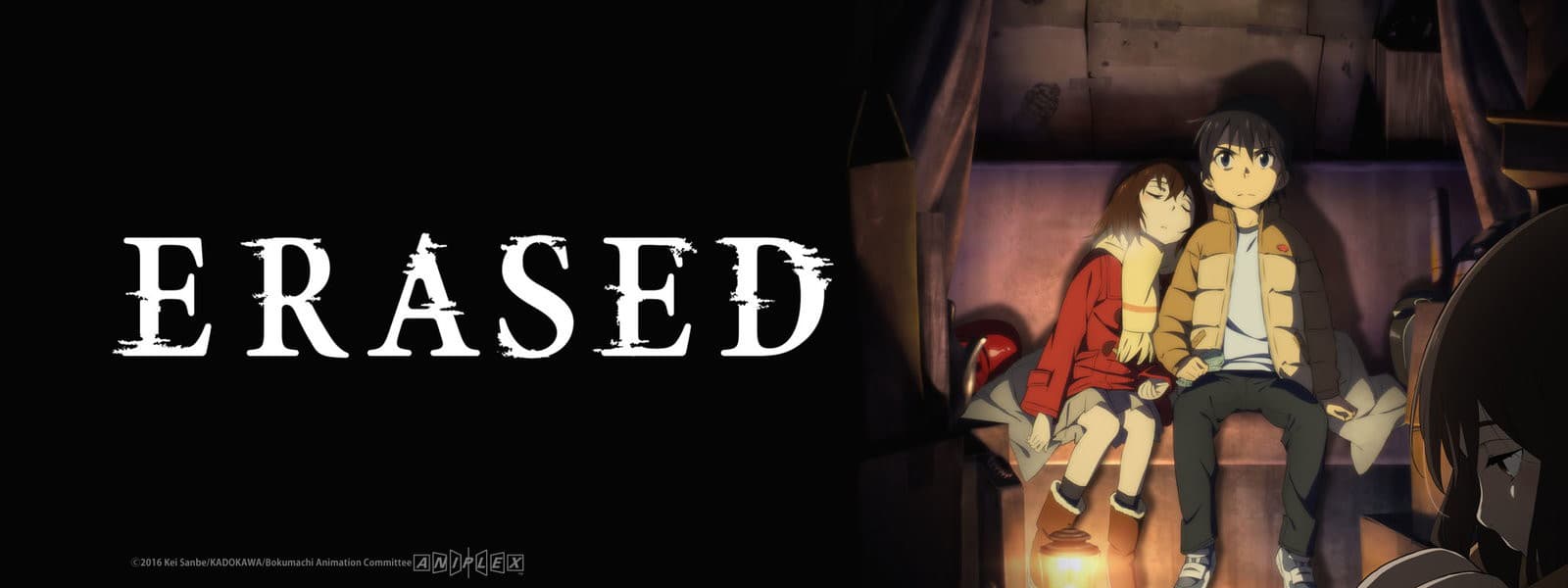
Just a disclaimer right off the bat, I've only watched the anime so any points from the manga, I am not aware of. Also, lots of spoilers !! Sorry !!
I watched the show once a few years ago and just recently came back to it because 1) I love the opening theme song and 2) I was looking for a show I could put on in the back and not have to focus too hard. I had already seen this show before so I figured that it wouldn't take as much brain capacity to play in the back. It was honestly so cool to see how my perspective of the show shifted now that I myself have grown as a person.
More than anything else, I see this film as a depiction of domestic violence, as seen from the perspective of a by-standing child. Satoru's revival power allows for him to receive some insight on the progression of events, allowing for him to re-contextualise details from the past as warning signs so that he can go back and adjust the circumstance before they follow their natural progression and result in tragedy. This same mechanic is applied when his mom dies and he is sent back to the root of his mom's passing and his framing of the murder, which turns out to be a series of kidnapping and murder incidents that happened in his childhood. Carrying the knowledge that these incidents caused his mom's murder, but more directly, caused the deaths of three of his peers, Satoru returns to the past with an especially keen eye to foreshadowing. This heightened awareness of warnings signs allows for Satoru to understand the sheer extent of the domestic abuse that Kayo faces from her mother. Details that he had not been as conscious of as a child illuminate themselves as he gets more frantic in his efforts to save her. He is distraught because he, carrying his knowledge from the future, understands the dire consequences of what happens if the warnings signs are not caught earlier. His approach at saving her is frantic but retrospective.
To compliment Satoru, we have Kenya, his elementary school classmate. He is established as a character with astounding observational skills, especially for an elementary schooler. Towards the beginning of the show, when Satoru (revived as his childhood self) starts asking about Kayo, Kenya notes that her essay had some worrying content matter, though he in the moment refers to it as "interesting". Titled The Town Where Only I Don't Exist, Kayo writes about her fantasy of being in a far away land. It alludes to some escapist fantasies to cope with her circumstance, but also a kind of comfort in knowing that the town would operate just fine if nothing changed except her absence. Being abused by the hand of a mother who, above all else, fervently works to maintain appearances, she feels deeply invisible in her suffering. She was not, however, as invisible as she thought. She was seen by Kenya, who, despite noticing her bruises and the concerning content of her writing, lacked the courage to do anything about it. She was seen, too, by Gaku, who took a sick pleasure in consolidating his perceived superiority from feeling like the one person who truly understands the loneliness of the children he preyed upon. He took their lives, letting their suffering become but a memory, overshadowed by the shock of their deaths. I could go on a whole other tangent about how his three victims all had the common denominator of loneliness in plain sight which, though thoroughly established in Kayo's case, is also offhandedly mentioned/ hinted at via Hiromi's mentions of a lonely household and the ease with which Aya joined their friend group. But I am getting off topic so I digress.
The revival ability, to some degree, feels like a metaphor for the regret that Satoru and Kenya experience. Satoru's approach to saving her is retrospective, only realizing the weight of each sign after learning of their outcomes. Kenya had been observant enough to notice something was wrong but, feeling helpless, he was unable to act. One is frustrated because he couldn't notice in time, the other because he couldn't act in time. Either way, they are children who feel responsible to some degree for the passing of their classmates. This is a theme addressed by the show too, questioning how much is enough. How responsible do you become once you become a witness? Are results all that show for the success of Satoru's intervention?
This show is a thriller. It's a bit of a murder mystery, but more than anything else, I think it's a call to others also suffering in plain sight. Satoru kept insisting to Kayo that not only will tomorrow come, he'll be there to pick her up and walk her to school. In a literal sense it's him trying to prevent her murder. But how powerful is that, to affirm to someone struggling with imagining their future that not only will tomorrow come, they won't be alone to face it.
I don't think that negates some of the odd elements of the show (like Satoru getting all flustered about his sixth grade crush despite being mentally 29 years old..... yeah...) and I remember how uncomfortable I was years back with the dialogue around Kayo (and people's frustration at her ending up with Hiromi). These things still hold, but I think it also holds that Erased was captivating in its depiction of the weight of being a witness.
17.5 out of 19 users liked this review
