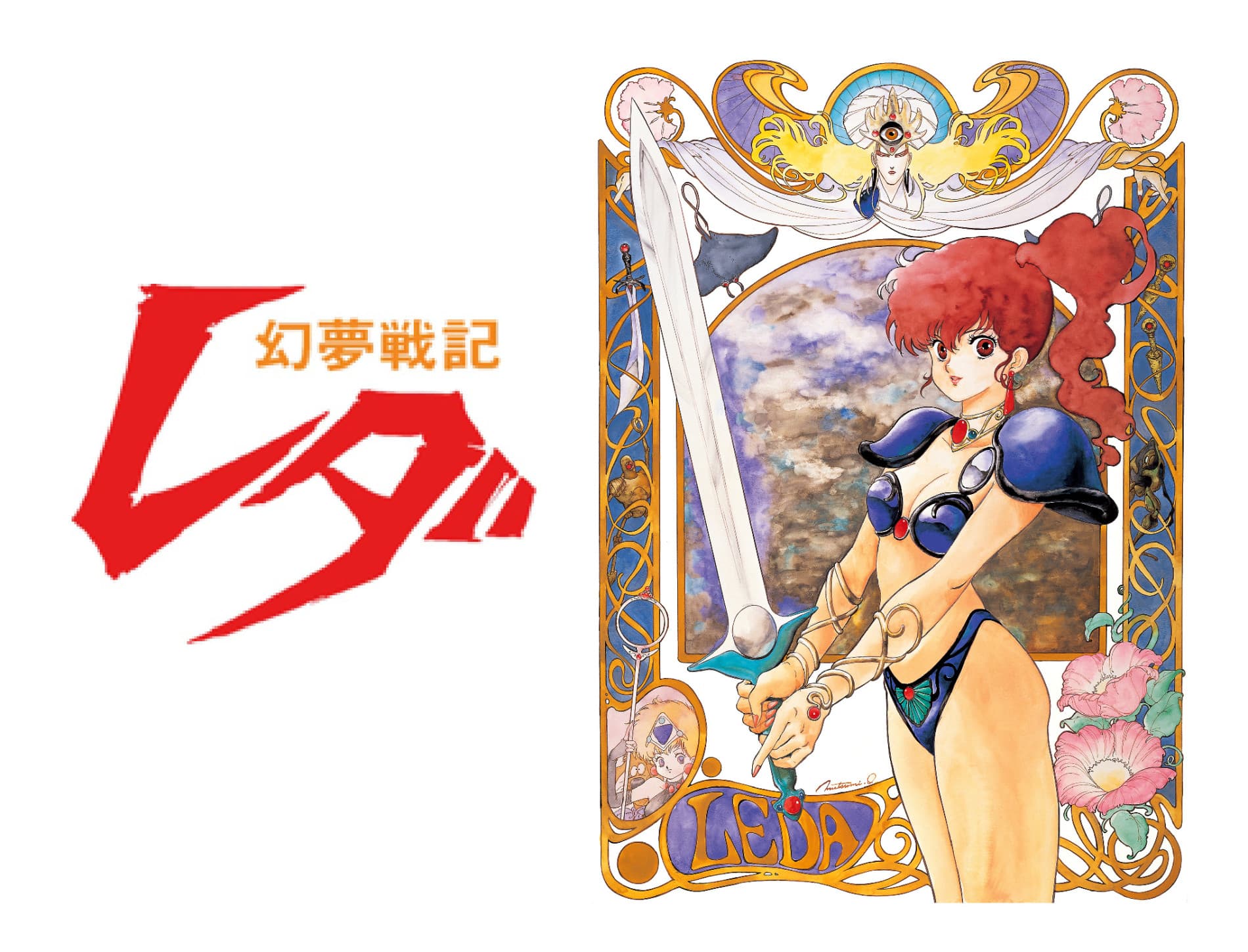
Leda opens on protagonist Yohko composing a subdued, yet compelling piano piece that becomes the OVA’s central theme. We learn that she is composing this piece to build up the courage to confess to her crush. This superb surrealist sequence highlights the talents of Director Kunihiko Yuyama in a major way. The intense colour palette and highly effective contrast between the oppressive lighting and dramatic shadows is striking. The melancholic atmosphere and phantasmagorical presentation is more befitting of the fantasy Yohko is dragged into after she fails to confess her L-O-V-E rather than are world. This extreme dissimilarity accentuates the connection between Yohko’s emotions and the appearance of the OVA, cleverly creating an instant attachment to the main character.
The world of Ashanti is filled with lavishly luminous forest these fluorescent forest being teaming with life. Of particular note are the distinctively Moebiusesque birds that soar through the bright blue and dual sunned skies of Ashanti. Ashanti is revealed to have great biodiversity baring desolate desert dunes and awesome ancient cities these distinct landscapes are contrasted by the cold mechanised domain of the OVA’s villain. But before Yohko can witness the wonder of Ashanti she has to wake up.
Exploring the exceptional environment prepared for her, to some suitably tubular 80s pop tune, Yohko comes across Lingam who’s just your average flying and talking dog. These two make a great pair. Lovesick Yohko’s radiant red hair and matching eyes makes her design popout the screen. Yohko’s a great lead nervous and lacking in confidence her strengths and weaknesses our highlighted through her dedication and determination to confess to her crush. This also provides a reason for her wanting to escape Ashanti. Lingam is as previously mentioned a flying and talking dog meaning he’s best boi. These two's odd mentorship/friendship would heavily inspire Que and Fandora's in Mujigen Hunter Fandora. These two also wholly represent two separate methods of design and animation philosophy. Because Yohko’s design is almost permanently picturesque the accompanying animation of her is hyperdetailed. Whilst Lingam's simple design allows expressive animation with ease. Both these methods ideologies get thoroughly tested throughout the OVA in a multitude of fantastic action sequences. These two drastically outshine Yoni who aside form bringing a series of radically rustic mecha into the fold and dumping exposition is drastically underwritten. Another serious flaw of the OVA is how empty Ashanti feels, a couple of extra scenes showcasing some populated towns or even some quick fly-by during one of the chase sequences would have greatly benefitted the OVA.
These three have to team up to defeat the overwhelmingly outrageous overlord of Ashanti Zel. Draped in luxury, looking like the leader of a space age druid cult, Zelly Stardust oozes evil. Looking to invade Noa (Earth) through the dimensional rift mysteriously opened by Yohko. Zel just simply wants to rule over all foreseeable dimensions, which is a moderately unreasonable request. Having already conquered Ashanti Zel and Yohko’s fates are paradoxically interconnected, if it wasn’t for Zel’s takeover there would be no need for Yohko to be summoned as Leda’s warrior. But in being summoned Yohko opens the portal for Zel to claim Noa. Only one can prevail, It’s Zel and his advanced arsenal Vs Leda’s bikini armoured battalion.
The Fantastic Success of Kaname Production
Released on March 1st, 1985, Leda was one of the first majorly successful OVAs. Selling 30,000 units and being released in theatres alongside Vampire Hunter D as a double feature. Produced by Kaname Productions after the crushing failure of Yoshinori Kanada’s Birth. Leda would become the studious greatest production withstanding the test of time and receiving a Blu-ray release and reclaiming a surprising resurgence in popularity. The OVA helped perpetuate the trend of Bikini armoured heroines as well as laying a fantastical foundation for fantasy anime. Leda also served as a cornerstone for the careers of Influential character designer Mutsumi Inomata, best Bubblegum Crisis episode director Hiroaki Gouda, Dirty Pair designer Tsukasa Dokite, and soundtrack legend and future Evangelion composer Shirou Sagisu. So, yeah Leda is a surprisingly big deal.
And beyond those whose careers where directly effected by working on Leda are those who were influenced by Leda. Whilst I can’t confirm this speculative claim, I believe that this OVA must have been a massive inspiration for the style of legendary director and future Studio SHAFT leader Akiyuki Shinbo. Eye-in-eye shots and the aforementioned use of colour are two quintessentially Shinbo tricks used in this OVA. The impact of Leda is seriously undermined and unfortunately so is its introspective approach to the Isekai genre.
The Fantastic Subversion of Leda (spoilers)
The final stretch of Genmu Senki Leda is, pardon the pun, fantastic and I won’t spoil it any more than I already have. instead I will leave you wondering, pondering, possibly even guessing and asking you too give this OVA a try.
19.5 out of 21 users liked this review
