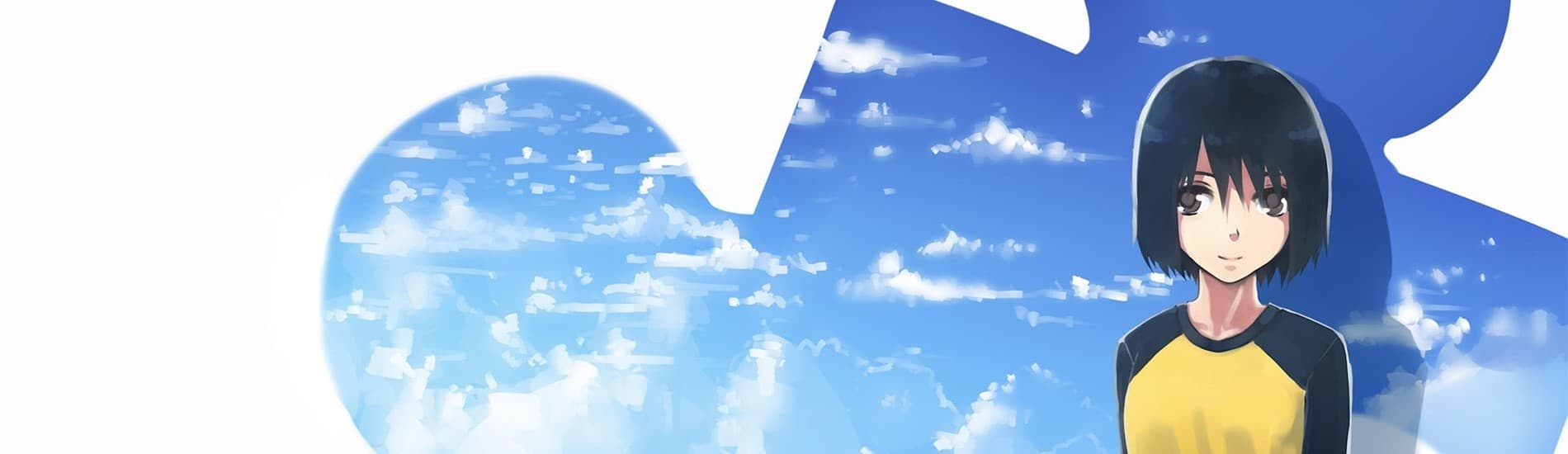
Welcome to the NHK is by and large one of the most overlooked and compelling narratives I’ve ever experienced and I couldn’t have crossed paths with it at a more appropriate time. For the last year I’ve been painstakingly working on an album covering my seemingly never-ending battles with agoraphobia and self-worth, and I’ve been sampling different bits of media that I’ve derived escapist pleasure from in songs pertaining to those themes. In a search for more media that covers agoraphobic themes, I asked ChatGPT for recommendations--- Welcome to the NHK was what it gave me.
What immediately gripped me about this anime was its knack for painting its lowlife cast as unavoidably realistic and human, despite their troubled natures that have caused them to be completely downtrodden and trashed by society. From the protagonist Satou’s paranoid delusions of conspiracy that exist to affirm his dedication to escapism and degeneracy, to Misaki’s angelic and therapeutic exterior underlined by a thick layer of manipulative and selfish intentions, feelings of inadequacy and an unwavering savior complex, to Yamazaki’s escapist tendencies through otaku culture and incel mentalities that are meant to distract him from his feelings of insignificance, to Hitomi’s seemingly incurable depression and dissatisfaction with herself and her relationship with her fiancée…. All of these characters feel painfully real and while there are plenty of opportunities taken by the show to exploit these character flaws for raucous bits of black comedy, it’s always followed by a grim and tear-jerking realization that these are real human beings, burdened with intense mental problems that inform every action they take and not once does the show ever let you breathe and forget this.
All of these characters and their interpersonal connections (or lack thereof) serve to force you to put your own situation and social standing into perspective and beg the question: does society really only function because it preys upon the backs of the outcast, the perceived scum of the world? Is there really a conspiracy out there to capitalize on this overwhelmingly large pool of losers? Is any iota of personal success we ourselves have achieved due to our own manipulation of or indifference towards these very people, conscious or not? And if you’re like me, and you feel like you are one of these people… is it your fault and is there a way out?
Rather than directly answer this question in any way meant to allow you some sort of breathing room, there’s a lot left up for interpretation, and the strength of Welcome to the NHK in delivering its themes is the fact it doesn’t rely on a thick layer of fantasy elements, instead preferring to be completely set in the world of normal people, like you and I. I don’t want to reveal too much about the story itself because I really believe anyone reading this should experience it at least once, so I’ll try to describe my takeaway as best as possible: in small doses a bit of escapism is necessary for breathing but locking one’s self away from society is neither productive nor helpful, and we should endeavor to create the best existence possible for ourselves despite the pain and hardship, as inescapable as they tend to be. As Misaki says, life is 90% pain and 10% happiness, but even that 10% is only possible if we live it and lean on each other. Everyone is selfish and leaning on other people is inherently a principle that stems from self-preservation, but ultimately it’s the way to survive and flourish as functioning, happy members of society. And sometimes… that’s just all we can do, and that’s okay.
It’s all these factors that cause this adaptation to be in my opinion not only the most purposeful version of the story (as the original light novel was far more sporadic due to its conception coming from a desperate need from the author to escape his own destructive hikikomori condition), but one of my all-time favorite narratives, easily ranking in my top ten.
So why isn’t it scored higher? Frankly, the show is incredibly hard to recommend to people due to its nicheness and brutal way of portraying its themes and questionable characters, but that isn’t really what I counted off points for. The biggest reason it’s hard to recommend is its visuals. I can’t exactly describe the look of the show as the quality of its animation is incredibly inconsistent throughout, with some episodes capturing its tone remarkably well for a niche mid-2000s seinen drama, while others (I’m looking at you, episodes 4 and 19) are borderline unwatchable because of its rushed production and off model characters, which could easily be a turn off for a lot of viewers unless they are as dedicated to the story underneath it all as I was.
Despite this, it’s an irreplaceable show that deserves far more attention than it gets. I give Welcome to the NHK a 89/100.
30.5 out of 32 users liked this review