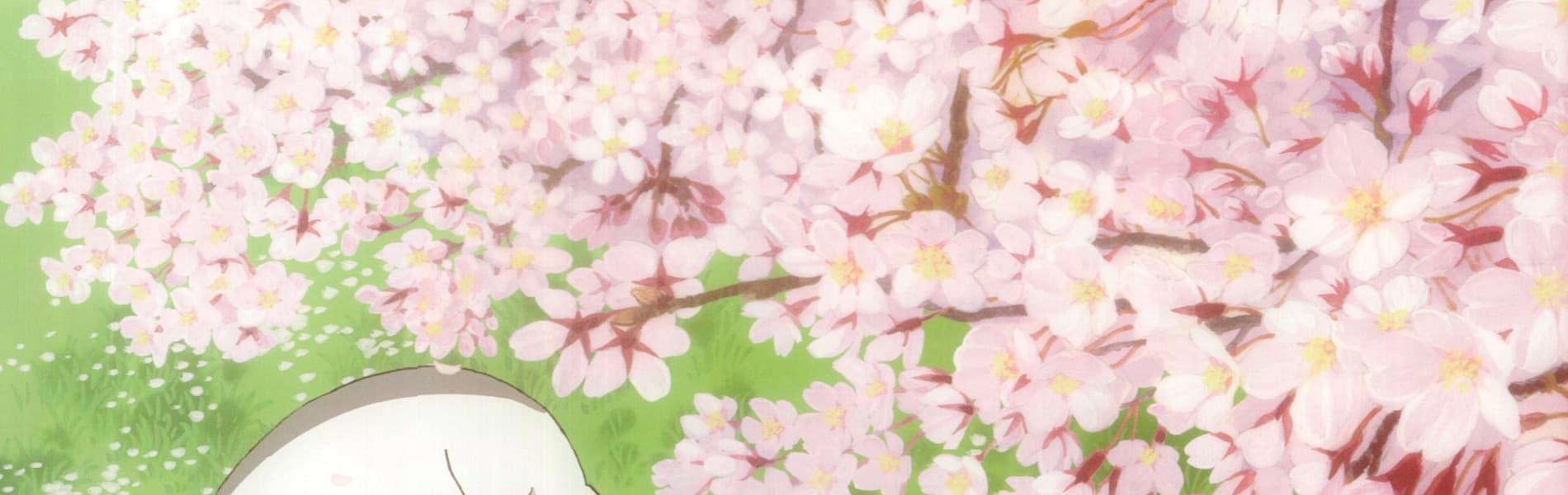


I recently completed my first rewatch of Natsume Yuujinchou — originally one of my first ventures into the more obscure side of Slice of Life (and iyashikei for that matter, which has now become my favorite genre of anime). Having finished and thoroughly enjoyed myself, I figured it’d be a good time to finally write a review for this magnificent series that I cherish so much. Because even after watching countless other SoL and iyashikei anime over the years — spanning gentle aquatic cityscapes, vast barren apocalypses, vibrant supernatural fauna, and everything in between — I still always end up coming back to Natsume Yuujinchou, which to this day remains one of my favorite anime, and pieces of media, of all time.
Natsume Yuujinchou follows the titular Natsume Takashi, a kind but lonely orphan with a rough childhood. His isolation from those around him stems from his ability to see yokai, resulting in countless problems for himself and his (many) foster families. Kids his age ostracize him and call him a liar, and his ability to see causes many inconveniences for his guardians, who constantly pass him around and likely didn’t even want him in the first place.

But this is all in the past: the anime picks up with Natsume moving to a new location — an incredibly tranquil, rural, and homely town in the Japanese countryside — with a loving older couple who actually treat him like family. And it’s in this town that he meets a yokai named Madara — AKA Nyanko-sensei, his soon-to-be partner in crime — and discovers the titular Book of Friends, an inheritance from his deceased grandmother (who could also see yokai).
The subsequent episodes follow Natsume as he grapples to balance natural and supernatural, working to maintain his human life while balancing the apparitional world forced upon him. The series follows an episodic structure, with each episode (or pair of episodes) focusing on a singular (usually yokai-involved) story. And these stories — varying in subject, nature, themes, and even quality! — impart profound wisdom on the human condition, relationships, and morality. They’re exceptionally well-written, confronting countless rare themes and topics within their fresh and unique storylines. But most importantly of all, these stories influence Natsume and facilitate his outstanding character development.

For Natsume Yuujinchou, your attachment to the characters (i.e., Natsume) defines your experience: as you grow more and more fond of Natsume, your enjoyment and emotional resonance begin to increase exponentially, and episodes that seem simple — or wouldn't have moved you before — begin to stir shockingly effusive emotions from within (seriously, I can’t name how many times I’ve teared up or even cried at seemingly mundane things while watching this series). For me, I really began to fall in love during season 2, and seasons 3 and 4 fostered that attachment to insurmountably distant heights. However, looking back, the series has always been this good; I just wasn’t attached enough to realize it, at least until I went back and rewatched the earlier seasons.
At the heart of Natsume Yuujinchou lies Natsume Takashi, the main character, and his beautiful character arc. Primarily concerning his transformation from an aloof and lonely child — afraid of scaring, burdening, or losing the people close to him — into an incredibly kind, compassionate, and happy person, with caring friends and a loving family.
Natsume’s character arc is extremely subtle: there are little to no pivotal moments in his journey; no key revelations, major turning points, or any other events that substantially impact his character. Rather, his growth is defined by small but profoundly meaningful encounters and budding relationships with friends and family. Each episode (or sometimes pair of episodes) contributes to his development, with most episodes revolving around Natsume encountering a new yokai and assisting them with a relatable problem.
To properly analyze Natsume’s character, it’s better to look at how he evolves over the course of not just episodes, but seasons of the show. Episodically, his growth is (for the most part) too granular to notice anything in particular; however, contrasting his character over the seasons reveals just how much he’s truly changed.
This next paragraph contains spoilers about the specific focuses of each season and the direction of Natsume’s character:
Spoiler, click to viewclick to hide
Season 1 Natsume, although managing to make a few friends, is lonely, reserved, and scared to lose what he has; early season 2 Natsume, while happier and a little more outgoing, still overly fears burdening his family; by mid season 3, Natsume has already blossomed into a kind and compassionate young man, who treats his family like family and begins to realize that he cherishes yokai too; season 4, like its predecessor, focuses heavily on Natsume’s past, specifically on managing grief; seasons 5, 6, and 7 concentrate on Reiko, and Natsume’s desire to learn about her — his elusive relative who he relates to in so many ways — as well as the insurmountable distance between humans and yokai (with season 6 having an additional subplot of introducing the Book of Friends to Natori); and no matter the seasonal subject matter, Natsume’s character and relationships continue to evolve as the seasons progress.
As the series progresses, Natsume, who used to hate yokai and blamed them for his loneliness, realizes that many yokai are similar to himself: despite being supernatural entities, they mostly struggle with very human issues — problems that often relate to Natsume’s personal situation. For instance, one episode follows a yokai that is lying to someone they care about, which spurs Natsume to consider his own falsehoods (about hiding his ability to see yokai from those he cares about); other episodes have Natsume caring for a small and lonely yokai — because Natsume, as an orphan, intimately understands the bitter feeling of loneliness — or a yokai who wants to protect their friends, which Natsume deeply resonates with, as he wants to help and protect his own friends from yokai-related ailments. This realization, that yokai aren’t all that different from him, dampens his resentment towards them, and each episodic plot furthers Natsume’s growth as he comes out of his shell, making both human and yokai friends along the way. And I must say, his journey is truly incredible.

Natsume Yuujinchou — through Natsume’s character arc and the episodic yokai stories — highlights some very powerful themes and messages, like loyalty, respect, compassion, friendship, mutual understanding, and many more. Each episodic story has its own valuable lesson that furthers these themes, like repaying kindness with kindness, relying on those around you, cherishing the limited time that you have, etc.; moreover, these relatable episodic stories play into Natsume’s character arc, spurring him to confront very relatable and human issues — like finding purpose in life, protecting those you care about, processing grief and painful memories, and grappling with loneliness. However, the theme that stands out to me the most is showing gratitude and appreciation for those important to you: in particular, observing how Natsume fully appreciates the wonderful people around him serves as not only a heartwarming experience, but also an ever-present reminder to truly treasure my own friends and family and remain ever-grateful for what I have. And for that, I will remain endlessly thankful to Natsume Yuujinchou for opening my eyes to how fortunate I am.
Thanks to these relevant themes, Natsume Yuujinchou stays relatable in spite of its supernatural elements. Because ultimately, this is a human story, one about life itself. Natsume’s journey and the yokai stories can speak to anyone, despite the series’ supernatural proclivities, because they beautifully display and highlight important values like respect, understanding, kindness, and love — principles that can apply to all our lives. To put it succinctly, Natsume Yuujinchou gives me hope for humanity, reminding me of all our best and most admirable qualities.

This next spoiler tag contains very light spoilers about the direction of Natsume’s character and the series as a whole.
Spoiler, click to viewclick to hide
In line with its humanization of yokai, Natsume Yuujinchou (from around its third season onwards) begins to accentuate the complex relationship between humans and yokai, primarily through exploring Natsume's yokai friendships and the callous exorcists. Natsume, after significant growth, eventually comes to realize his appreciation for not just the people in his life, but the yokai too — even becoming thankful for his ability to see them. This realization furthers Natsume's character arc, cementing him as an empathetic person friendly with all beings, whether human or yokai. However, Natsume’s overly compassionate behavior is deftly contrasted with the cold-hearted exorcists and their exploitative relationships with yokai. They’re excellent foils to Natsume in the way they view and treat yokai, with their overall lack of empathy serving as a great antithesis to the overly compassionate and caring Natsume.While somewhat different from the series’ tried-and-true formula of individual yokai vignettes, this narrative supplementation — placing a larger focus on exorcists and the overall dynamic between humans and yokai — remains thematically congruent with the heart of Natsume Yuujinchou. The earlier seasons focus on Natsume’s blossoming relationships and his understanding of what a family entails; the natural next steps in his character journey are processing the yokai world — in regards to how, through their connection with him, it unduly influences Natsume’s friends and family — and wholly understanding yokai and their multifaceted relationship with humanity. Specifically, Natsume has always chosen kindness and compassion, helping basically any yokai that comes his way: will he still continue to make this choice after considering the exorcists’ hardened points of view and having more run-ins with yokai (including yokai that may try to harm his friends and family)? How should he balance relationships with yokai and the danger they entail — to not just him, but those around him as well? To me, that is the appropriate continuation to Natsume’s character arc and appears to be the direction the series is heading in.
Yokai problems are not the only happenings in Natsume Yuujinchou; some episodes focus solely on Natsume’s connections with those around him, and many episodes have wholesome moments involving his adoptive parents or newfound friends (including both humans and yokai). Some of my favorite — and consequently the most emotional — episodes are simply just Natsume hanging out with his friends, or Natsume and his friends/family expressing care and concern for one another.

This paragraph contains very very light spoilers about an amazing facet of Natsume’s character development. However, they’re so light that I believe it’s safe even for those unfamiliar with the series to read, so it’s not spoiler tagged.
In this regard, one of my favorite developments of Natsume is his perception of family. Due to years of neglect and being passed from one adoptive family to another, Natsume develops a fear of burdening his guardians and being a nuisance: he tries to avoid trouble as much as possible, always fearing making a mistake or souring their relationship. If he were to break something, he would get anxious and offer to pay it back, and he hesitates to ask for even small favors from his parents. But, as Natsume’s adoptive father points out, that’s not what family is; too much consideration is unhealthy. It’s okay to be a burden sometimes, or to ask for things on occasion. This development is sublime and perfectly represented by Natsume’s shifting reasoning for hiding his yokai-seeing ability: at the series’ outset, Natsume hides his ability from his parents because he’s scared to be a burden; but at some point, Natsume begins to hide his ability out of love instead. Not because he fears they may stop loving him, or may get rid of him, or wouldn’t believe him, but because he doesn’t want to worry them — because he cares deeply about them. This shifting perception, and the scenes where his friends and family really express their care for him, are so unbelievably heartwarming and emotional. Also, Touko and Shigeru are the indisputable BEST anime parents.
Natsume and Madara’s bond also significantly develops over the story. What starts as a transactional association between the two blossoms into a wonderfully humorous and caring relationship, though neither of them would ever admit it. Nyanko-sensei may complain and bicker and outright ask Natsume to hurry up and die, but he’s always there for him, saving him every time while complaining all the way. I love tsundere-esque relationships like these, and the evolution of their connection is seriously amazing.

The other substantial part of Natsume’s character is his desire to understand his grandmother, Natsume Reiko, a fascinating character in her own right. As they both share very similar backgrounds — in particular, experiences of loneliness and isolation thanks to their ability to see yokai — Natsume feels a very intimate and special connection with her. He sees a version of himself within Reiko: if he can feel proud of her, then he can feel pride in himself and his own actions. If he can accept Reiko, faults and all, then he can accept himself. That’s why he cherishes the Book of Friends so much — to him, it’s her legacy — and why he desires to learn more about her. And he uses Reiko’s experiences, which he occasionally becomes privy to witnessing (through the memories of yokai who knew her), to guide his growth: she essentially serves as an ever-present reminder of all that Natsume has.

The below spoiler tag contains light spoilers about Reiko’s character and background (as well as some of my own theories about her circumstances).
Spoiler, click to viewclick to hide
Reiko’s background is shrouded in mystery, but we can glean insights from her limited screen time and infer additional details based on what we see of her. We know that Reiko never had any friends, human or yokai. She appeared to have similar circumstances to Natsume (passed around from one family to another, ostracized for her strange ability), except she wasn’t fortunate enough to meet anyone kind enough to love her, befriend her, and/or treat her as family. Since she was shunned by humans, she often turned to the world of yokai to entertain herself, pass the time, and fulfill her desire for relationships.However, Reiko’s loneliness and isolation weren’t solely the fault of her unfortunate circumstances (at least, I don’t believe they were). The way I see it, Reiko’s reason for creating the Book of Friends was out of loneliness and, like Natsume, a fear of losing what she had. Each time she met a yokai, she challenged them and forced them to write their name in her book, which gave her complete power over them and the ability to summon them whenever she chose. This gave her control over her connections, so that she never had to worry about a yokai leaving her or breaking off the relationship (because they literally couldn’t). However, in a seemingly contradictory fashion, she never used the Book of Friends (at least that we are aware). My interpretation is that, likely due to some unknown trauma, she was still too scared of forming bonds with others; thus, she often (consciously or subconsciously) avoided revisiting the same yokai twice or actually using the Book of Friends to continue a relationship. Because even with the almighty Book of Friends — boasting the power to prolong and wholly control a relationship — she’s still too afraid to take that next step. So rather than trying to create fulfilling connections for herself, she instead aimlessly moved on from one yokai to the next, laying the groundwork for blossoming relationships but never bothering to continue them. Reiko, like Natsume, yearned for genuine connections with others; but unlike Natsume, she let her fear control her and ran away from her potential happiness. It’s honestly really tragic, but that tragedy makes many of the moments — where Natsume finishes what Reiko started, or obtains happiness that Reiko could only dream of — all the more beautiful.
Natsume’s character is not the only great aspect of Natsume Yuujinchou; the anime’s absolutely enthralling atmosphere cements this series as one of the comfiest and coziest watch experiences I’ve ever had. The series’ serene countryside setting has such a powerful sense of place, capturing an unrivaled essence of warmth and peacefulness. Even without the depth and emotional profundity of Natsume’s character, Natsume Yuujinchou would still be vastly entertaining and relaxing; the depth and emotional foundation are like the cherry on top to an already amazing series.

 ###
### The biggest contributor to this homely ambiance is the anime’s magnificent soundtrack. By far one of my favorites of any media ever, the Natsume Yuujinchou soundtrack is absolutely stellar, emitting an unparalleled air of relaxation and comfort. Whenever I hear Furusato no Nioi, Atatakai Eiji, Itsumo no Soba, or any of the other beautiful scores on the soundtrack, I always feel completely at peace, like everything is right in the world and as it should be. And the EDs are unbelievably amazing too, never failing to make me emotional and perfectly matching the episodes’ profound conclusions. From a further production standpoint, the simplistic art and gentle colors also wonderfully contribute to the series’ chill vibe.
This snug atmosphere makes Natsume remarkably easy to watch; as much as I love complex, nuanced, and thought-provoking works that require me to carefully think about what I'm watching, it can be draining to spend that much time actively focusing (especially after a long day). In that regard, Natsume Yuujinchou — no matter the time of day, how I'm feeling, or what mood I'm in — is always vastly entertaining thanks to its soothingly tranquil atmosphere. This outer layer of comfort is so intoxicatingly blissful, making Natsume's character journey far more palatable and ensuring the anime is always pleasurable. So even if the story quality somewhat varies episode-to-episode, I'm always completely content, satisfied, and entertained.

I will admit, however, that I slightly prefer the earlier seasons of Natsume Yuujinchou (seasons 1-4) over the later ones. While Midorikawa's skillful writing hasn't changed over the course of the series, there's just something about the overall vibe and atmosphere that doesn't feel quite as comforting as the prior seasons. I can't put my finger on exactly why — maybe I prefer the earlier seasons' soundtracks (though the S5/6 soundtrack is still quite amazing), or maybe it's that the earlier seasons, thanks to the directing placing a larger emphasis on the scenery, have a stronger sense of place. Either way, the later seasons are still incredible and well worth watching, containing some of my favorite episodes of the series; I just find seasons 1-4 a bit stronger and more relaxing.
I’ve heard a lot of comparisons between Natsume Yuujinchou and Mushi-shi — and for good reason, as they both follow a male lead who can see things others can’t that resolves problems often concerning human nature — however, the series are markedly different in their approach. Mushi-shi places a larger emphasis on the supernatural, principally focusing on isolated vignettes and the involved side characters. In this regard, the stories themselves are often more profound or poignant; and Ginko, the main character, remains as an unchanging constant within them — cool, relaxed, and confident, with abundant knowledge on the supernatural happenings around him. Natsume Yuujinchou, on the other hand, centers around Natsume, and how the episodic stories affect his character and his perception of the world around him. Natsume constantly grows and changes over the story, and the emotional foundation of the series (which Mushi-shi mostly lacks) stems from Natsume himself and how the stories affect him personally. So I would consider Mushi-shi to be more profound and thematically brilliant, while Natsume Yuujinchou is more emotional and personally resonant. I absolutely adore both series (with Natsume taking a slight edge for me), but aside from their similar premises, they’re very different. In my eyes, liking one series has little to no bearing on whether you’ll like the other.

Natsume’s Book of Friends is the epitome of late-night comfort anime: the series evokes a keen sense of warmth and coziness that few can match up to. And hidden within this veneer of unparalleled serenity lies a beautiful character arc and boundless emotional depth. It’s just so damn relaxing, and watching Natsume’s growth makes me so indescribably happy. For these reasons and more, Natsume Yuujinchou is one of my favorite SoL stories and my favorite iyashikei. For any SoL fans out there, I highly suggest giving it a shot: enter in with an open heart, and you’ll surely find solace within Natsume Yuujinchou’s warm, all-encompassing embrace.