
Your Name.
a review by celebrating
a review by celebrating
Spoilers for the movie below
Kimi no Na wa is a movie that has baffled me since the first time I saw it in theaters back in 2017. It's a movie that I remember vividly disliking, but couldn't put into words why I disliked it. I had no desire to re-watch it up until recently as well, with the hopes that it'd be re-acclaimed in my head. Looking at the critical acclaim after watching it in theaters, and even now, after I just re-watched it, I can say without a shadow of a doubt that I still don't understand why it has gotten the praise it has gotten.
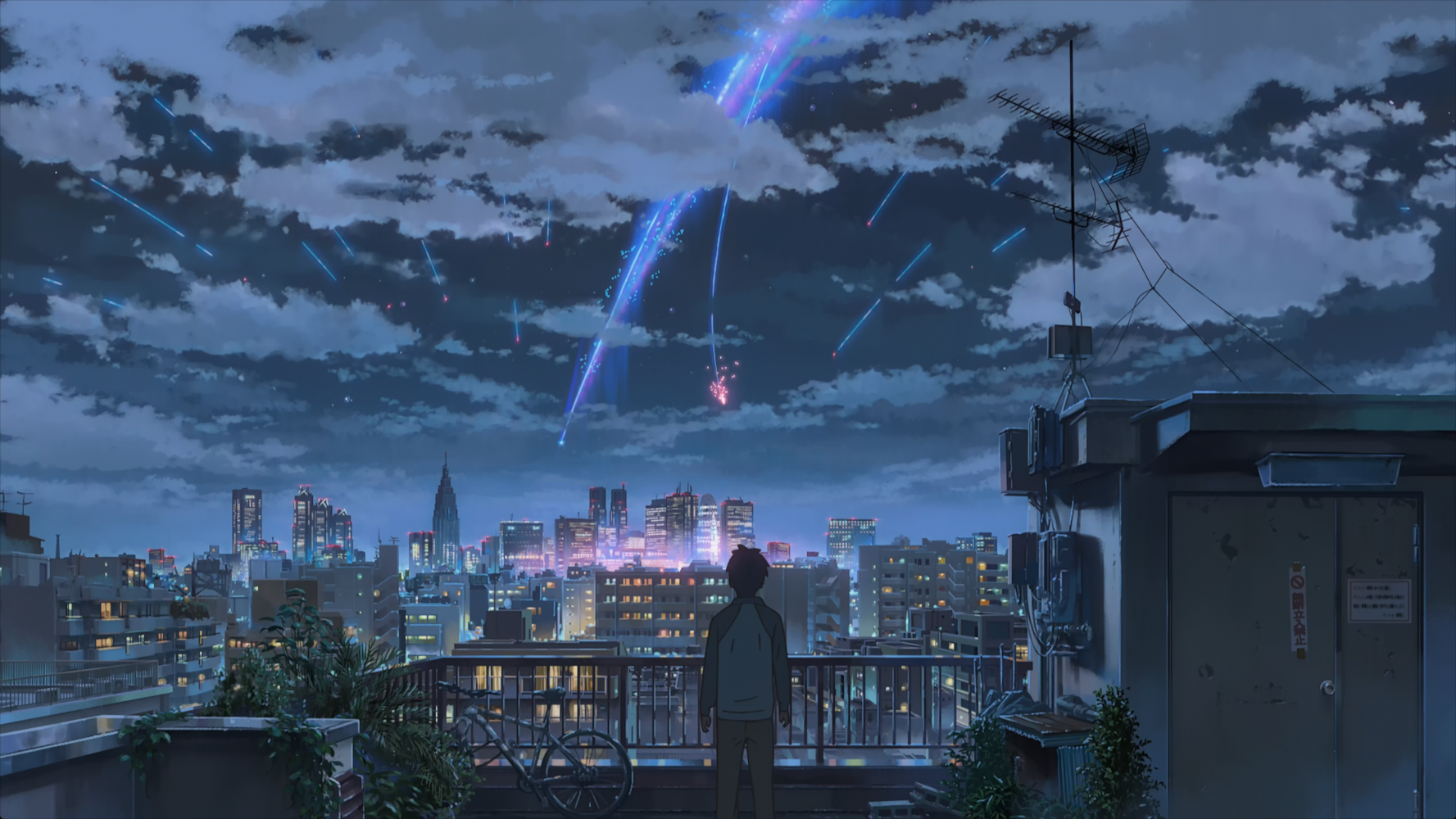
I'll get the easiest part out of the way. This movie is visually stunning. It blew my mind to look at back in 2017, and it still blew my mind watching this time around. The way the light reflects off of every surface, each shadow is carefully handled to be realistic, how the water reflects and splashes, every visual part of this movie is a treat. I told my friend that every frame of this movie could be someone's wallpaper, and that's an amazing accomplishment on the part of CoMix Wave. The amount of detail put into all the backgrounds and the minute things, like books on a shelf or the Tokyo cityscape is astonishing, and they deserve all the praise for the amount of work they put into making the story Shinkai directed pop out and come to life.
But a full-length movie can't be carried by visual style and animation alone, and once you try to analyze and think about the plot, the entire thing unravels in a gigantic mess.
The story is at its finest when it showcases the body-swapping for the first time. The slice-of-life montage shots showing both Mitsuha and Taki completely ruining each other's social, home, and work life was great, and it was the only time I truly enjoyed the movie. If it had just stuck to a body-swapping romantic comedy, I don't think my thoughts on the movies would be as mixed as they are right now. Watching them set new rules in real time was interesting, and while it would be a generic trope, it's a move that I think would've been better than the final product we got in the end.
Kimi no Na wa suffers from bloat, which shouldn't be an issue for a movie that's less than 2 hours long, but it tries to do too many things at one time, and cannot stand under the pressure of its own weight. By introducing too many plot points and clichés, it fails to live up to the body-swapping sequences, and leaves the viewer baffled and confused by the direction the story takes.
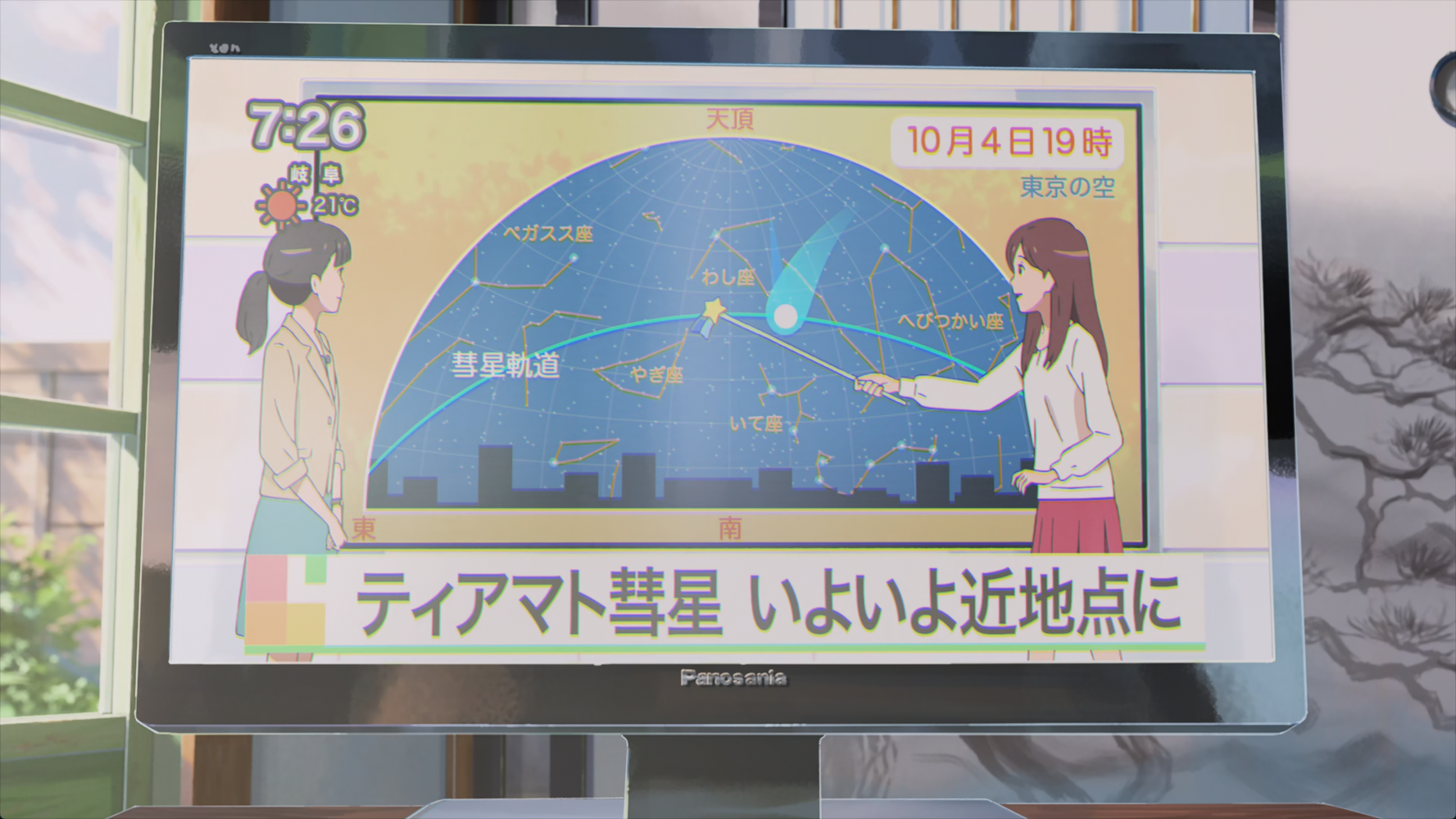
The time travel mechanics are bewildering, and even when trying to apply suspension of disbelief, the actions taken by the main characters in the movie are so mind-boggling that it's impossible not to take notice. Take the aforementioned body-swapping sequences as an example, they're thrust into an unknown situation where neither of them have a handle on what is going on, yet neither makes strides to fully understand the predicament that they're in. Using material online compiled by fans of the movie, the body-swapping continues from September 3rd to October 3rd, and during that time, neither Taki nor Mitsuha noticed that they were displaced by 3 years? We were already shown that neither character cared about making the other look not foolish in the first few days of body-swapping, so a character asking where they were or what year it was wouldn't be out of the ordinary at all. Even if the characters didn't want to embarrass each other to the point of asking where they were to their friends, context clues and surrounding information (calendars, chalkboards, cellphones, newspapers, news articles, TV broadcasts, etc), should've easily filled in these gaps in the information presented to Mitsuha and Taki. Knowing that the timeline spans a month makes it more unbelievable as well, in an entire month, neither of them would have seen or heard anything suspicious? The biggest clue to Taki however, should've been the comet approaching. A mass causality event like the Tiamat impact event would've been in the public consciousness for months afterwards, if not years. We already know Taki has a near-perfect photographic memory, as evidenced by his sketches from Itomori, so why didn't he remember the comet that killed over five hundred people?
Speaking about the memory loss issues these characters have, Kimi no Na wa relies so much on forgetfulness that it is groan-worthy. The emotional climax of the movie, Taki and Mitsuha meeting at the Itomori crater, is completely ruined by them forgetting each other names afterwards. Timeline swapping and converging were already shown not to affect memories, so why did this one specific instance lead to them to forget each other? It's a classic amnesia trope, but it's not believable in any way, especially with the rules set up by the movie, and the actions of the characters.
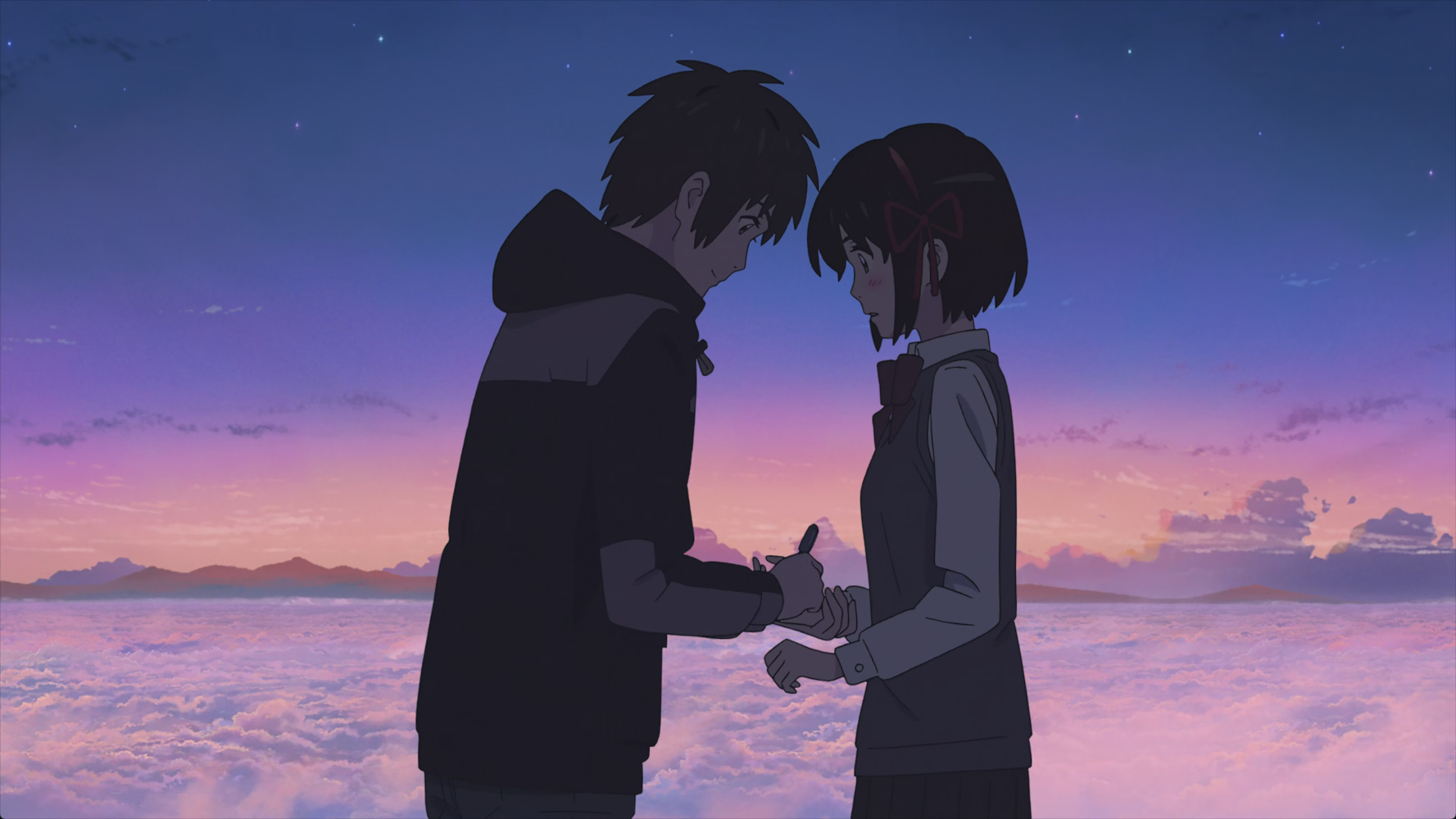
The convergence of the timelines at the crater actually shows off this movies biggest glaring flaw however, in that the romance developed by Mitsuha and Taki is completely shoehorned in. Why would these characters fall for each other without knowing one another? All Taki did was be a regular teenage boy, and grope Mitsuha while he was in her in body, and Mitsuha ruined his work relationships and spent all of his money. By all accounts, these characters should dislike each other from their previous actions, but they don't! They make a promise to each other to find each other at the crater, and the last 30 minutes of the movie (already a rushed movie!) are spent with these characters trying to find and meet each other in the new timeline. With no real character development, and no real characters to begin with (both Taki and Mitsuha were already bland main characters with little characterization), spending 30% of the runtime on these feelings is a move that I'm left unable to understand.
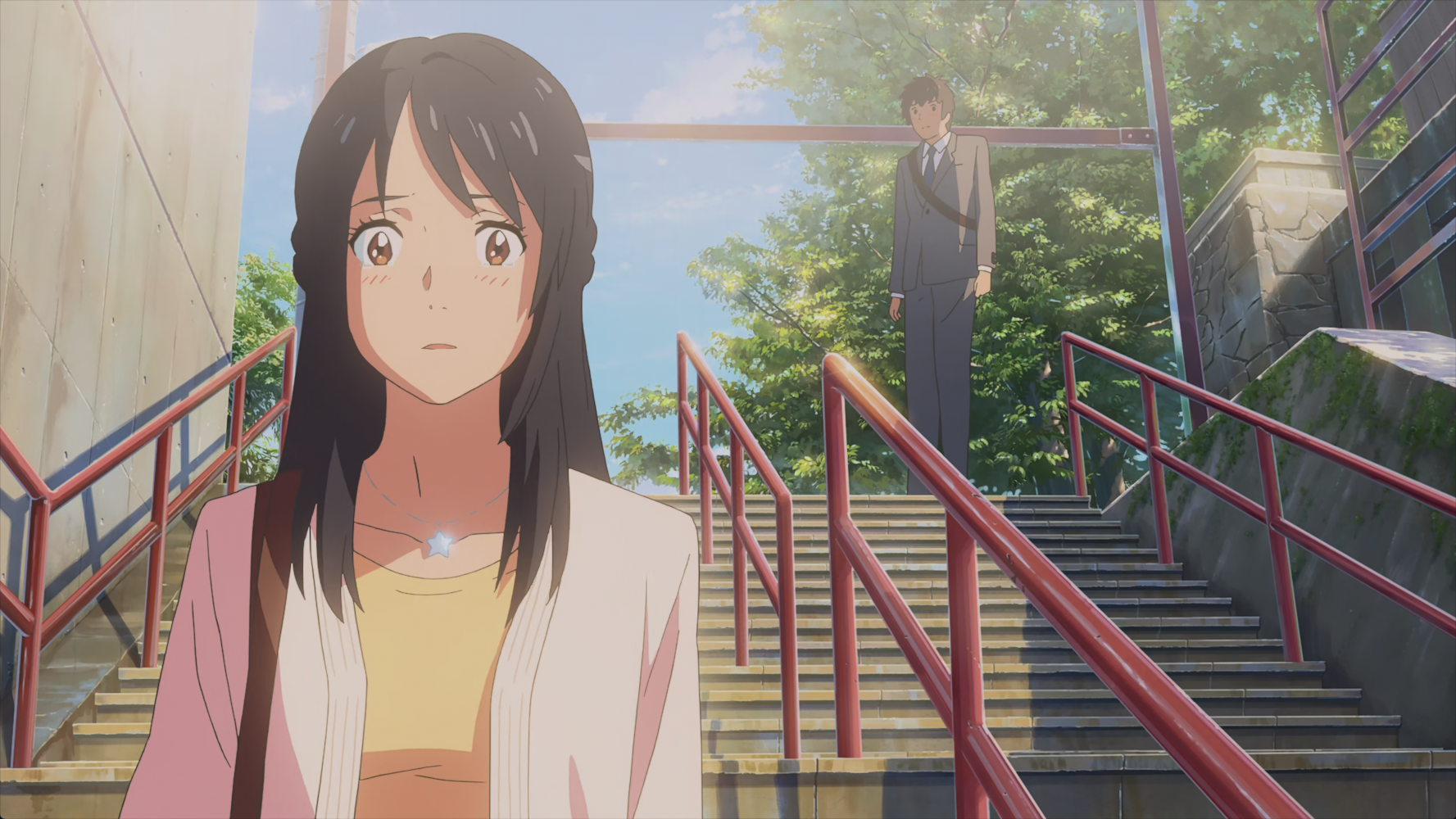
Kimi no Na wa is a movie that could have been so much better than what it was given to us. By being too ambitious and aiming too high, it misses the mark entirely with the time we're given with the movie. Given how rushed it is, I would have liked to see a story like this built up more, either through it being released as a short, 6 to 8 episode ONA, which I think could have given enough time for all the plot points to develop with a payoff more satisfying than the one we got, or as a full-length 1 or 2 cour TV anime, which would have given it time to breathe and develop all aspects of the time travel and characterizations of Mitsuha and Taki. Having to combine all of these intersecting ideas and plot points into a 1h40m movie leads it to becoming too big, and it proceeds to crush itself.
52.5 out of 81 users liked this review
