
Disclaimer
This was written by me about a year ago.
I also took multiple months to write this so be aware that there is a LOT.
In case you prefer a short version, go to the very bottom for the TL;DR version.
Also this is full of spoilers so read at your own discretion.
First words
In Love with the Villainess means a lot to me. Having followed the series since
the release of the first Light Novel in English, I have been very much up to date
with whatever was going on in the series. Of course I would never have guessed
that me looking at a random suggestion on Amazon would get me all the way here but so is fate. I have both interacted with the author and
a lot with the community. I have watched many live streams of the author
Inori Narou herself, participated in many events organized by both Inori herself and the community and eventually even created fanmade stuff myself. I have also witnessed and involved myself in many discussions when it comes to the many topics of WataOshi.
So needless to say I have a lot on my mind when it comes to this series.
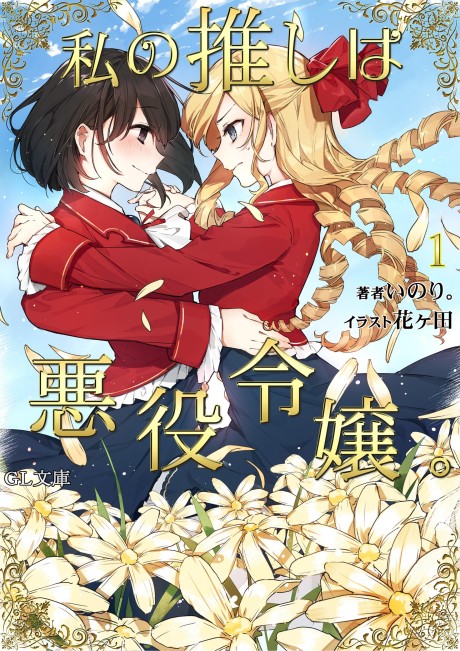
As a Yuri Isekai story WataOshi or ILTV, which going forward I will only name by
the short version, stands out among the many other stories as one that focuses
more on the characters and their relationships instead of the world setting or the
stories’ “gimmicks”. In fact it brilliantly introduces the reader into a story that at
first sets the entire magic part into the background, only to be used when
assisting the story. Structurally it is divided into 2 separate parts and 18 Chapters
which are divided into those two.
Also I won't include Part three into any of the stuff written as I haven’t read it and
don’t plan to for the time being.
Instead as a review, this is more like a love letter from me to the series that shaped a good few years of my life.

The definitely most recognized aspect of Inori Narou’s style of creating her story
is how far she plans everything in advance. There are little hints every now and
then that much later start playing a role in the big picture. Be it a conversation, an
observation or an entire scene, most things intertwine together in some way. The
same can also be said backwards, as instead of simply going forward, the reader
sometimes gets reminded of past events in the story that are looked back on to
support the current scene. My favorite example for this easily is the promise that
Claire made to Rei in the beginning as a result of their two competitions that both
in the climax of Part 1 and Part 2 respectively gets recalled as a means to add to
both moments.
Though something that ILTV struggles with is definitely the pacing. We have chapters like the first one that are very slow because of its main goal of establishing the world and characters for the rest of the story and then very fast paced ones like the entire second half of part one. Being too slow in the beginning definitely has the risk of creating the image of being an either boring or simply slow story overall.
At the same time several chapters are too fast paced and as a result can feel either suffocating and difficult to follow or single focused. Of course in ILTV’s case neither of those affect its story in a bad way. This can’t be said for chapter 17 though but that gets its own section.
For a second work of the author, ILTV definitely has a competent writing style
that’s easily accessible for everyone.
Characters

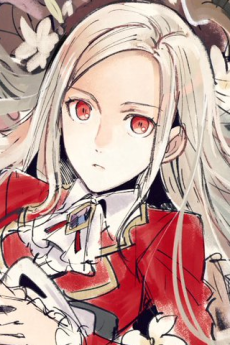









While the members of the imperial family are some of the most important
characters of part two, I do not have that much to say about both of them as well.
Philine has a surprisingly assertive and stubborn side behind her more shy
facade, which creates many interesting interactions between her and the main
duo. Her falling in love with Claire was a surprise but was never anything that felt
like a tense plotpoint because of the already fundamental relationship between
Rei and Claire. For me her only memorable moments were when she snapped
and when she got banished (more to that later).
Dorothea on the other hand is much more involved with the main plot of the story
and thus gets a bit more characterisation. She is a very stubborn, oppressive
leader who has the patience of a child. And while her backstory and reasoning
for her actions make her look different from a retrospective point of view, for me
at least it doesn’t change the main issue that her whole character has. Overall
she is simply just that, an annoying obstacle. Of course there is nothing wrong
with that, in fact Salas himself can be viewed in the exact same way. But
compared to all the well written and fleshed out characters in part one, it feels
strange that one of the most important characters of part two also has one of the
most shallow appearing personalities of the entire series. It goes so far that her
entire point as a character is just a setup for the main villain(ess) of the entire
second part. And not only that but she even gets the typical “redemption leading
to death” treatment on top of all that.
I am not going to say that the two members of the imperial family are entirely
badly written characters because that would just make me look cynical. And I did
in fact enjoy some of the scenes in which either of them played a central role
because of them specifically, like the entire Sumit or Philine’s and Rei’s
“conversation” and of course the last big battle. But considering how well all of
the other characters, including some introduced after them, are handled and
used in the story, both of them just become a set of forgettable characters in my
mind.


##TAIM
TAIM or “The Artificial Intelligence for Humankind” is one of the last characters
introduced and plays one of the biggest roles in the final acts of the story. Unable
to process or express feelings or emotions, they constantly think and act in a
rational and calculated way, so much so that they’re able to run countless
simulations for the desired results. Because of their almost cold and blunt nature
towards the other characters they make an interesting addition to the cast.
Personally I would have loved to see more of them, especially in Chapter 17 but
more to that in the designated section, but at the very least they get enough
screen time to feel relevant enough, especially in the final act. Just like the
technology introduced later, they constantly feel like a mystery.

The probably most iconic character from Vol. 5 or the last chapters in the story,
who is also known as the Demon Queen is the ruler of the demon territory. She
always appears as either emotionless or filled entirely with negative ones.
Naturally being Rei she does have feelings for Claire, even if those are not as
pure as they once were. Though still having slight feelings for her causes her to
be very hostile towards Rei, especially when seeing her close to Claire. Seeing a
version of Rei that is essentially the polar opposite to her, like the typical evil
version of a character, is definitely an interesting unexpected plot twist that shook
up the entire story when her secret got revealed. Personally I also believe that
her concept alone is one of the most interesting ideas in ILTV. Not only is she
connected to the current world that we are all too familiar with over the story but
she also has a connection to the very original one that started everything. It’s
also an interesting aspect to have Rei be a scientist originally compared to her
office worker counterpart. It would have been nice to see more of her side of
things, since we almost solely get Claire’s point of view but again more to that
later.
I am not talking about any of the first versions of the other characters of Claire and Lene because I didn't feel like there is much to be mentioned.
Topics and Themes
Rei and Claire
Of course I have to start with the main part of ILTV, the relationship between Rei
and Claire. Rarely to almost never do I see a couple whose relationship develops
as much as theirs during their story (outside of well written pure romance
stories). While the first chapter is only there to set the basic dynamic for the two,
the next chapters already give them a lot of development in how they interact
with each other. And even though it is mostly Claire that indicates any changes in
their relationship, Rei also has some slight changes that are a result of their time
spent together. Over the time Claire gets more used to Rei’s sudden outbursts
and ideas and becomes more accepting of hers while Rei gets calmer and more
sincere around Claire. (Shows more of her real personality that she tends to
hide) I loved seeing them at first just get used to being around each other to later
tackle various issues that always challenged their bond. So much so as it was
what made me fall in love with the series initially. My personal highlights for each
chapter were always both the scenes where they had a fight or argument and
likewise the ones where they made up. And it obviously is impossible to have this
segment without crediting the entirety of chapter 8 for its brilliant way of setting
the final stage of part one. Not only was Claire betraying Rei’s expectations at the
most crucial moment an emotional killer, it was something that both Rei and the
Reader were able to understand and kind of expect when thinking in
retrospective, since at that point we were very familiar with her large sense of
justice while also seeing how close she got to Rei at that time. I strongly believe
that chapter eight only works this well because of how much care was put into
the development of their relationship all the way up to this chapter.
What I like about Part two is how it uses their relationship, which reached its
peak with them now even being married, as a base to give them new scenarios
so experience together. And while the wholesome aspects like their newly found
family with their daughters are a highlight of part two, what I love is how they
overcome the many challenges as a couple instead of as individuals like in part
one. But my personal favorite aspect of their relationship being continued in part
two is seeing how they got used to each other as a romantic partner. Rei
definitely feels more open and honest towards Claire while Claire believes in Rei
much easier and more quickly and always has her in mind with her actions (also
their daughters).
And like in part one, part two stays consistent throughout all of its chapters when
it comes to their relationship.
Magic
The main reason why I consume such a large amount of fantasy novels and
anime is because I enjoy the magical aspect of them. Seeing how each author
builds their magic system and how they implement it into their world is always
interesting to see. Of course there is the classic elemental based magic system
that ILTV also uses, but the good stuff starts when unique types of magic like
extra elements and abilities come into play. ILTV does have the additional two
elements light and dark but they are mostly used as story devices. What it does
use a lot though are the later department of magic, aka the unique abilities and
also signature magics.
I love the idea of a select few people having access to a unique type of spell
which complements their already assigned element. And while we don’t get the
same for dark and light magic, it would have been nice to see some special
magic within those fields. Some that I especially love are for example the
Dominator Spell of Manaira or Time Rewind of Alter. And while I also like Claire’s
Magic Ray and Rei’s Cocytus, both get significantly downgraded throughout the
story. Also we really only get those special spells in the entire story for the most
part.
And while this is not a unique spell in itself, the Chorus Spell is a very interesting
concept. Not only is it among the most powerful spells in the story (known as of
part two) but it also gives an understandable reason why its usage is so limited in
the world. Plus the spell idea itself does sound cool because of the many
possible combinations between the two users’ elements, in the end it essentially
just becomes a large amount of magic combined instead of a specific spell type.
Though that is to be expected if potentially only Rei and Claire are able to use it.
Sadly, something that did disappoint me was how Part two didn’t deliver much
creativity on the promised magic department (even though it was advertised as
having a more magic focused story). While there were much more battle scenes
compared to part one, most were a simple matter of who had more magical
power in their attacks. Even the Chorus Spells, who were the biggest addition to
the magic system, were ultimately just a more powerful spell, making it feel more
like a typical “the bigger the greater” concept.
Lene and Lambert
Okay so it should be obvious that this topic was unavoidable when I said that I
wanted to get all my thoughts out there. The Aurousseau siblings are certainly
well introduced and do play important parts in the story, not only in the beginning
but also later every now and then. Lene is greatly involved in both Claire’s
backstory and current person, while Lambert plays a big role in the magical
development of the Bauer Kingdom. From that point of view alone they make a
great addition to the cast of characters. But that is already all the good bits I can
say about them. Not only do they introduce their love like it is on the same level of
forbiddenness as homsexuality but its involvement in the story neither makes
sense nor has any weight overall. Of course one could argue that being held
hostage or being blackmailed is a good explanation of why one would go to such
extends when they literally don’t have any other choice but not only does
Lambert give the strong impression of self motivated actions but they clearly
were never in a position where they couldn’t have simply asked for help. Again I
do acknowledge that things are easier said than done. But even then Lene being
blindsighted enough by love to betray Claire but then still worry about her right
after is more infuriating to me than any of those explanations. It could clearly be
connected to personal preferences…or the opposite in this case but no matter
how many times I went through chapter three, I would always end up being
annoyed at this revelation.
This in fact is so bad to me that it is the sole reason why I can't ever give this series a full 10/10.
The Hardships
One of my personal favorite aspects of any story is any sort of struggle. Be it an
internal one of a character or a group or a goal aspired to be reached, they make
up a very important aspect of my personal enjoyment. ILTV has those in both a
physical aspect, as well as a psychological one.
Physically even though our main duo consists of both having exceptional magical
capabilities, a high intellect and Claire with her social standing (and both of them
later known as heroes), almost all conflicts are not easily solvable through sheer
force. The exceptions for this are the Mother Slime, Lambert’s Chimera, Louie or
whatever undead thing he became), Kato, the Demon Queen and lastly TAIM’s
Chimeras. And while this does sound like a lot, one has to remember that it is
only a part of the whole list of antagonists and villains/villainesses. Because of
this it makes the reader emotionally more invested to see the characters succeed
in any situation. In fact Part 2 is very much ruthless in that aspect as most fights
are either lost or ended through a third partie’s intervention. Because of that it
makes the few times when our protagonists have a clear upper edge stand out
and feel all the more satisfying.
There are also a lot of non combat scenarios. While part one focused its main
plot on the conflict between the commoners and the nobility of the Bauer
Kingdom, the second part also uses a lot of its time for the dispute between the
Bauer Kingdom and the Nur Empire as a whole. For me the great thing about
part one was that even though Rei knew everything that there was to know about
the events regarding the upcoming revolution and its prior events, she was
unable to prevent the results and major events. And the story didn’t treat it as a
“history can’t be changed” sort of situation but rather a “things don’t seem like
she knows them to be” one. While she was able to keep things in check, she
ultimately had to rely on those other characters that she first disregarded as
simple side characters. Because of that, one of my personally most appreciated
scenes in chapter 8 is the one between Rei and Manaria, as it encapsulates Rei’s
growth through the entire first part from what she learned in chapter 4 to the fact
that she is still not quite there yet with her own conclusion. (being more honest
with Claire and herself) And while part 2 doesn’t have quite the same sense to
that type of struggle, the entire conflict between the main party and Dorothea
definitely make up for it. Instead of dealing with an entire social system, we rather
just deal with a single unmovable person, both physically and mentally.
Revolution- Lily Side (Revo-Lily)
Something interesting about the second part is the introduction of Revolution’s
spin-off title Revo-Lily, which is a Yuri themed story in the same universe as the
original game. Being even included in the overall timeline of the overall setting
makes it a very believable addition to the plot. Sadly apart from the basic
information like the protagonist and the possible romantic options, there is not
much being mentioned about the game overall like in Part 1. Of course one could
assume that the amount of side activities like playing different games on the side
or activities offered to the player like the RPG aspect of Revolution are also
present in this game. But sadly this is simply a matter of speculation, especially
since spin-off games in our world are very inconsistent on how much dedication
is being put into them, some made very well while others are treated as simple
cash grabs. If there was more emphasis put into the different possible routes of
the game (Dorothea, Hildegard and Friedelinde), I would have had to talk
negatively about one of those, but since that is not the case, I will simply look
past them as just facts used to describe a story element.
It is also interesting to think about the fact that the developers of the game gave
a cameo to Claire in this game, even though she was the Villainess of the original
game. That has to mean that she did have some sort of a popularity either within
the fanbase outside of Rei’s knowledge or on the developers side.
Part 2 Pacing Issue
While part one was phenomenal when it comes to the pacing and amount of
content for the main plot, the second one does the complete opposite. It definitely
has a solid start just like the first one but quickly tries to do too many things at
once. For one it tries to deal with the relationship between the main gang and
Dorothea, while also introducing the whole demon plot quite early. But then there
are also the newly introduced characters from the academy and church (and also
the twins). So getting right into the main plot this early not only rushes the plot a
lot, a thing that was noticeable in the second half of part one, but also takes away
any chance for the new characters to get enough screen time to feel important.
Because of that, the students, who have an entire chapter dedicated to them,
don’t even leave much of an impression both within the same chapter and
afterwards as well. And while the imperial family and those connected to them
get enough background information and characterisation, even they suffer
because at the earlier stages until the big moments in the second part.
Though the worst offender of this definitely is the entire chapter 17. The idea of
creating a background section for how things started and lead up to the current
point is great and the idea itself is something I have never seen like this before.
But fact is that it essentially got just as much content as Rei’s backstory in part
one. Considering the weight of both backstories and their importance to the
overall story, it makes sense to expect the later one to be much longer, to the
point of being able to fill most of if not an entire chapter. It does makes sense that
we only get Claire’s point of view for this, even if TAIM’s POV is also possible, but
even then the amount of time spent with them is not nearly enough to fully
explain just how the most important system, the Loop system, even got to be.
Had the author given the second part even just one additional chapter, there
would have been a lot of things that could have improved it overall. But as for
how things actually are, the second part is just full of lost potential.
The exiled Philine
One of the major plots in Part 2 was dealing with Dorothea and preventing any
more conflict, essentially creating a peace treaty between the Bauer Kingdom
and Nur Empire. Philine who as the daughter of the ruler played a central role
would obviously be involved in both the story leading up to and to the outcome of
everything itself. But it would be an understatement to say that her leaving the
story to just later appear again to resolve everything is anything but satisfying.
Since we do get an expansive flashback on just what happened to Dorothea and
what led to her ways of thinking, it wouldn’t be all that strange to also give a bit of
screentime to Philine for the time in which she is exiled. It puts a hold to her
character progression and with that her character as a whole. Seeing those
events would also have given us a slight few of what could have been part of one
of the routes in Revo-Lily, since it was stated that going up against Dorothea was
one of the options presented. And considering what gets introduced after this
part of the story, it created an even bigger sense of a rushed plot as an
afterthought.
Again just one more chapter would have changed a lot.
The Loop System
The biggest bombshell in the entire franchise of ILTV for sure is the Loop
System. It gives us a look to the very beginning of everything in the story and
what led up to this loop (aka everything from Chapter 1 until this point). Because
of it being active for countless amounts of back and forths between the scientific
and magical world we both get a feeling of the overall scale while also losing a bit
of what last bit of humanity remained from before its activation. It should also not
be a surprise that not only the creation itself but also the maintaining part are
topics that can never reach an unified moral unanimity. Myself included I am
unable to decide whether to be supportive or skeptical of the decisions that were
drawn in the project. Of course that thought doesn’t have anything to do with the
story itself but it does come up when thinking about the technological
background. The most significant part of the Loop System definitely is how it also
reshapes the beginning of the story, the world itself and also the way we look at
the overall genre of ILTV.
Once again though the entire system feels too little explained to me personally.
Of course it might be due to my inability to not grasp the information dump of
Chapter 17 but only having part of an entire chapter to a plotpoint that essentially
reshapes the entire world view of ILTV just doesn’t sit right with me.
Rei as an Isekai Protagonist
The basic idea of any isekai is that the protagonist gets put into a different world
in which they then either possess a special or great amount of magic or simply
carry around their special knowledge of things unknown to said world. By those
two simple aspects the entire genre branches into many different directions just
by the base formula alone before it specifies what gimmick to use. As Rei both
possesses the knowledge of every major event in the story around her immediate
environment, the Academy and the Bauer Kingdom, as well as has an upper
edge in magic towards most people, one would think that she belongs to those
categories.
But funnily enough ILTV does not fit in any of those isekai subcategories. In fact
things rarely go her way at all. She does succeed in preparation work and things
that happen in the background but the moment she directly is involved in a major
event, things go into a totally different direction from what she would expect.
Magic wise the same, she does have a strong level of magic and has good
control over it but most things or people she goes up against either overpower
her or are things that can’t be dealt with by simple force. This is one of the
aspects that I really enjoy about Rei’s development as she starts, like most isekai
protagonists, with some sort of ego because of the new environment but then
later gets shown that not everything naturally goes her way. And while most
people love Chapter 4 because of both its approach to the struggle against
Manaria as well as the development and conclusion of Rei’s and Claire’s
relationship, I love the chapter because it was when Rei's beliefs really got
challenged for the first time. But one chapter that executes this even better is
once again chapter eight’s climax. The scene of Claire rejecting her future with
Rei is definitely my favorite moment of part one simply because it was the first
time when Rei had a feeling of hopelessness, essentially reaching rock bottom.
And because of that low point her rising up against what everyone was setting up
just to crush it was extremely satisfying and memorable. I know just how many
times I am repeating myself regarding the struggle part of a story but again this
was my personal favorite moment of Rei not only throughout part one but the
entire series as well. Long story short, I like it when Isekai Protagonists don’t
have it too easy and have room to grow.
Lastly, something I liked about her within the story was how her increased
involvement caused those involved and especially those close to her to become
suspicious of her. Generally the protagonists never reveal that they are from a
different world, be it because of social circumstances in order to protect
themselves or those around them or simply because they take pride in being
from a unique place (or maybe because they just don’t care). So the scene
between Rei and Misha was great because it came out of nowhere (at least in
the novel because the manga teased it ahead). It’s even better because it didn’t
involve Claire at all, something that was pretty much the only time in part one.
And while she did tell Claire later as well, this scene just sticks out to me
because the bond between Rei and Misha was one of my favorites in part one.
My short summarized view of everything / TL;DR Version
Part one is peak fiction ignoring the slight issue I have with the incest shit and from my point of view is the best of Inori-Sensei’s writing.
Part two is still a good enjoyable story that expands the first part but can’t get anywhere close to its former one’s greatness.
Don't talk to me about Part 3 please
The characters are great, the world building is simple and not overly complicated, giving more room for the other elements, and the plot is very well crafted and thought out.