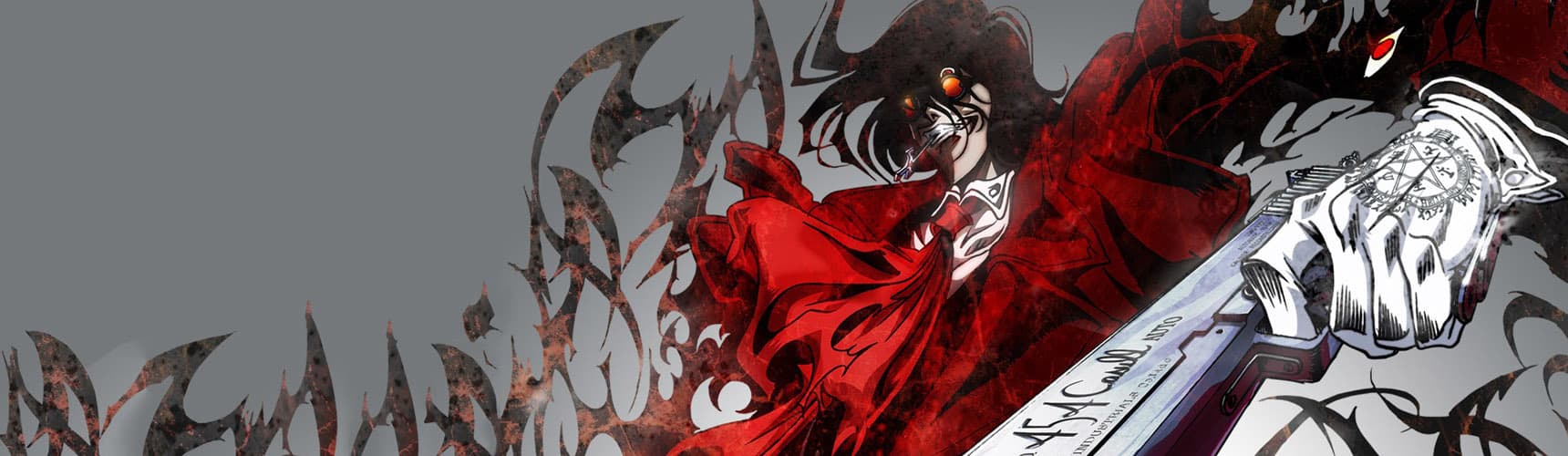
The series is enjoyable in two very different, distinct, but equal ways. One is that you can have a TON of fun watching Nazi vampires get blasted away by a vampire chick lugging around anti-tank rifles and anti-aircraft cannons, or Alucard having bloodlusted crashouts. Two is that you can really stop to appreciate the amount of character depth. Alucard, Seras, and Integra all have well-developed backstories, and they all really come together by the end to create something that, while a bit esoteric, is also extremely interesting from a philosophical standpoint. Schrodinger, who initially serves for comic relief as a Nazi catboy (god, that sounds funny to say out loud), starts off as being a pseudo-mascot for the series, but winds up having a fascinating turn.
This was one of my first anime. Hard to believe, right? Imagine, a 13-year-old boy's first exposure with Japanese media being Hellsing Ultimate lol. But, in retrospect, I'm very glad I started this way. Aside from the 'rule of cool' in basically every action scene with Alucard having some pretty stunningly grotesque visuals through his transformations, or Seras making heads fly and explode, there's a lot to appreciate when growing up and pondering how it depicts destruction and power struggles. The Nazis are able to get volunteers for vampirism on a whim because of the promise of power. With the way the Catholic Church is depicted, from Anderson being an overall force for moral good versus Maxwell's intent to eliminate all heresy, it winds up feeling like a metaphor stating that fascism and faux superiority is the Antichrist. The series doesn't operate to critique any religious faith directly, but instead how the intent of faith is used. The experience is equal parts badass and profound.
This especially comes to a head during the climax of Anderson's character arc, where his character motivation leads to him
The presentation of it all... it's Studio Madhouse, so looking back, I had high hopes that it would hold up. It's actually better than I remembered. Madhouse did an absolutely phenomenal job adapting this. The art direction is about as perfect a recreation you can get of Kouta Hirano's style. The key frames take a heavy amount of cues from Hirano's artwork, sometimes to the point I could believe they colored in some of his panels. The animation is smooth, visceral, and heavy all in one. Great stuff.
32 out of 33 users liked this review