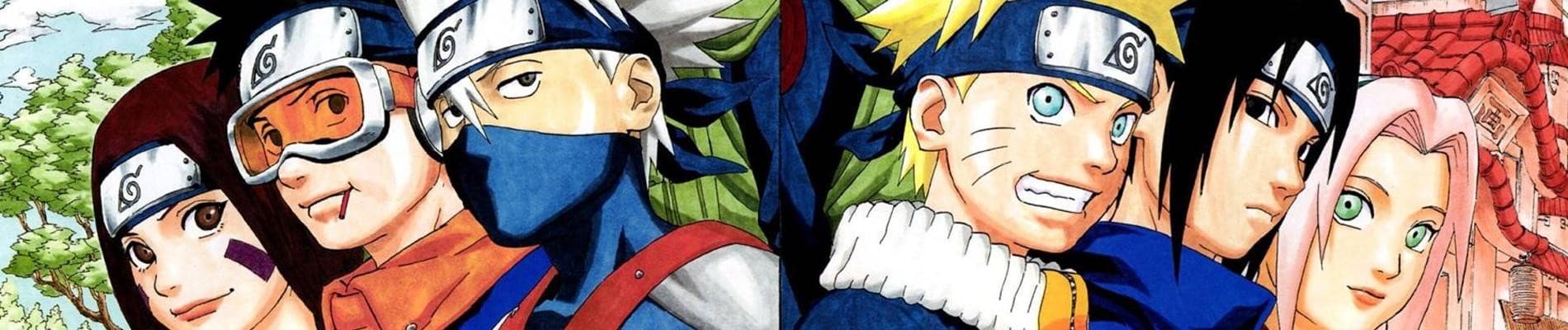
Even though Naruto wasn't my first shonen anime—Dragon Ball Z holds that spot—it was the second anime I ever got hooked on when I was still relatively new to the genre. The combination of ninjas with cool powers, surprisingly strong emotional stakes, and, most importantly, interesting strategy played a huge role in transitioning me from a casual viewer with no real understanding of anime into someone who started exploring more hardcore series.
The first season of Naruto certainly has its issues, mostly with Naruto’s initial immaturity and the anime adaptation’s excessive filler. Thankfully, those filler arcs are easy to skip, so I won’t dwell on them. That said, I’d take any of the issues from pre-time skip Naruto over the disappointment that is post-time skip Naruto: Shippuden, which I’ll cover in a later review.
Of all the major battle shonen series, I think Naruto has the best first episode, immediately establishing the emotional core and potential of the story. It introduces Naruto as an underdog who has to properly train and learn his true potential, which we don’t fully understand until much later.
While Naruto starts off immature due to his loneliness, I like how he gradually makes acquaintances and friends, including his teammates in Team 7. It’s unfortunate what happens to them post-time skip, but in season one, they serve as the core of the series, each with distinct personalities and a fair amount of character development. Sure, pre-time skip Sakura isn’t particularly useful outside of a few moments, but it’s well-known that Masashi Kishimoto seems to low-key dislike female characters, rarely giving them major moments.
Despite Naruto being set in a world of ninjas, there’s a surprising amount of magic involved. The jutsu system is well thought out, and at least pre-time skip, the series mostly sticks to its rules. There’s a good balance between physical fighting (taijutsu), magical abilities (ninjutsu), psychological warfare (genjutsu), and classic ninja tactics like shuriken, bombs, and unique weapons—big-ass swords included. Pre-time skip Naruto maintained a solid balance where anything could be useful in the right situation, and you didn’t necessarily need a strong bloodline or god-tier abilities to compete.
It also helps that the focus remains largely on a young, teenage cast. While not all of them get the development they deserve, the Chuunin Exams and Sasuke Retrieval arcs do a great job of showcasing their potential. Almost every canon arc has solid writing and pacing. Zabuza’s Arc establishes the true grit of the ninja world, the Chuunin Exams highlight the crazy variety of abilities in this universe, the Tsunade Arc dives into ninja politics, and the Sasuke Retrieval Arc explores the darker sides of being a ninja.
That said, Naruto season one has its flaws. As I mentioned, Naruto starts off pretty immature, and while he grows, he still retains a childish nature even by the end. Shippuden improves on this, but unfortunately, Sakura and Sasuke are also a bit immature in this season. However, given their age, it makes sense. Sasuke, in particular, is a decently likable character until Shippuden completely ruins him. Meanwhile, Kakashi remains the most consistently likable member of Team 7.
The anime adaptation suffered from way too much filler, which was largely a product of its time, when anime didn’t have fixed seasonal airing schedules. If Naruto had been structured with one or two core seasons per arc, the pacing would have been much better, avoiding filler altogether and potentially solving the post-time skip pacing issues, which somehow ended up even worse.
Even though the cast size in pre-time skip Naruto is reasonable, with decent character development, by the end of the last arc, you can already see the beginning of a problem—what I’d call “character screen-time creep.” Many characters introduced during the Chuunin Exams barely have any role in later arcs, which was a bad sign for how they’d be treated post-time skip. That’s a shame because the series introduces a lot of great characters, and the few that do get proper development end up having some really satisfying moments.
Overall, pre-time skip Naruto is a very solid, well-balanced battle shonen with a great world, a mostly likable cast, cool and relatively balanced powers, and a good mix of unique magical abilities alongside actual ninja-like strategy. The villains are memorable, the arcs have great pacing, and the progression makes it clear why this series became so popular.
It’s just a shame about all the filler—and that post-time skip Shippuden ruined so much of what made the pre-time skip era so good.
21.5 out of 24 users liked this review
