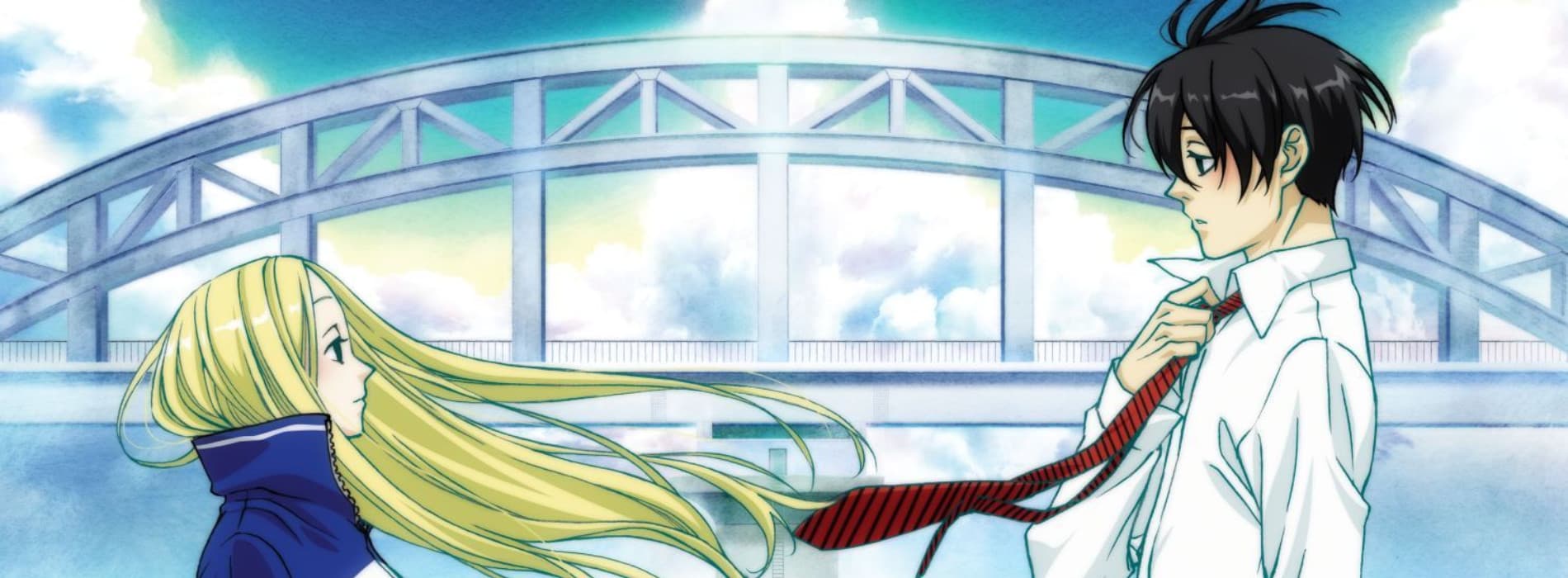


At its core, though, Arakawa Under the Bridge is more than just its bizarre premise. It’s a story about self-discovery, about stepping out of societal expectations, and about learning what truly matters in life. Kou, who once lived a rigid, success-driven life, is thrown into a world that defies logic—but in doing so, he starts to understand himself and others in ways he never imagined.
A Cast of Lovable Weirdos
One of the greatest strengths of Arakawa Under the Bridge is its characters. The manga is filled with an unforgettable cast of misfits, each with their own quirks, histories, and oddly endearing philosophies on life.

Not one character felt unnecessary with the manga taking its time to develop each of the characters. Each of these characters felt unique with their distinctive charms and no matter how exaggerated they seem, brings something meaningful to the story. Through their antics, Arakawa Under the Bridge cleverly critiques rigid social norms, highlighting how embracing one’s individuality can lead to true happiness.
Comedy That Hits Different
The humor in Arakawa Under the Bridge is what makes it stand out. It thrives on the absurd, constantly throwing situations that defy logic and expectations. Whether it’s Kou desperately trying to understand Nino’s “Venusian” customs, the Mayor forcing him into bizarre tasks as “initiation,” or Sister giving a sermon while casually brandishing a machine gun, the manga never runs out of ways to surprise and amuse.

But what makes the comedy work so well is how it’s woven into the characters’ relationships. The interactions feel organic, no matter how ridiculous they get, and the humor never overshadows the emotional depth of the story. There are moments where the jokes land so well because they contrast with the rare but powerful sentimental moments—where characters reveal their vulnerabilities in the most unexpected ways.
Art That Matches the Madness
While Arakawa Under the Bridge doesn’t rely on overly detailed or hyper-stylized art, its simple and expressive style is perfectly suited to its tone. The character designs are clean and memorable, with each character’s exaggerated expressions adding an extra layer of comedic impact. The minimalistic backgrounds and framing choices often enhance the humor, making punchlines land even harder.
That said, the manga also knows when to shift its tone visually. Some panels are surprisingly atmospheric, using soft shading and detailed environments to capture the more introspective and emotional moments. This contrast between absurdity and sincerity is a big part of what makes Arakawa Under the Bridge so effective.
From Absurdity to Heartbreak
From the very beginning, Arakawa Under the Bridge thrives on surreal, absurd humor. It throws logic out the window, creating a world where a man in a kappa suit rules a riverside community, a muscle-bound ex-soldier runs a church, and a little girl can be more terrifying than the mafia. Every chapter is packed with bizarre interactions and hilarious nonsense, making it easy to believe that the series exists purely for comedy.
But beneath all the chaos, there’s always been an undercurrent of something deeper—something that lingers in the background, waiting for the right moment to strike.
And when it does, it hits like a truck.

For a series that spends most of its time defying logic, its final act is brutally honest. It doesn’t sugarcoat the fear of leaving behind what makes us happy, nor does it ignore the pain of facing a future we can’t control.
Final Thoughts – A Must-Read Experience
Reading Arakawa Under the Bridge was an experience unlike any other. It’s one of the most charming, hilarious, and unexpectedly touching manga I’ve ever read. Over 400 chapters, I laughed at its absurdity, grew attached to its bizarre yet lovable characters, and, by the end, found myself unexpectedly emotional. What started as a surreal comedy slowly unraveled into something deeply introspective, reminding me that even the strangest places can hold the most profound truths.
This series took me on a journey—one filled with chaos, warmth, and, ultimately, a bittersweet realization about change and belonging. And as I turned the final page, I wasn’t just saying goodbye to a manga; I was saying goodbye to a world that had become unexpectedly meaningful.
