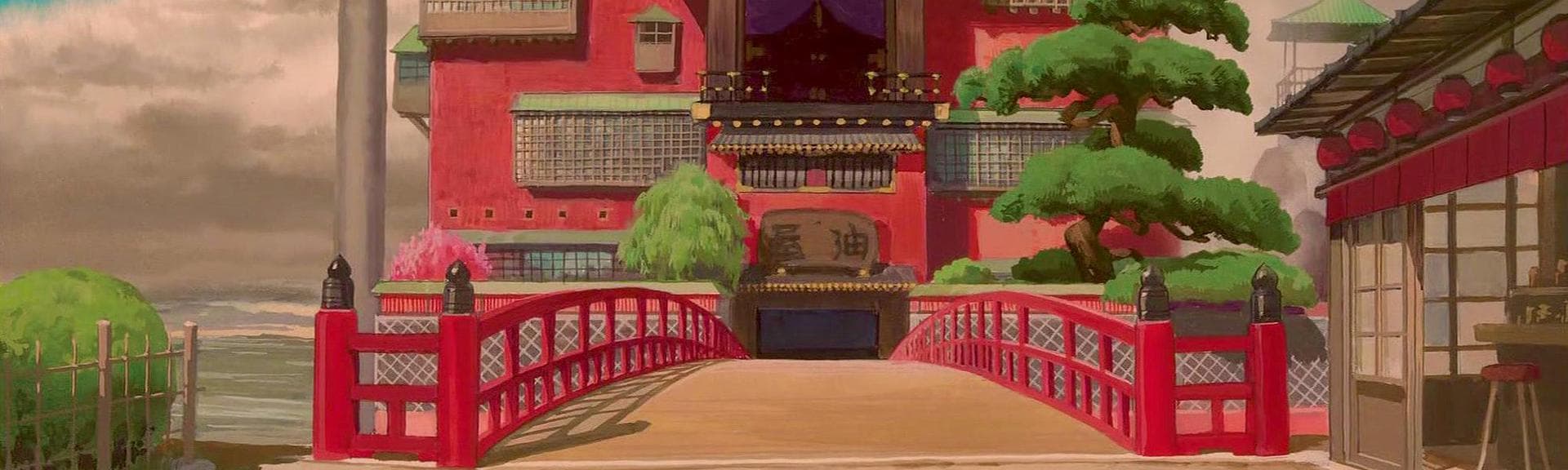

_Spoilers for the film. TL:DR, go see it if you somehow haven't already. It's great. _
As previously mentioned, I never grew up with Studio Ghibli films, so my experience with Miyazaki animes are not based in any childhood nostalgia, and instead come from more recent viewings of My Neighbor Totoro and The Castle of Cagliostro as an adult. That being said, its hard not to develop a kind of understanding of Miyzaki's style through pure cultural osmosis due to his influence on the industry as a whole, and while watching Spirited Away, even I, a relative newcomer to anime, could see the marks he had left behind.
Over a decade after Totoro, much has changed and much has also stayed the same. Like Totoro, Spirited Away thematically deals with concepts of environmentalism, the interaction between humans and nature, and most prominently, a bunch of mythological Shinto creatures running around all over the place. The film oozes creativity and has the courage to let itself be odd and magical for the sake of it; the world in which Chihiro finds herself in is strange and doesn't make sense, and there is a mystery and wonder that comes from the story never bothering to explain why or how most things are the way they are. It's the kind of fantastical and fun worldbuilding that can be hard to get away with outside of surrealist narratives. I also like how the spirit realm kind of works as a parralell to Chihiro's life at the beginning of the film; she's moving to a new place and isn't really excited about having to adjust...only to end up going someplace new where she has to deal with a lot more than just a new school.
Spirited Away also seems to be gesturing towards anti-consumerism ideals or at the very least anti-greed ideals. The obvious examples here are how the plot is put into motion by Chihiro's parent's gluttony for food that isn't theirs turns them into literal pigs, or how the bathhouse spoils No-Face with food for his riches, leading to catastrophe. This is not to mention the characterization of Yubaba as gem collecting, industrial business owner and how she is contrasted with her twin sister, who lives in a humble swamp shack and is shown to be generally good. While the through-line was a little unclear to me, it also seems like Chihiro's heroism comes from the fact that she gives the herbal...you know that green ball thing she gets from the water spirit to Haku and No-Face to treat their ailments, even though it is implied that it has the power to return her parents to normal; Chihiro decides to put the needs of others before her own desires.
The film looks amazing, but you knew that already. What's most interesting to me about it, is that comparing it to Totoro the actual art style doesn't seem too different or updated, it more just seems like everything from the line art to the animation has been refined to look cleaner. Not a bad thing by any means; it makes for an interesting visual flair of 70-80's aesthetics aided by early 2000's technology.
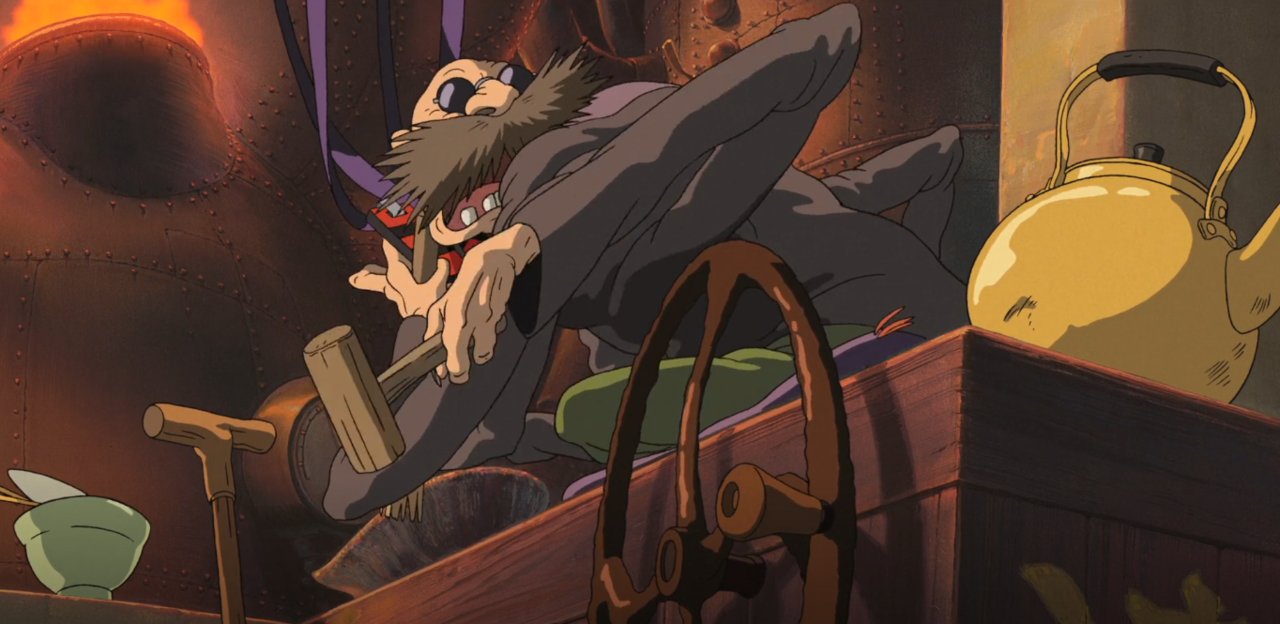
My favourite character was Kamaji; he's not a huge part of the story but I think his role as the boiler room guy and chaperone to an army of dust bunnies for this hyper-complicated bathhouse is a rare sight into how if we did ask for answers from Spirited Away they would be more confusing than the questions. Though for the most part I think I just like his arachnid Dr. Robotnik character design. And he's a sweet guy underneath it all.
I really enjoyed Spirited Away. Of the Miyazaki films I've seen (which isn't saying much, it's now only three) it might just be my favorite. I'll never be a kid again, but this film did inspire a smile in me, a kind of wonder for worlds unseen and unknown, a desire to think creatively and beyond the scope of how stories are usually told. I'd recommend it, but I bet a lot of you have already seen it.