The idea of the “deconstruction of mahou shoujo” is often discussed when analyzing this anime genre. Bishoujo Senshi Sailor Moon, Princess Tutu, and Puella Magi Madoka Magica are frequently cited as works that subverted the conventions of mahou shoujo. Sailor Moon was a milestone in the history of mahou shoujo, setting a new standard for the genre, but I believe the series goes beyond mere deconstruction. Sailor Moon is a love letter to Majokko, paying homage to the past of magical girls while reshaping the genre.
The first magical girl anime was Mahoutsukai Sally, released in 1966, which followed the daily life of Sally, the witch princess of the Magic Kingdom, as she tried to live like a normal girl in the human world, all while keeping her magical powers a secret. In 1969, Himitsu no Akko-chan premiered, adapting a 1962 manga. The story revolves around Atsuko Kagami, a regular girl who receives a magical mirror from the queen of the mirror kingdom after performing an honorable act. With this mirror, Atsuko can transform into whatever she desires. Unlike Sally, who is a witch, Akko needs an external tool to use magic, her mirror. Both Mahoutsukai Sally and Himitsu no Akko-chan use magic to resolve everyday situations. These two anime helped define key mahou shoujo tropes, such as the first transformation sequences and the presence of a magical companion who grants the protagonist her powers.
Following this foundation, mahou shoujo works in the 1970s adhered to a certain formula: the protagonist would receive magical powers, allowing her to transform and solve daily problems. Magic was used for personal matters and always had to be kept a secret. In most cases, transformations involved changing outfits or becoming an older version of oneself. Cutie Honey, released in 1973 and created by Go Nagai, incorporated elements of Majokko but was aimed at a different audience. Cutie Honey is actually Kisaragi Honey, an attractive android who studies at a Catholic school and, when necessary, transforms into various types of women to fight against Panther Claw, the evil organization that killed her father. Cutie Honey used transformation sequences to emphasize eroticism in mahou shoujo, presenting the protagonist as an alluring woman who wields her femininity as a weapon. This anime drew a new audience to the genre through its use of eroticism, comedy, and violence.
In 1982, Mahou no Princess Minky Momo premiered, featuring Momo, the princess of the Land of Dreams, who is sent to Earth to help humans believe in fantasy again in order to save her kingdom. Momo uses her powers to assist those in need, primarily through her ability to transform into any adult she wishes to be. Influenced by Minky Momo, mahou shoujo anime in the 1980s focused on transformations into adult versions of the protagonists, reflecting the natural curiosity of imagining oneself as an older person.
During the 1980s, Studio Pierrot released four mahou shoujo anime that followed this trend. Mahou no Tenshi Creamy Mami, released in 1983, starred Morizawa Yuu, a ten-year-old girl who gains magical powers after encountering aliens. When her transformed self is accidentally discovered by a talent agency, Yuu leads a double life as both a regular girl and a famous idol. Similar to Minky Momo, Creamy Mami uses her powers to help people or even other aliens. Following Minky Momo’s success, Mahou no Yousei Persia (1984), Mahou no Star Magical Emi (1985) and Mahou no Idol Pastel Yumi (1986) were released, all featuring protagonists who transformed into older versions of themselves. Between 1986 and 1987, two OVAs were released that united the protagonists of Pierrot’s four Majokko series. In the second OVA, Majokko Club Yoningumi, they must fight together to defeat a monster, forming the first mahou shoujo team.
Bishoujo Senshi Sailor Moon premiered in 1992, directed by Junichi Satou. The anime adapted the manga of the same name, created by Naoko Takeuchi. Drawing inspiration from Majokko and tokusatsu series, Takeuchi created a team of magical guardian girls who battle evil. The influence of tokusatsu is strongly present in Sailor Moon, both in battles and beyond. Sailor Moon revolutionized the traditional mahou shoujo formula, putting an end to the peaceful days of magical girls. After Sailor Moon, the destiny of a mahou shoujo was to fight.
Tsukino Usagi is the protagonist of Bishoujo Senshi Sailor Moon, a clumsy and airheaded fourteen-year-old girl who is also cheerful and dreamy. After saving the cat Luna from an accident, Usagi learns from the talking feline that she is destined to be a warrior of love and justice: Sailor Moon. Using the power of the Moon Prism, Usagi transforms into Sailor Moon in an effort to recover the Silver Crystal and find the princess of the Moon Kingdom. Throughout the anime, Usagi battles numerous villains who seek to exploit the fragile hearts of humans to harvest energy for the Dark Kingdom.
The villains of Sailor Moon consist of Queen Beryl, a servant of Queen Metalia, along with her army, which includes four male commanders (Jadeite, Nephrite, Zoisite, and Kunzite) and numerous monsters. Throughout the series, Queen Beryl sends her minions to collect human energy and search for the Silver Crystal in order to revive Queen Metalia and conquer everything. In the first arc of Sailor Moon, the villains’ energy-harvesting schemes are often tied to human desires and insecurities. For example, in one episode, Jadeite opens an academy where people exhaust themselves in pursuit of the perfect body.
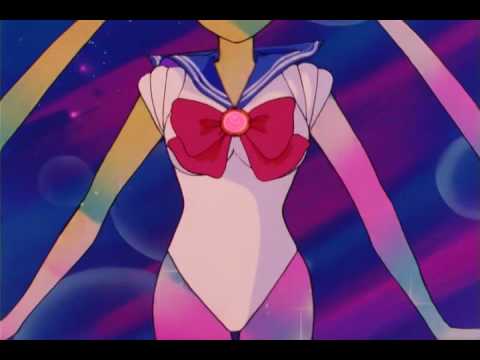
Bishoujo Senshi Sailor Moon is a profoundly feminine work. Many episodes revolve around the characters' concerns with their appearance, romantic troubles, or trends. The concept of guardian sailors in Sailor Moon celebrates femininity, these guardians fight evil in high heels, with painted nails, wearing earrings and tiaras. The emphasis on nails is particularly striking, as transformation sequences prominently showcase them changing from natural to polished.
The anime’s direction is fantastic, adding depth and personality to the characters. The soundtrack and visuals play an essential role in this. It is impossible to imagine Tuxedo Mask’s entrance without the iconic rose falling to the ground and his gallant theme beginning to play.
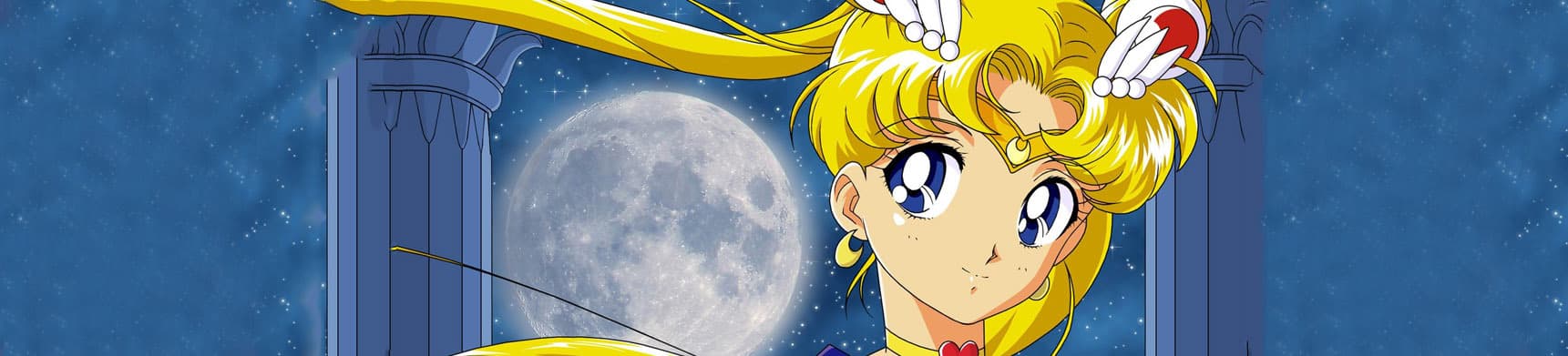
The anime pays great attention to detail, particularly in its visual composition. In several scenes, Sailor Moon is framed with the Moon in the background, reinforcing her connection to the celestial body and her identity as a lunar princess. Symbolically, the Moon is associated with femininity and emotions, elements that are reflected in Usagi’s own personality. The Moon is always present in the background when Usagi conjures her powers, symbolizing the magic that Sailor Moon wields.
In the first episodes, Usagi doesn't seem to care much about the situation she is in. She doesn't actively seek out the villains, instead, she is drawn to these energy collection points just like everyone else. Gradually, Usagi becomes aware of her responsibility as a magical warrior. In the midst of this, it is very difficult for Sailor Moon to defeat the villains on her own. Due to Usagi's clumsy and crybaby personality, she often ends up crying or getting beaten by the villain for a while before managing to get back up and fight. This moment, when Sailor Moon truly fights, usually happens after the appearance of a very important character in the series: Tuxedo Mask.
Tuxedo Mask is a gentleman. He doesn't use weapons, he uses roses. In most episodes, Tuxedo Kamen appears during battles to encourage the sailors to fight; he serves as a great moral support. He rarely saves the day by fighting the villains himself; instead, he usually acts behind the scenes. However, thanks to him, the girls, especially Usagi, get their chance to shine.
The anime consists of five story arcs: four involving the commanders of the Dark Kingdom and the final one being the ultimate battle between Sailor Moon and Queen Beryl. In the first arc, Sailor Moon fights the villains alone until halfway through, focusing on Usagi's daily life and her journey to becoming a true warrior. As the episodes progress, Sailor Mercury and Sailor Mars join the team, helping Sailor Moon put an end to Jadeite’s plans.
The second arc introduces the villain Nephrite, who grants powers to people, slowly corrupting them. Usagi's friend, Naru, who is not part of the warrior group, plays a very important role in this arc, which particularly caught my attention.
In the third arc, the villain Zoisite uses a crystal to revive the seven legendary Youma. To help combat this threat, Sailor Jupiter joins the team. This arc features my favorite Sailor Moon episode (Episode 31), which focuses on Luna’s daily life.
The fourth arc serves as a prelude to the finale, introducing Sailor Venus as the last member to join the group, forming a complete quintet. There is a lingering tension throughout the arc, a sense that danger is near, which is highlighted by episodes where Sailor Moon’s identity is almost revealed.
The final arc is a key moment for Usagi’s development. It is when she must act without relying on others to accomplish what needs to be done. However, even when separated, she still has the support of those she loves. The ending of Sailor Moon is bittersweet, it is not a sad ending, but it is not entirely happy either.
The dynamic between the five guardians in the anime is very enjoyable. Ami, or Sailor Mercury, is the most intelligent member of the team but struggles to form bonds due to her dedication to studying. As she interacts with her companions, her kind and responsible nature becomes more evident.
Rei, or Sailor Mars, is a serious and elegant girl, but she gets easily irritated when she’s with Usagi. Despite their frequent arguments, they genuinely care for each other and share a beautiful friendship.
Mako, or Sailor Jupiter, may seem intimidating due to her height, but she is actually very feminine and falls in love easily. However, she is always the first to jump into a fight when necessary.
The last member to join the group was present in the anime from the start and served as an inspiration to Usagi. Minako, or Sailor Venus, appears to be the ideal leader, responsible and experienced in battling evil. However, as the story progresses, she reveals a more playful and silly side, much like Usagi. Besides them, there are Luna and Artemis, the guardian cats who granted them their powers. Both deeply care about the girls' well-being.
As I previously mentioned, Bishoujo Senshi Sailor Moon was not merely a new take on mahou shoujo, it was a heartfelt love letter to the genre. The dedication to its production is evident in every detail, from its elaborate transformation sequences to its iconic soundtrack, which perfectly encapsulates the essence of the series.
In the classic anime, Usagi has three main abilities: transformation, purification, and disguise. Her disguise power allows her to take on any desired form, closely resembling the classic transformations of Majokko series. Interestingly, in most of her transformations, Usagi becomes an older version of herself, which directly references protagonists from earlier anime, such as Minky Momo. This detail, besides being a beautiful tribute to the mahou shoujo genre's past, reinforces Sailor Moon's connection to its predecessors.
In recognizing these references and symbols throughout the series, my appreciation for Sailor Moon deepened. It honors the legacy of mahou shoujo while simultaneously redefining it, and this blend of tribute and innovation is the true crowning achievement of Bishoujo Senshi Sailor Moon.