
Katanagatari
a review by EndymionK
a review by EndymionK

CHEERIO!
Young Shichika Yasuri is the sole heir of Kyotōryū, a bladeless “sword style” that turns the user body into an invincible weapon. Living on an island with only his frail older sister, he is a sheathed, useless blade that has never been drawn into real battle. This all changes when the scheming Togame comes looking for the Kyotōryū heir: on behalf of the Shogunate, she needs his services to find the legendary twelve Deviant Blades. Forged by eccentric swordsmith Kiki Shikizaki, these weapons are so powerful that whoever gathers them all could become an unstoppable force.
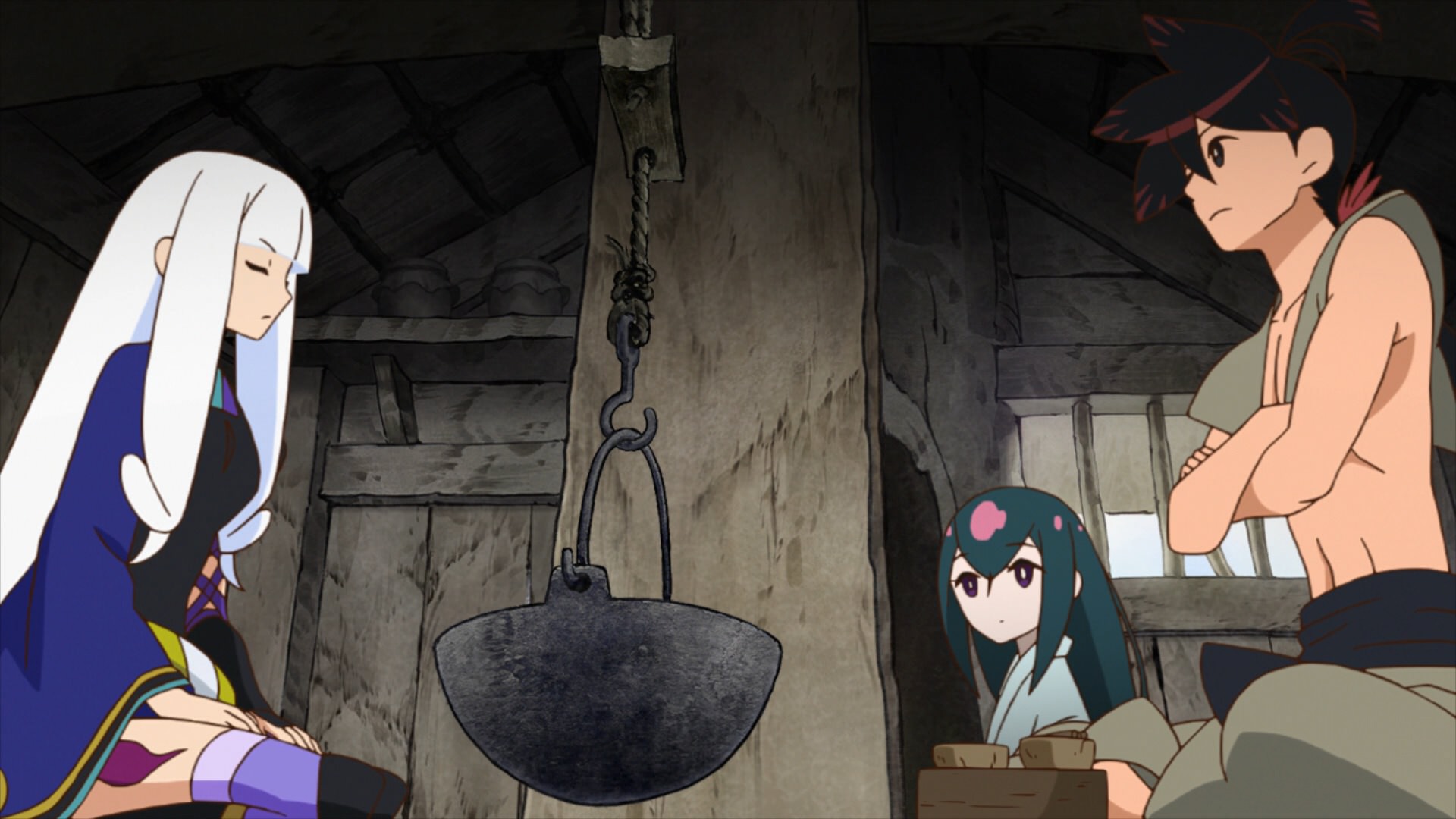
But Togame isn't the only one hunting them. Very soon the hunt turns into a deadly race, where many are drawn into conflict—each driven by personal ambition, duty, or obsession.

Katanagatari is one of those works that just stays with you long after the credits have rolled, as you really need to process all of its imagery and messages. Nisio Isin is famous for the narrative depths of his works and for the curveballs he throws story-wise and this is no exception: almost nobody is who or what they initially seem and all characters have hidden sides that get revealed during the series. And it is its characters that are the main focus of the show: every episode introduces one of the Deviant Blades’ owners, each an interesting and often quite unhinged individual that pushes to the limit the skills, brains and spirit of both Togame and Shichika.

The Deviant Blades themselves are as much of a character as their wielders,each more unique than the previous and quickly straining the definition of the very concept of “blade” itself as they come up in more and more bizarre forms the more the story goes on (I’ll avoid spoilers—they’re a joy to discover on your first watch).
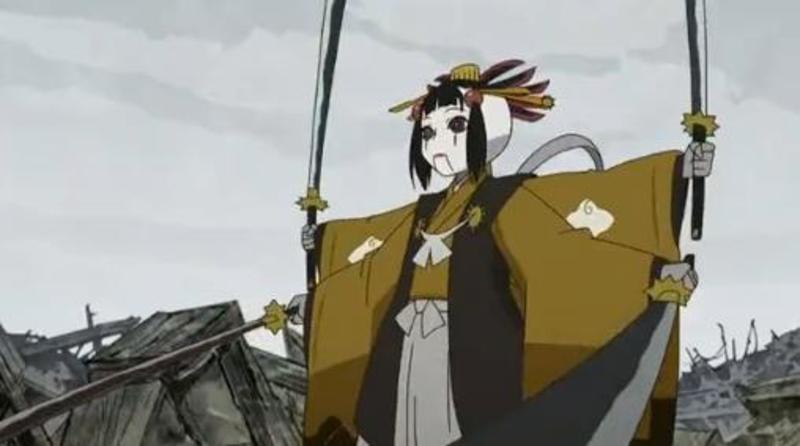
Equally unique are the main other contenders for possession of the Blades, the animal-themed Maniwa ninja clan: both silly looking and intimidating, they greatly add to the setting and as the story goes on they prove to be a both darkly and hilariously down-on-their-luck bunch that still maintains a menacing presence over the plot, especially with their more powerful members.


Katanagatari uses a unique stylization of its characters that distinguishes it from all other works. Both essential and elegantly detailed, it completely throws any pretense of historical accuracy out of the window: each character wears their essence in their looks,as every detail tells something of who they are, from their clothing down to the shape of their pupils. It's bold and colorfoul and contrasts beautifully with the show’s darker themes and philosophical moments, to the point it’s hard to imagine the story working as effectively in any style other than Take’s distinctive artwork.

The animation work is fluid and beautiful, with no lack of interesting shots and masterfully paced scenes. It’s definitely top tier.
Watch Katanagatari if
One of my favorite aspects is Katanagatari's use of a trope I call: “The Precisely Numbered Bizarre Swordmasters Path to Enlightenment”—a.k.a. “The No More Heroes Formula.” By this, I mean stories where the protagonist grows by confronting a series of weird, isolated opponents—each a kind of spiritual “gate” they must pass through to understand themselves and the world (which I know is basically the shonen formula of stronger enemy > improvement > repeat, but I feel it is different enough in execution and setup to stand as a different trope).

The other main spotlight for me was the dynamic between Shichika and Togame, that starts as make believe love and end up being so much more meaningful and not necessarily only in a romantic sense. I am a sucker for nuanced character relationships and Katanagari delivered abundantly for me on that side.

27 out of 27 users liked this review
