Introduction
___Weekly Shonen Jump_ & Jump+: An Evolving Medium and Industry__
Today it is easy argue that in most of the world, all entertainment has shifted to digital. South Korea and China’s novel and comic industry has shifted to digital, with the major medium defining titles from either country, such as Solo Leveling (2016) and Heaven Official’s Blessing (2017) being originally published as web novels before being adapted as web comics designed around vertical scrolling on smart phones. Japan however in stark contrast to all of this, still has a very strong physical market. Magazines, beyond just manga, from fashion and lifestyle magazines aimed at men and women, to salacious magazines focused on female models, continue to be very popular purchases from convenience stores. Novels, manga, and self-help books also continue to be very popular purchases physically for reading on their long commutes. But there has been a very slow shift to digital to meet changing demands not only in Japan but in the rest of the world.
Physical releases the way they always have been is by far the focus of the Japanese entertainment industry, but in the wake 2011 Great East Japan earthquake and tsunami, a digital version of Weekly Shonen Jump was published to great success, leading to them work toward the creation of what is now known as the Shonen Jump+ web and mobile platform, not to be confused with the later western platform, Manga Plus, which since 2023 all works published on the Japanese Jump+ would be simultaneously published in English on this platform. At launch, Jump+ had little in the way of hard-hitting exclusives, but publishing a digital version of the magazine, put it in line with their ambitions in the United States, as at this time, the American Shonen Jump magazine was a direct digital analog to the Japanese Weekly Shonen Jump.
Jump+ began to exhibit laxer restrictions around explicit content, as can be seen in /manga/87170/fire-punch and /manga/87260/worlds-end-harem and in 2019, the release of /manga/108556/spy-x-family brought in more female readers, all of which introducing a body of work that can appeal not only the typical audiences of shonen manga and Weekly Shonen Jump house style, and can bring in a wider audience and explore ideas and themes hitherto uncommon in the magazine. Because of these reasons, for me personally the works in Jump+ are by far the most interesting things to come out of Shonen Jump brand, and even if it remains to be seen new heavy hitters in the magazine will allow it to compete against competitors from within the country like /manga/118586/frieren-beyond-journeys-end and outside it like /manga/105398/solo-leveling what Jump+ puts out is so interesting (regardless of quality) that it signals a change in what it even means to be “shonen manga” in a new era, beyond the Super Saiyans of old, which is a question beyond the scope of this review.
What‘s Hell’s Paradise?
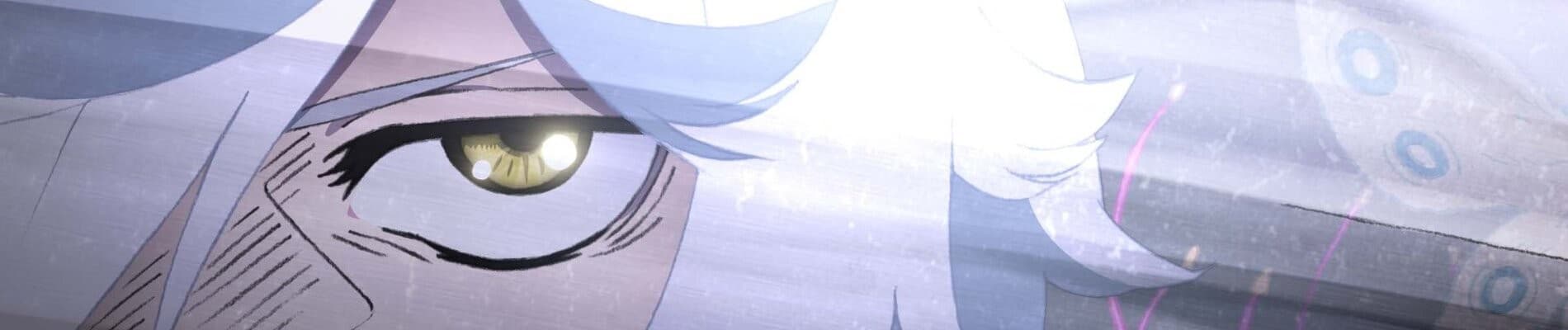
Hell’s Paradise by Yuji Kaku, a former assistant of Tatsuki Fujimoto (/manga/87170/fire-punch /manga/105778/chainsaw-man ), serialized in Jump+ from 2018 to 2021, where it was the most popular series on the platform in 2018. Hell’s Paradise can be part of a larger zeitgeist of shonen manga based focused on demonic creatures and powers, which are represented by the mega hits of /manga/87216/demon-slayer-kimetsu-no-yaiba /manga/101517/jujutsu-kaisen and /manga/105778/chainsaw-man which I’ve previously finished in some form. I’ve read all the manga for the former and watched all the anime for the latter two. I generally have mixed feelings about all them, enjoying elements and finding other elements to be boring to terrible, with my favorite of all these being /manga/105778/chainsaw-man but I’m due for a rewatch or read through of the manga to consolidate my thoughts on its weird elements and other things that didn’t make much sense before the release of the movie later this year. Because I already had all these to try and am not that into battle manga in the first place, Hell’s Paradise fell by the wayside, but I’m glad I finally gave it a shot. I don’t think I’m alone in this since Hell’s Paradise was nowhere near as successful as these and continues to face allegations that its studio, MAPPA, shafted it and gave it terrible animation. The top reviews on this site are negative ones, and since I really enjoyed its unique elements and compared to its contemporaries, the focus of the story, and the thematic elements, I hope to spread why people should give this series a shot.
Plot
Hell’s Paradise takes place during the Edo period of Japan, a time of peace following a time of war and division, which is juxtaposed with the events of the story. A ninja known as Gabimaru the Hollow,for his apparent lack of emotion,is captured on an assassination mission and sentenced to execution by the Shogun.However, when nothing seems to be able to kill him, he and several other death row criminals are given the chance to work and fight for their freedom. The Shogun wants to obtain an elixir of immortality from outside mainland Japan on a remote island off the coast, but due to the immense danger, he decides to send death row criminals with a samurai executioner each to ensure the job is completed. Yamada Asaemon Sagiri (eastern name order), the sole female executioner of her clan, decides to pair herself with Gabimaru, and thus begins their perilous journey.
Characters
Gabimaru despite his title is not lacking in emotion and resolves to return to his wife back home. He struggles with what it means to be strong or weak because of this, and he starts out rationalizing his love for his wife as weakness and does not act true to himself. Sagiri similarly struggles with strength and weakness as she is not only the only female samurai executioner of her clan and constantly experiences (period accurate) sexism because of this, but she just plain scared. She’s too scared to kill. She’s unable to assume the burden of the lives she takes. The two develop a strong bond from the very beginning due to their similar struggles and they push each other’s development forward.
In the face of Japanese fiction and society that doesn’t value loyalty to one’s partner enough in my opinion, instead choosing to believe going to brothels aren’t infidelity, and create a large garbage heap of fiction for the sake of cuckolding fantasies, such as /manga/99943/rentagirlfriend I found this main character’s motivations to be extremely refreshing and something that I personally could really root for, much like Shirou Emiya’s drive to protect Sakura Matou in the Fate/stay night the Movie: Heaven’s Feel trilogy (2017, 2019, 2020). Sagiri’s struggles being based in her insecurities and the nature of her sex I found to be very realistic, interesting, and tactful. In general, I found the story encouraged both characters to be true to all sides of themselves, the strong and weak, and the masculine and feminine, which I really enjoyed. The struggles both deuteragonists go through are revealed through the course of the narrative to be akin to the Taoist concept of Yin and Yang, how there is darkness in good and light in evil. I found this sort of struggle to be very interesting,and very fitting due to the nature of the setting and lore. Compared to most shonen manga protagonists, I found that the thematic depth of Gabimaru and Sagiri, and how they developed in tandem created far more interesting characters than are found in the anime this is compared to.
Most of the other characters didn’t particularly stand out to me, as the story was focused on Gabimaru and Sagiri, but I found the Nurugai, Yamada Asaemon Tenza, and Shion group to be particularly impactful.
Setting and Lore
The next main thing I want to talk about is the setting, and to some degree the lore. The island of Shinsenkyo the criminals and executioners set foot in search of the elixir is nothing short of bizarre. The dreamlike nature of it perfectly realized with its striking use of color. Much like the use of pink blood in the Danganronpa series (2010), the use of bright colors is in direct contrast to the dark and horrific nature of what unfolds in the narrative. Building off that directly, the tropical flowers which bloom from the corpses on the island feel just as wrong as it looks good. Flowers that bloom when a life has wilted are in contradiction with life itself. One could say it is an insult. Life, which is as fleeting as the blooming and scattering of flowers, has its scattering marked by the blooming flowers. It’s truly quite unsettling. It also feels akin to parasites taking over the body, but I can’t discuss that further due to spoilers. The villains, the masters and gods of the island,to embody this perverse beauty.
To me, one of the most interesting things about this setting is how it combines elements of many philosophical and religious traditions. I intended to watch the show with Japanese audio and subtitles, but because it was difficult and I was watching it friends and couldn’t pause and go and my own pace, I watched it with dual Japanese and English subtitles. It was very interesting how several names were left in Japanese, some were interpreted in Chinese, and others in Sanskrit. Due the nature of the Japanese language, none of these interpretations are obvious. There are basically three elements involved in this, Shinto, Taoism, and Buddhism. While Shinto and Taoism are belief systems / philosophies native to Japan and China, Buddhism while it entered Japan through China came from India. This mishmash of ideas reflects not only Japan today, but also back then. There’s a saying that the Japanese are born Shinto, marry as Christians, and die a Buddhist. The Japanese relationship with how we view religion in not only the west, but also India where Buddhism is from, is beyond the scope of this review, but what matters is that I found this mix of ideas to create a very interesting setting and lore. While the first season ended in what felt like a final boss (and naturally set up more), one thing I’m most excited to see more of is the lore that was set up here.
Art and Animation
As much as I love animation, I’m not the typical person to discuss animation with since big sakuga moments can bore me if there’s little story depth to hold it up. Regardless, I thought while the show seemingly had less budget than /anime/113415/jujutsu-kaisen it used it really well, and more importantly honestly, the art was really good. There’s more to animation than being able to get good still frames, and there’s more good visual style than good movement. There are many anime, such as low budget action anime that very clearly save budget for fights that happen every several episodes, and there are anime with very good animation that are more understated in movement. My favorite animation can be found in the works by my favorite studio,Kyoto Animation, and the moments that stick with me are often the more understated ones, but I understand that is a me thing. I felt everything in this show was a spectacle to behold, even if it might not have looked as good as the best of /anime/19603/fatestay-night-unlimited-blade-works or /anime/113415/jujutsu-kaisen To me what mattered more was the depth and heart of this story, which the latter frankly lacks.
Flaws and Onto the Second Season
I feel like the show didn’t have many major flaws, but I also didn’t feel as if it was good enough to be amazing. At present there’s still enough holes in the narrative, such as many things involving Tensen, Mei, and the cliffhanger with Gabimaru, to properly judge some of the flaws. The most concrete one at this point in the narrative I think, is that while I enjoyed the culmination of Yuzuriha and Yamada Asaemon Senta’s characters at the end of this season, I felt there should been more development with both of them through the season, as much of it was backloaded in the final episodes.
The twist at the very end for Gabimaru’s character is frankly heartbreaking, but it also creates a very interesting wrinkle in the narrative. I’m excited to see how his and Sagiri’s characters develop in the coming second season. I cannot wait for it to air!
21 out of 25 users liked this review