ENG REVIEW
 Blue Giant was born as a seinen manga focused on jazz music, written and illustrated by Shinichi Ishizuka and serialized in Japan in Shōgakukan's Big Comic magazine from May 2013 to August 2016, for a total of 80 chapters collected in 10 tankōbon volumes. The manga then continued and is currently running with 3 other sequels, chronologically: Blue Giant Supreme, Blue Giant Explorer and Blue Giant Momentum.
 An anime adaptation was first announced on October, 21 2021. It's a feature movie produced by studio NUT. Originally scheduled for 2022, it was postponed to February, 17 2023.
Directed by Yuzuru Tachikawa, Ishizuka-sensei, the author of the manga, is credited with the original story of the movie, and Number 8 is the co-writer of both the manga and the movie.

SYNOPSIS
The protagonist of the story is Dai Miyamoto, who discovers jazz in eighth grade and instantly falls in love, to the point of not being able to do anything else, taking advantage of every free moment to play his sax on the river of his hometown, at any time of the year and in any climate and temperature.
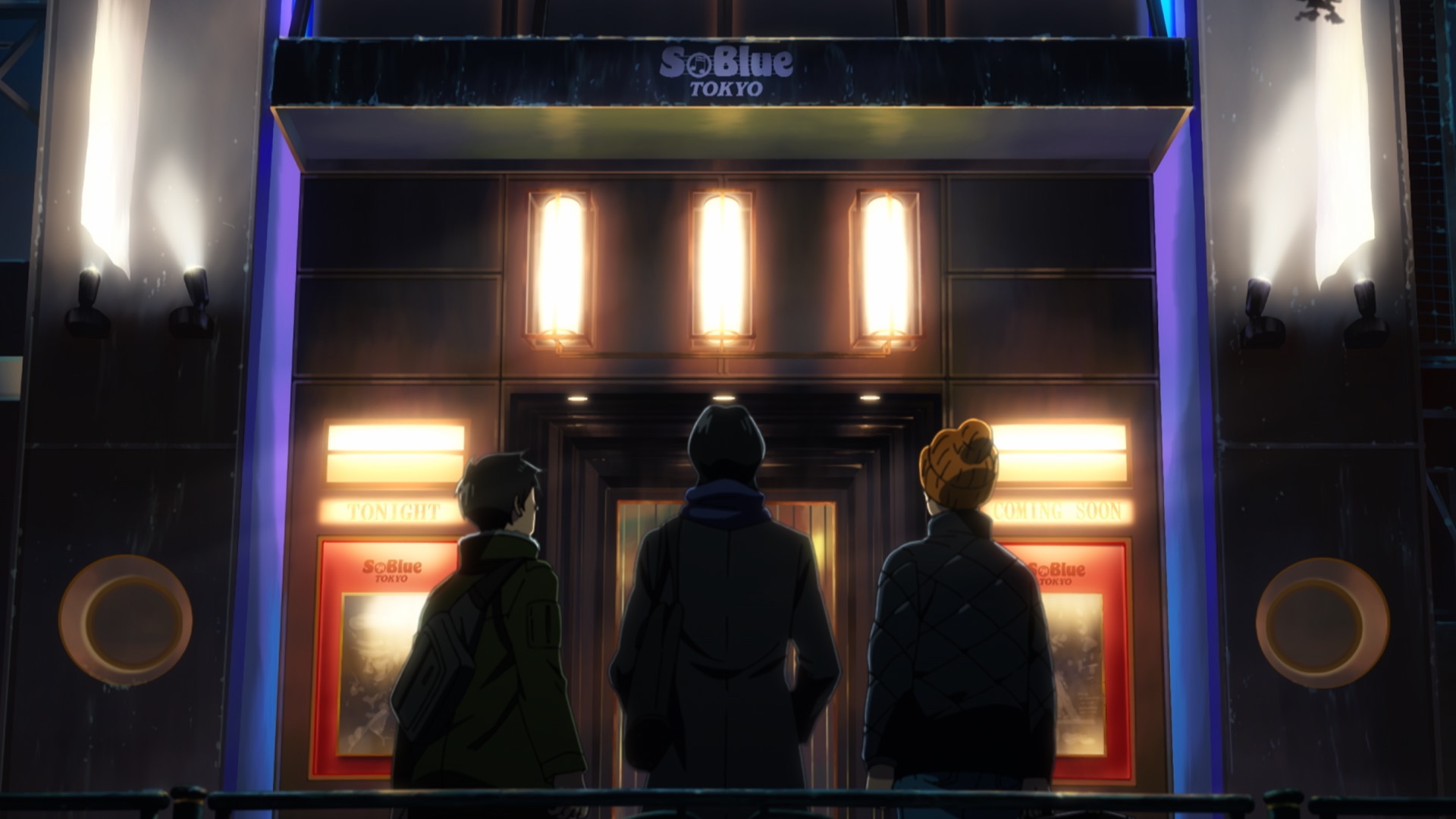
This is a coming-of-age story of how Dai discovers that jazz is his whole life and decides to become the greatest living saxophonist. To achieve his goal he decides to leave his hometown and move to Tokyo, where he meets the other two protagonists of the story, Yukinori Sawabe and Shunji Tamada, with whom he forms a three-piece group, Jass.
The three boys will face various vicissitudes during their growth, with the goal of playing in the most important jazz club in Japan.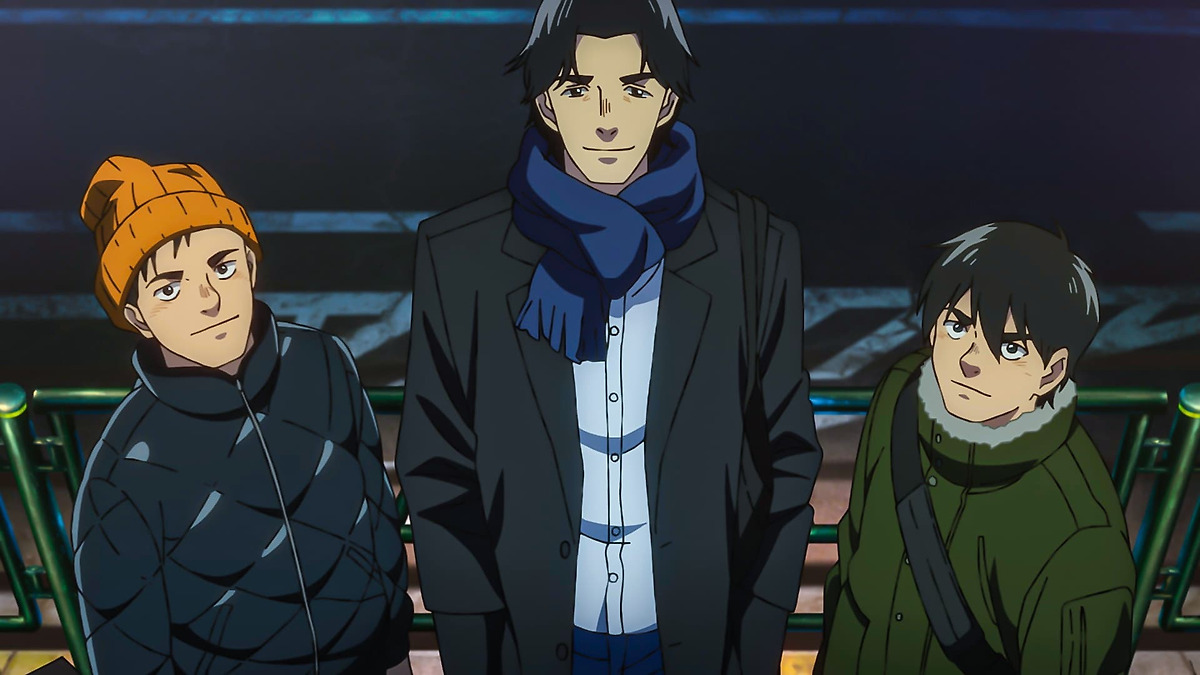
PERSONAL IMPRESSIONS/THOUGHTS
Without further ado, I will begin by reviewing this movie which, in my opinion, had two enormous challenges to face: the fact that a 10-volume manga was turned into a 2-hour film and that the musical component was adequate.  Let's start by talking about the movie adaptation in general: Number 8 decided to completely exclude the first chapters of the manga, focusing on the central and final part of the story. The moment in which Dai became passionate about jazz and all the support he received from his family are relegated to two small flashbacks, and the story starts when our protagonist arrives in Tokyo.
The choice is probably due to the fact that the first part of the manga is a bit slow and the "real" story begins when he arrives in the metropolis. Having decided to adapt the manga into a movie, I think this was a correct choice even if it leaves some gaps, which can only be filled by those who have read the paper counterpart.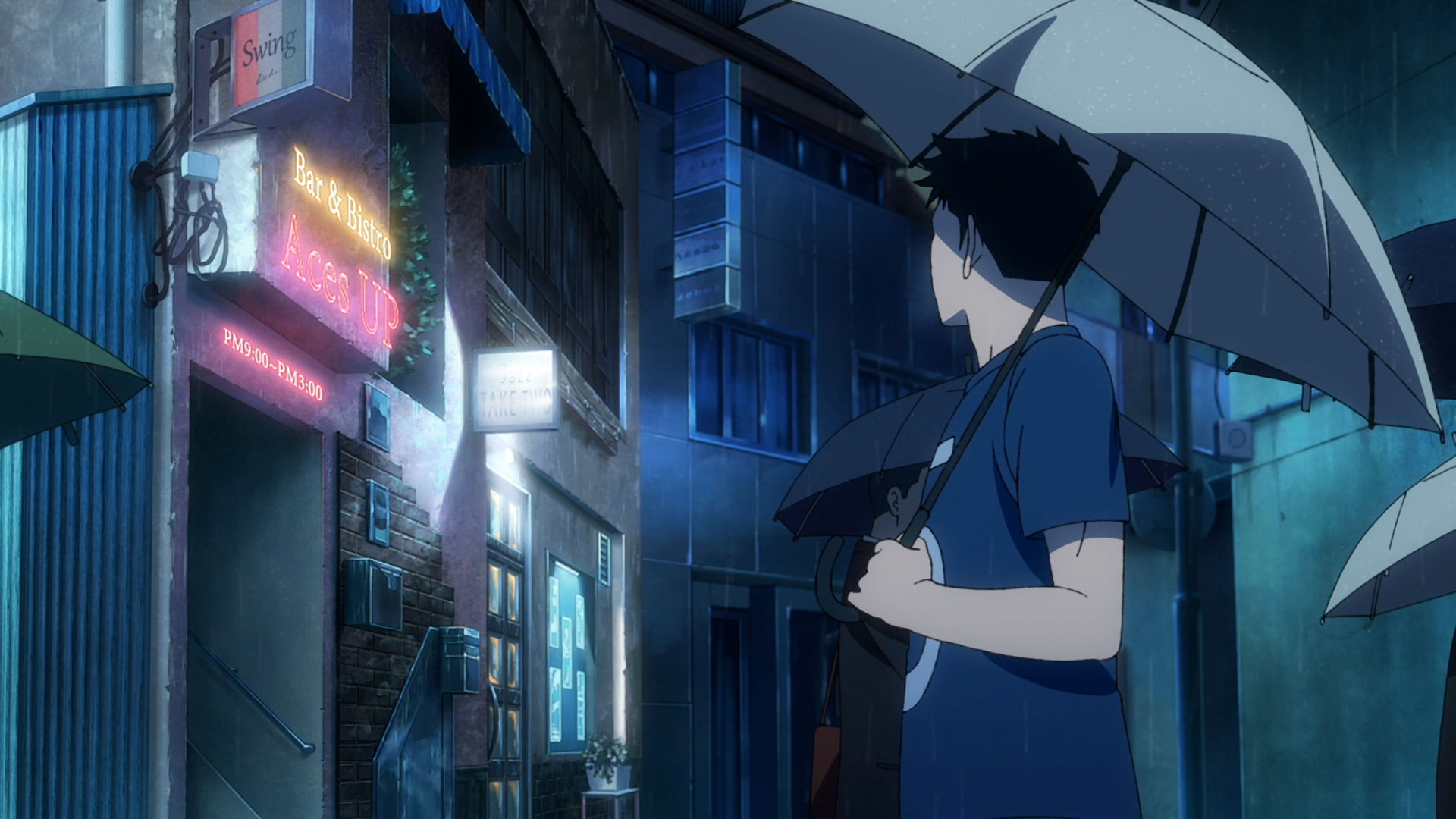


###
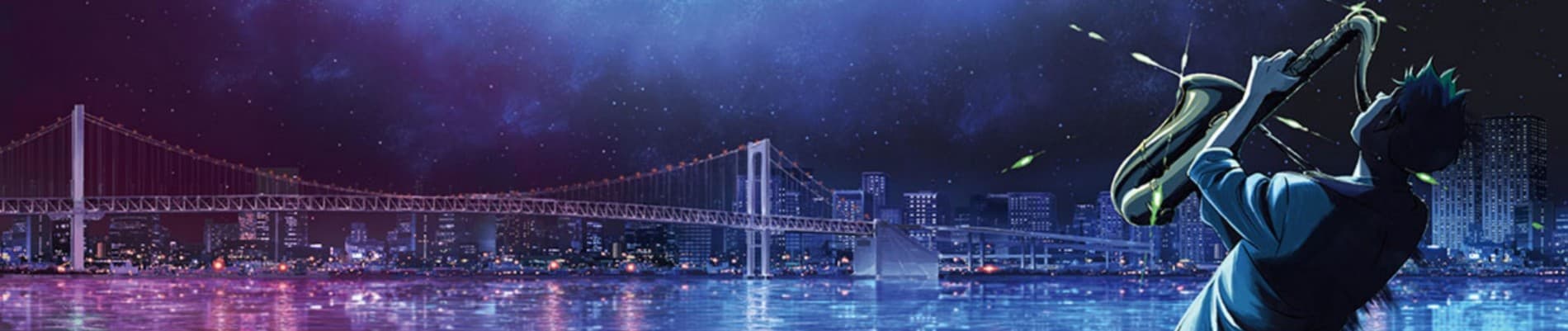
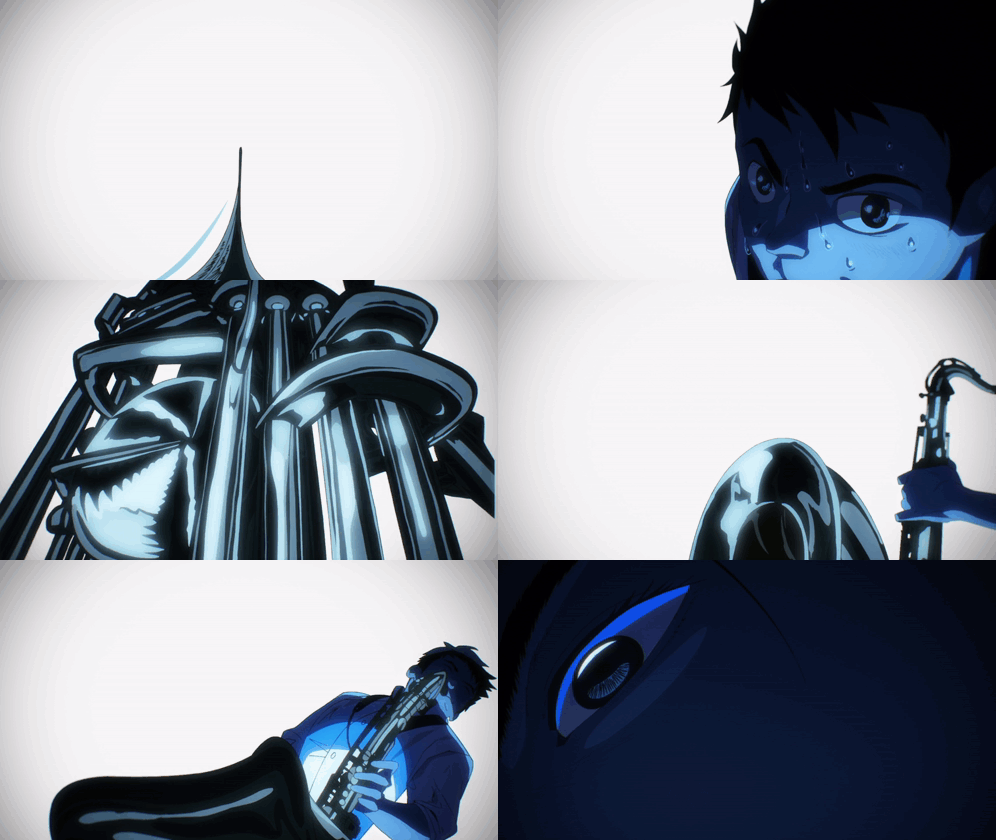
_On a side note: I really loved all the backgrounds, which are often tinted or lit in various shades of blue both day and night, the most recurring color theme in the movie._
|
|
v
>
...But WHY SO BLUE? In astrophysical language, a
blue giant is a star that, due to too high a temperature, abandons the red spectrum and becomes blue. As the name itself suggests, it usually has gigantic dimensions compared to common stars but a very short life span instead.

And this celestial body (as well as its choice as the main title) is a perfect metaphor for the bright and inextinguishable passion that burns in the hearts of the three young musicians.
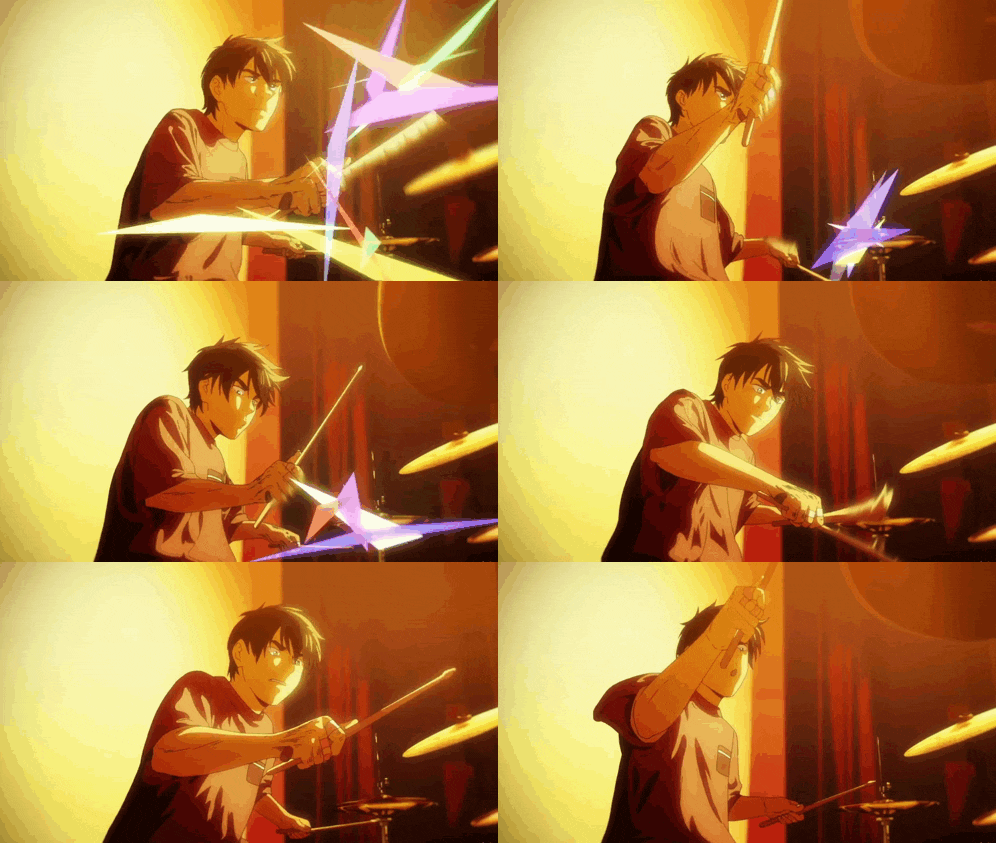
Now let's move on to the other focal point of the story, namely jazz, and the movie was very good at translating the music onto the manga. Ishizuka's panels, through some graphic devices, are vibrant in the moments in which the live performances are executed.
This was so good that it almost made me imagine the music, at times I had the impression that it was resonating in my head also while I was reading the manga.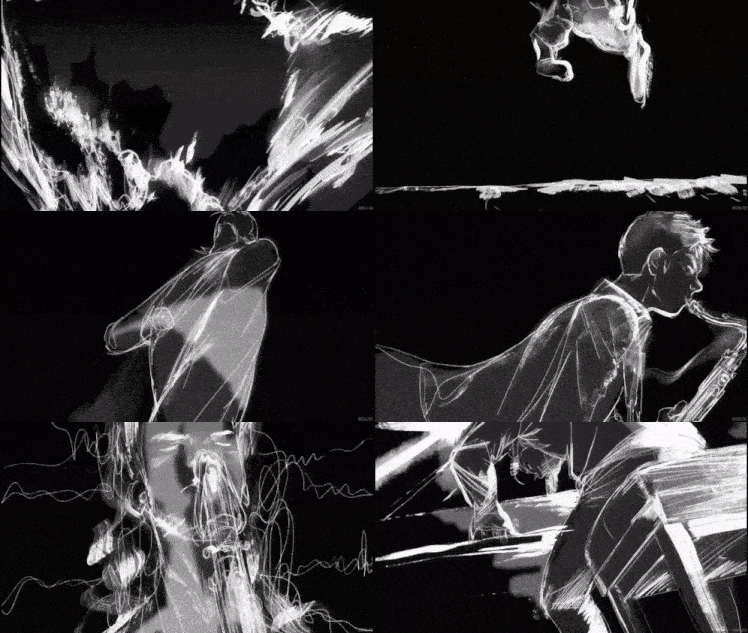


 The Japanese jazz artist and pianist Hiromi Uehara was chosen as the composer. In an interview, I read that Ishizuka and Number 8 said they had given very general indications, as they wanted a rhythmic but also a little heavy sound, but in the end they left everything up to the artist to decide.
Uehara is known for her virtuosic techniques and renowned for her very energetic live performances, things that lend themselves very well to Dai's music.
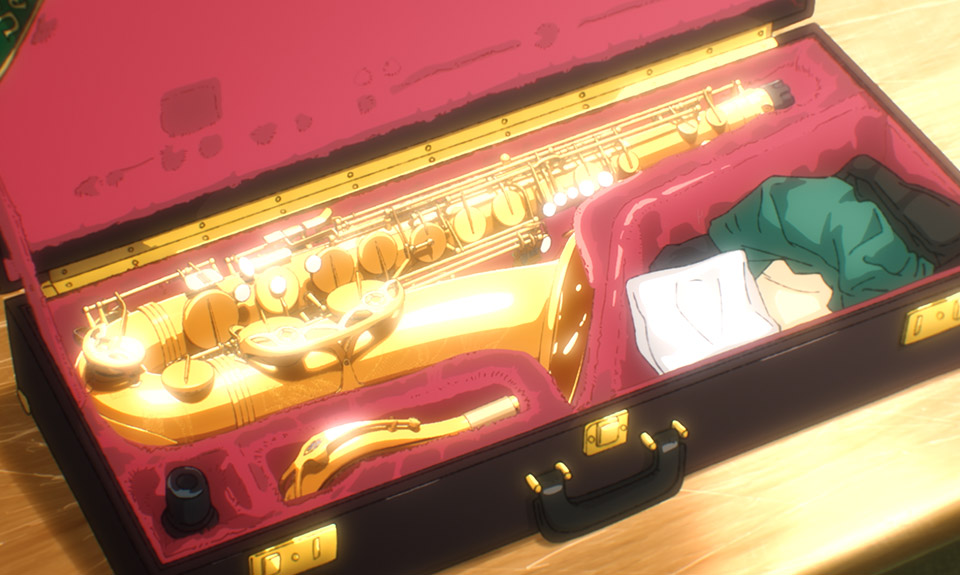
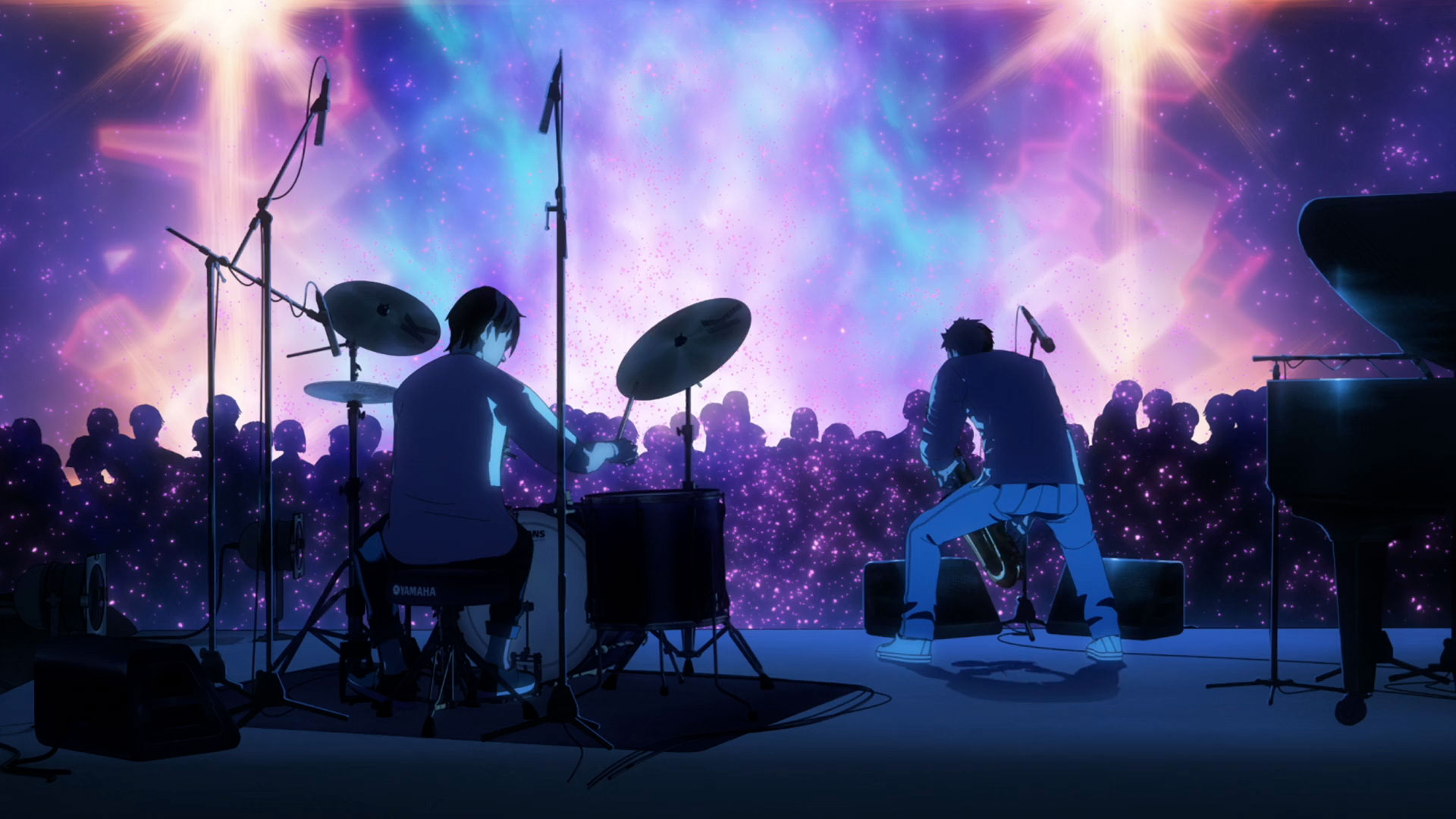
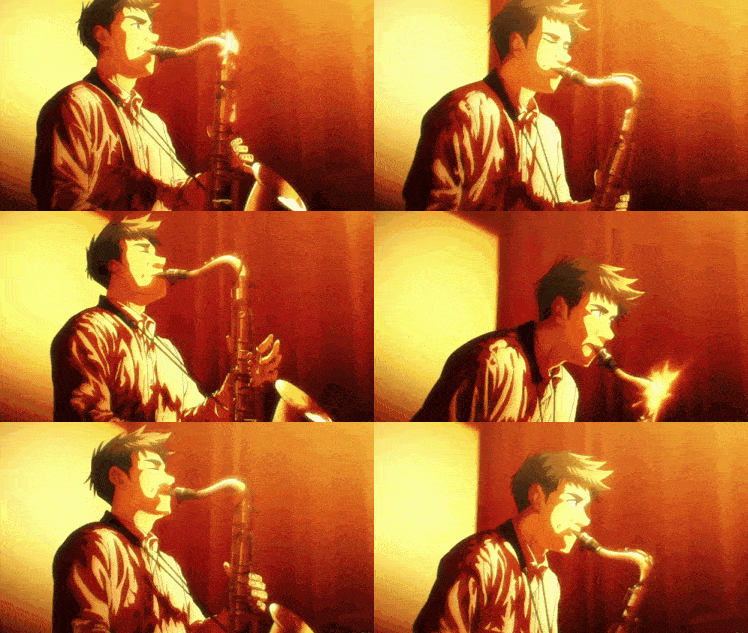
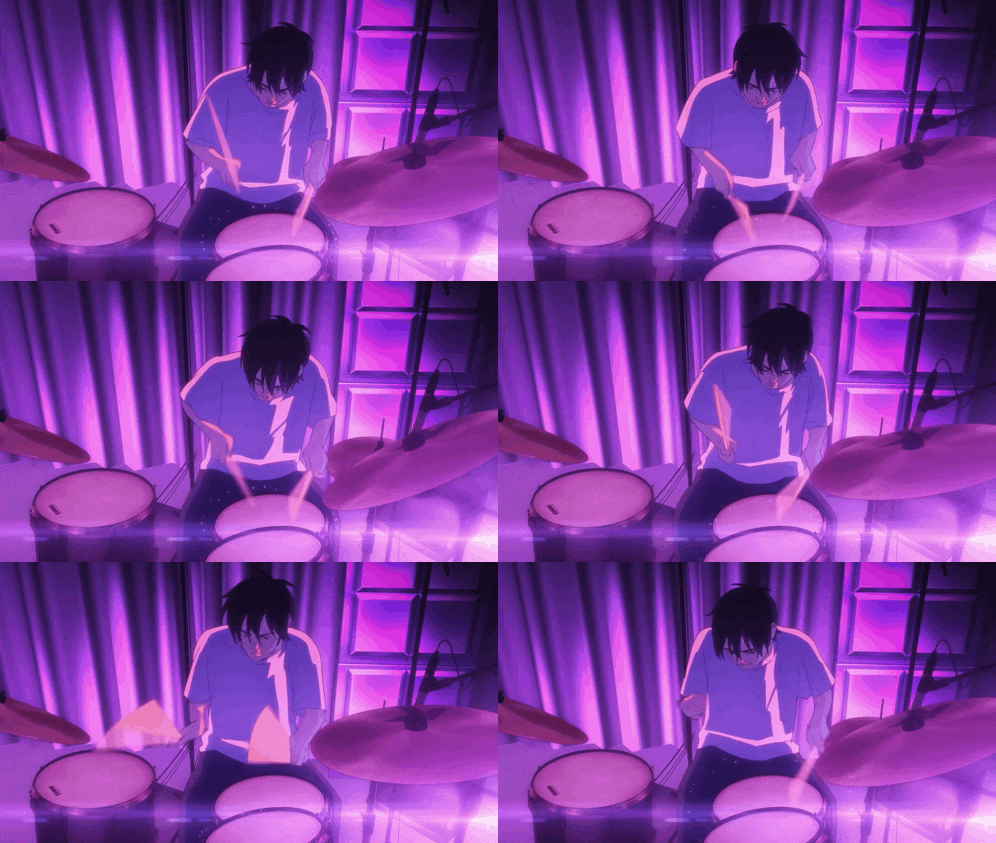
Therefore, the most important knot to untie in the movie was resolved in a more than brilliant way, with truly energetic and performing live compositions. Furthermore, the animated scenes and the concert music blend very well, with virtuoso images that go hand in hand with the performances. The combination is very successful, in the various live performances the images blend the golden color of the sax with electricity, or with fire or water, all depending on the piece played and the specific feelings that want to be conveyed.Link to Blue Giant's Spotify PLAYLIST: https://open.spotify.com/intl-it/album/4GhDb60eJfeVCHJQdHWooc
I found the direction of the musical scenes by Yuzuru Tachikawa, famous for Mob Psycho 100 and Death Parade, punctual and well done, it doesn't get lost and keeps you glued to the screen without "pauses".
While the character design, by Yuuichi Takahashi, is faithful to the manga, giving us the impression that our protagonists have come to "life".




_So is everything perfect in this movie? No, unfortunately there are a couple of things to criticize._
Sadly, I have to say some CGI parts are quite bad: during the live shows there are many CGI scenes that are wooden and poorly done.
So, after a few moments in which music and animation blend together magnificently, it's really a shame to find yourself in front of a poor CGI.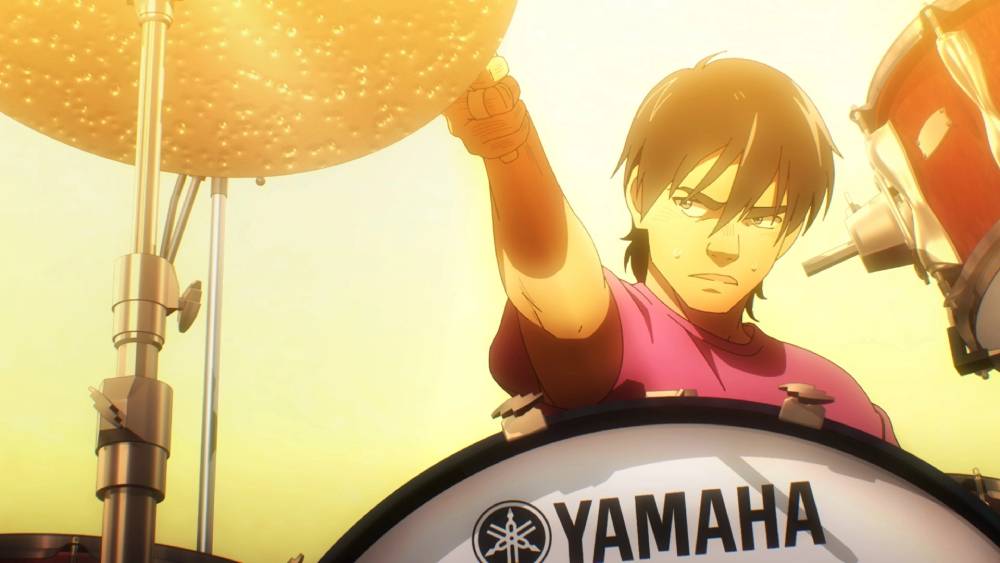
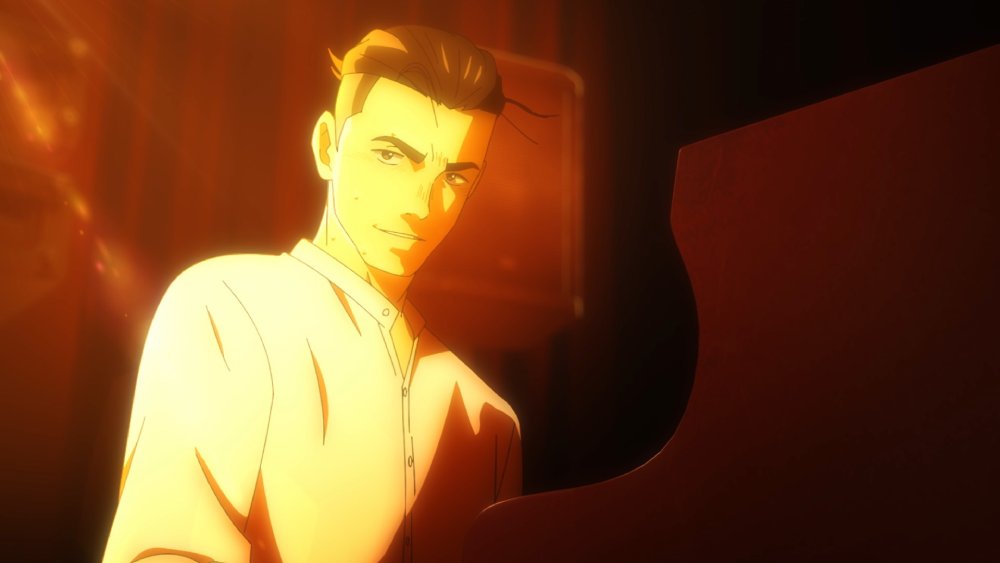
 Another criticism I have is towards some choices made in this adaptation, for instance: some characters are barely shown and it is possible to understand who they are only if you have previously read the manga.
In my opinion, since they add nothing to the story and since the parts involving them have been eliminated, it made no sense to include them in the movie; also because those who have not read the manga probably realize that there is something they are missing.


###
The audience "engagement"Even the friendship between Miyamoto and Tamada is not well perceived at the beginning: in the movie Dai simply shows up at Tamada's house in Tokyo to be hosted, without making us understand the bond between the two, except, again, with a very short flashback. Another thing that in my opinion wasn't very successful is the explanation of Dai's evolution, who in the manga finds himself facing various difficulties, which he faces, overcomes and makes him grow.
In the movie, however, he goes almost straight on his way without having to face obstacles and this makes it a little bit less interesting than in the manga.


 It's different for the other two members of Jass (the group in which the protagonists plays), who have their own evolution, with even Yukinori Sawabe who basically steals the role of protagonist from Miyamoto, with his difficulties and his beautiful personal story.
Maybe the decision to make a movie was restrictive, there was enough material to make a series without having to cut various parts of the story.


 However, as in the manga, I found the micro-interviews of the future with some characters very interesting, which allow the viewer to break up and not get bored.N.A. The finale of the movie is slightly different from that of the manga, but I think it makes the story even more profound and moving that it's impossible not to shed a tear!
Finally, if you want to get into this movie, remember to don't interrupt the watching in the credits to enjoy the post-credit scene.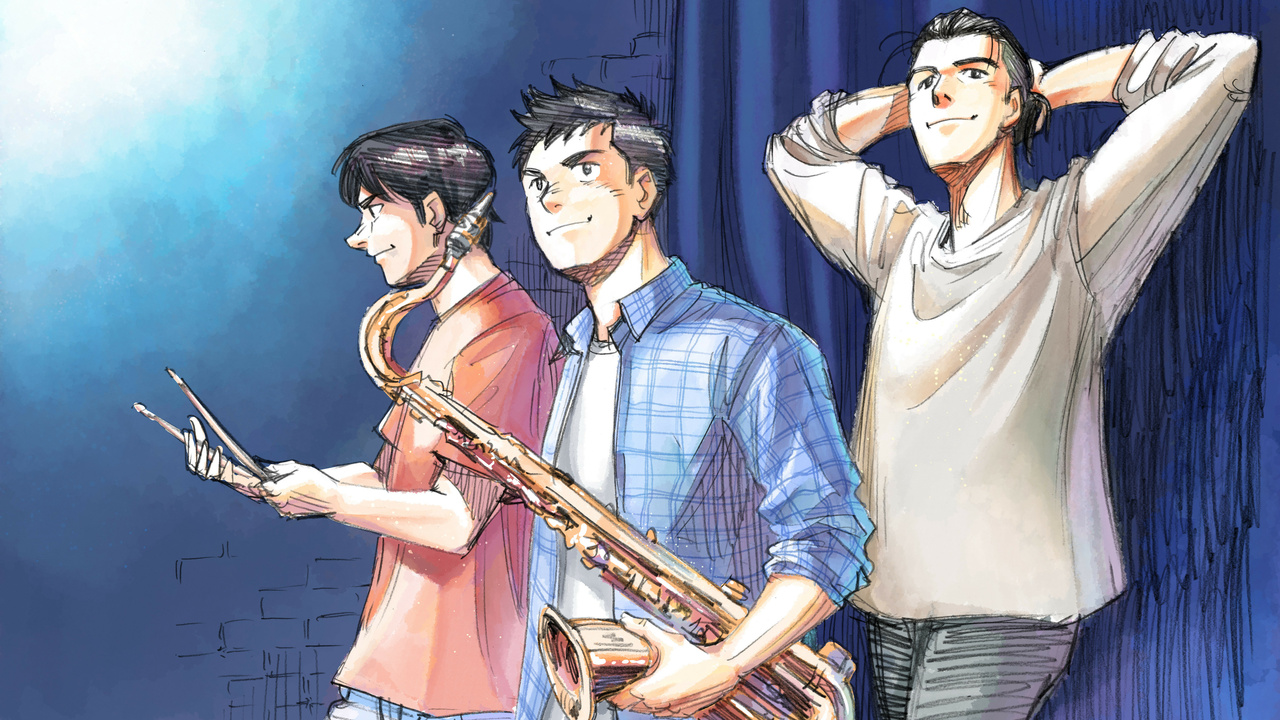
In short: Blue Giant's anime movie is like a brilliant live jazz concert that way easily manages to overwhelm you. The protagonists are three boys who dedicate their whole life, or a part of it, to the music they love.
It has a solid direction, an excellent character design and Uehara's jazz performances are full of energy. During the live concerts animation and music blend together beautifully and are a spectacle for the eyes.
Perhaps the story has some limitations from being very tight (in order to be adapted into a 2h movie) and the CGI would really need to be redone.
However, the final result is a deep and moving work, and it's impossible not to be passionate about the stories of the three young protagonists.