Haibane Renmei
a review by 1lcola
a review by 1lcola
haibane renmei is a story of immense grief. one in which nearly everyone is fighting, not with one another, but with themselves, and with the conditions of their world. it isn’t a tragedy. there’s a quiet, almost meditative quality to its sorrow -- the series doesn’t announce its themes, because it doesn't have to. its show-not-tell nature lends to the quiet beauty and ingenius of the series. even its title feels deliberately obscure, as if designed to slip past expectations; but perhaps that’s the point. it isn’t a story that demands attention. it earns it slowly.
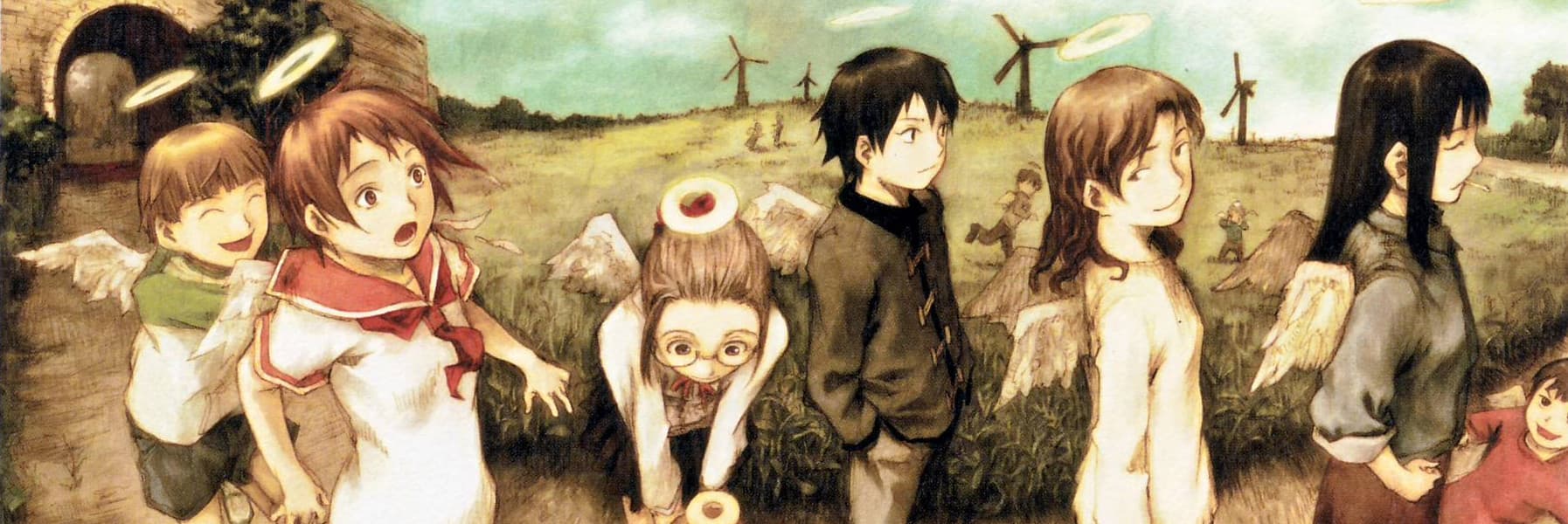
glie is a town surrounded by an impassable wall, its boundaries psychological and physical. it is inhabited by haibane, who are neither human nor angel. they are in-between, much like the town itself. glie’s rules are few but absolute: the haibane work modest jobs, wear hand-me-downs, and never touch the wall. these constraints aren’t explained outright; they simply are. haibane themselves exist in a constant uncertainty between punishment and grace. whether they're being protected, atoned for, or punished -- the show refuses easy answers, mirroring its characters’ uncertainty; and that is exactly what makes glie feel so real. we never learn who built the wall, why the haibane exist, or what their "sin" truly was. the show trusts the audience to sit with uncertainty, and the world feels expansive, ironically, because it isn’t overexplained. the haibane are born from dreams which reflect their unresolved past lives. their wings are a visceral symbol of burdens carried into this new existence. yet, their lives in glie are tenderly mundane: they bake bread, work jobs, and care for each other like a fractured family.
in any world, change is inevitable. no matter how mundane things may feel, when existence is fleeting, all things must come to an end. the day of flight is the closest thing to an answer the show offers. is it transcendence? dissolution? the series refuses to define it. and it’s here, in the wake of kuu’s sudden departure, that rakka begins to change.
kuu’s day of flight arrives without any big announcement. kuu begins doing small things for those around her as thanks for their time together. cleaning the kitchen, giving away her belongings, baking breakfast, and small goodbyes. this is most notable in her interactions with rakka; whom she seemed to love so much. through rakka's arrival, kuu was finally able to be an older sister for someone after feeling small for so long. for rakka, kuu was a dear friend. her day of flight was the first crack in the fragile normalcy of old home. kuu, the youngest and brightest among them, is simply gone, and rakka is left grappling with the absence of her mentor. it’s rakka’s first real confrontation with the impermanence of her world.
before kuu leaves, rakka is still wide-eyed, clinging to the comfort of routine. afterward, a restlessness takes hold. she starts to see the cracks in Glie’s serenity -- the way the older haibane avoid talking about the past, the unspoken fear and sorrow in reki’s eyes, the crows that seem to watch her with knowing malice. kuu’s absence becomes a mirror. her wings, once pure gray blacken with guilt and grief. rakka begins to hate herself, begging for change to slow. she grasps for what once was, she cuts her black feathers away in a beautiful metaphor for self-harm.
but it’s also kuu’s departure that sets rakka on the path to healing. in losing kuu, she learns to reach out. first to hyouko, who carries his own grief silently. then to reki, whose isolation mirrors her own. and this is what makes reki and rakka’s relationship is the emotional core of haibane renmei. both are burdened by grief. reki sees herself in rakka. rakka's loss of kuu is like reki's loss of kuramori. both were beacons of light in their respective partners' lives, making them feel loved and understood. reki, hardened by years of self-loathing, wears her isolation like armor, pushing others away even as she longs to be seen. rakka, still a fledgling, reminds reki of what she used to be, and what she has yet to achieve. their bond isn’t one of easy comfort, but of painful recognition.
as rakka confronts her own darkness, she begins to understand reki’s unspoken despair and unresolved pain. and reki, watching rakka struggle, is forced to confront the hypocrisy of her own advice. she tells rakka, "you’re not alone," yet refuses to believe it for herself. their dynamic peaks in episode 13; where rakka, having barely clawed her way out of her own abyss, turns back to drag reki from hers in an act of love, desperation, and learned selflessness from the help reki was able to give her.
the scene where rakka writes reki’s true name on her farewell letter is minimal, but beautifully telling. there are no grand speeches, no divine interventions. reki’s tears as she realizes she has been seen, that her existence mattered to someone, is the show’s most transcendent moment. it is not forgiveness from some higher power that allows reki to realize herself; it is rakka's growth. rakka is finally able to move on, and reki's day of flight isn't seen as a burden or a wound. it is a moment of bittersweet acceptance. love, time, and memories are all fleeting, but who cares? those experiences are there to cherish.
in the end, their healing isn’t about erasing their scars, but learning to carry them together. rakka, once lost, becomes a guide. reki, once resigned to silence, is able to speak and be heard. the wall still stands, the mysteries of glie remain unsolved. but for the first time, that’s enough.
and that is what makes haibane renmei remarkable -- its restraint. it certainly isn’t a series for those seeking catharsis in the usual sense. its resolution is ambiguous, its truths aren't absolute. but in that ambiguity lies its deep comfort. its religious, almost mystical world still mirrors the flaws and holes in reality, and it whispers to its audience to be okay with the incomplete, and that the ache of letting go, the fragile hope of moving forward, and the quiet grief one faces can be rebuilt and molded into a home, if given the proper conditions. recovery isn't an inevitability, it is something you must work for, and that is why it is so admired.
35 out of 36 users liked this review
