SPOILER WARNING
The entire movie runs as follows.
? Girl has terminal cancer
? Socially awkward guy gets roped into being her emotional support pet
? She guilt-trips him into “fun adventures” to feel alive
? He develops feelings—not really by choice, more by prolonged exposure - Stockholm syndrome.
? Just as he starts to feel something real, stabbed.
? He is then back to square one with everyone disliking him.
Much like many other reviews on this platform, this shall be sorted into primary sections for clarity and coherence.
As previously mentioned, the story revolves around the two main characters, Sakura and Haruki, both of whom shall be discussed and analysed later on. Sakura has pancreatic cancer, likely chosen due to its relatively aggressive nature compared to that of other cancers, to keep brevity. Sakura has had her "eye on" Haruki for a while, and thus, after she drops her book "Living with Dying" in the hospital and he discovers her illness, she attempts to rope him into her daily life. This goes on for an unspecified amount of time with the pair engaging in activities such as weekend trips or spending time in her home. A somewhat predictable twist occurs when she is suddenly stabbed and passes away, leaving Haruki to deal with the wake of her death, such as by futilely reconciling with Sakura's friends or by going to the late Sakura's home. My primary grievance regarding the plot was simply just not interesting, and if anything felt somewhat uncomfortable. It was very evident in the beginning that Haruki had no intention of changing his ways, and yet she persisted in a way that if the roles had been reversed would be downright creepy. She constantly makes advances because in her diary, she wants to do "naughty things" with a boy she is not dating, so many of the moments regarding this feel off-putting on her part. Many of these platforms assert that this film is about "understanding the meaning of life" or about taking action. This stance would hold water if she had not dragged others into things numerous times, namely someone who wanted nothing to do with her. Primarily, if she had truly cared about Haruki, forgive the cliché, she would not have communicated with and Stockholm syndromed him into liking her, knowing that she was going to pass. The notion that this is about living life or taking action seems minor, as her whole goal is essentially to do things with someone who has little to no initial interest in her and being solely self-serving dipiste creating harm to others. This film could have far more masterfully constructed Haruki as a brother who wanted to fulfil his sister's wishes and did so to his ability whilst fighting his personal battle of losing his sister. Critically, the choice to create Haruki as a quasi-love interest seems misfounded, as many have pointed out, it seems somewhat of a confusion for many and a distraction. Taking action could have been far more tactfully done. As previously mentioned, the abrupt death of Sakura was somewhat foreseeable, not only due to the remaining run time, but also common sense. She had just gotten what she wanted, and yet was cloaking herself from him at a moment in which she would supposedly be the happiest. Many viewers would not want to watch a protracted, drawn-out death, along with the story getting somewhat repetitive up to this point, and thus some major change would need to occur. Whilst the method in which she passed was not foreseeable, the fact that she was going to die far sooner the once thought was very predictable.
Many viewers, particularly younger men, may unconsciously project onto Haruki, imagining how desirable it would feel to have someone pursue them so fiercely despite their aloofness. But this fantasy masks a troubling power imbalance. Sakura doesn’t just insert herself into Haruki’s life; she emotionally corners him by weaponising her mortality. If the roles were reversed, his persistence would rightly be seen as coercive. That this behaviour is romanticised underlines a concerning trend in media: that boundary violations are acceptable when done by the “right” person, for the “right” reasons. Sakura is a character whom I take a personal dislike to. I will give credit for the choice to give her pancreatic cancer is an interesting and good one in that it brings a new dimension and increased awareness to the terrible diseases; however, as previously harped on, it feels as though she uses this as an exploitative tool. When really drilling down to the core of this show, she uses the fact that he accidentally found out the nature of her disease to force him onto these trips that she wants to partake in. No reasonable person would deny the wishes of a dying individual, so what else is he expected to do? Many of her actions always felt motivated by this list of things that she wanted to do with him, but when distilled down to that fact, it seems somewhat creepy. She had taken an interest in that person, clearly understood that he had no interest in her by his dearth of approach and then used the fact that he knew about her illness to force him to do things. Haruki later develops feelings for her, but at this stage, it feels impossible to tell if it is just friends because he is unaware of what that feels like or something more. However, the presence of both is underscored by the idea that she also guilt-tripped him into being there. Kyoko was also aggressive and standoffish for seemingly no reason. It would be clear from the beginning that something was occurring, especially something in which Sakura was in favour of, given the nature of Haruki and yet she adamantly disliked him the whole series, even after he was burdened with disseminating her final messages. Gum boy seemed like a chill dude, and thus was the best.
The remainder of the review will be brief, as many are not notable.
As mentioned by many, the music was correct, but not mainly memorable in any way. The intro to the later half of the first season of Fire Force I have on my playlist, and thus something of that calibre I would consider a very good theme song, which this lacked. Not to say it was negative, just bang average for this type of media.
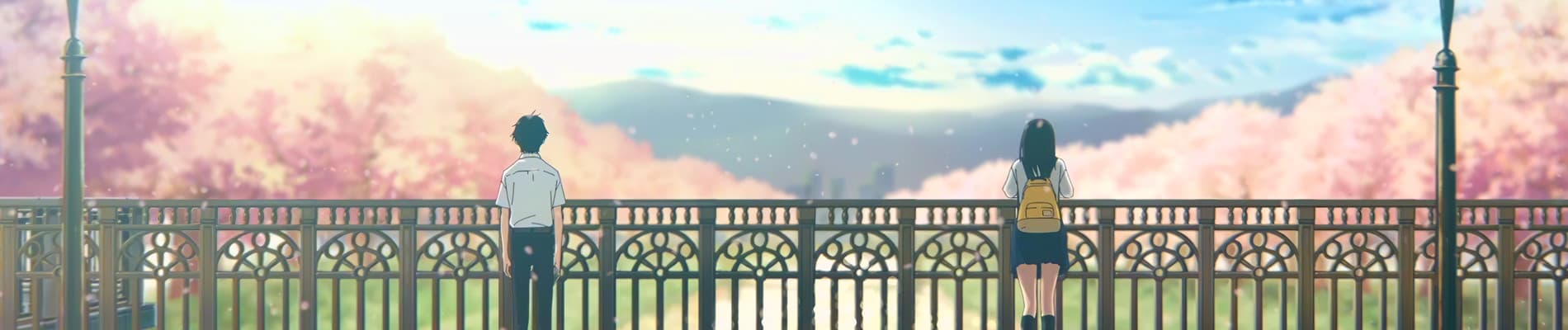
It was the best aspect of this film, very high-quality artwork; however, on a more personal note, I disliked the animation style when Haruki was imagining her on the planets when reading her "Living with Dying" post-mortem. Again, this is just a stylistic choice, however.
It could have had far more potential if they went down the brother angle and focused more on the idea of living by what she had left. Much of my grievances from this stem from the weird dynamic between the two main characters. The film was far too monotonous when watching it, and I watched it on a treadmill, so really anything will keep you focused off the treadmill. 1.5 hours of cardio is required a day. Would not recommend, was hoping it would be more K-Drama-esque because they feel less creepy.
39.5 out of 66 users liked this review