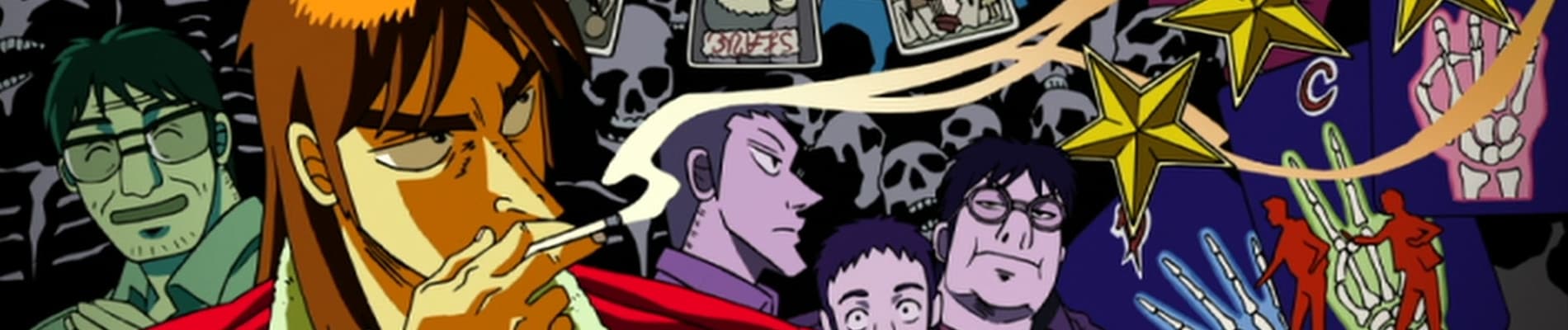
Thrillers are a genre defined by creating impossible situations, but laying the clues for the viewers to figure out how the characters can escape them. It is one of the most difficult plots to pull off successfully, even more difficult to do while raising stakes and attempting not to descend into convoluted thought processes. Kaiji: Ultimate Survivor manages to pull off a very mature and analytical take on the thriller which may feel familiar to fans of shonen action series - but unlike most of those series the set-ups have huge consequences and payoffs.
Kaiji is sometimes identified as the "anti Yu-Gi-Oh" for its overriding themes of valuing psychology over belief in victory. There are a lot of similarities between the two, especially with the original manga. However, while at first Kaiji seems to criticize trusting others as a core value of its world, it does eventually come around to a similar place as Yu-Gi-Oh. The titular hero suffers through some of the most heart-wrenching scenarios imaginable to escape an endless cycle of suffering - actually forming a stronger worldview for it. The conflicts that he goes through in order to survive are definitely the most engaging part of the story.
Every game played in Kaiji has very simple rules with complex strategies underlying it. The point is to test both the characters and the viewer to work through all possible scenarios before making assumptions about what other characters will do. Though conceptually some of the games are quite silly, they all serve as allegories for the human condition - which becomes more and more apparent when characters fail. Rather explicitly, these are allegories on society at large, a system that both menaces the characters and gives them an opportunity to rise above.
The presentation remained gripping from start to end, though it got weaker during the last batch of episodes. I finished this show in three days because I absolutely had to know what happened next and there were so few end-episode breakpoints. Kaiji is extremely bingeable, though that comes with some caveats about the presentation. While it doesn't look bad (despite many being repulsed by the character designs) it is slow moving with a lot of intermittent flashbacks and sometimes glaring animation omissions. There is a certain inconsistency with how well each of the new "tricks" were disguised towards the end, which may be more of a directorial issue in the animation than anything.
Kaiji likely suffers some from the need to be a 24 episode show. If made today, it likely would benefit from being more like 18 episodes with some of the repetition of rules, emotional monologues, and imagery swapped out. No situation was ever dull - some of that elongated tension was definitely needed - but I could never shake the feeling that the story would be improved if a bit more concise rather than a fully faithful adaptation of a manga which has its own particular flow.
Some of the things that happen to characters in this show are definitely on the spectrum of body horror, but they are always done in a muted style which was more to my tastes - spurts of blood help cover up gore (for the most part). Even with the rather dour ending of this first half of the animated storyline, Kaiji ultimately does feel inspiring. There's a message that everything happens for a reason, that nobody's life is without value, and knowing your enemy helps you realize how everybody is ultimately human. It's bleak, yet never hopeless. That's something that a lot of dark thrillers ultimately share.
The show is a delightful death game and character study that will leave you craving more - and possibly leave you lying awake at night thinking about the fragility of the human spirit. It's a pointed look at the world's destitute ruffians and what is promised for us in the adult world. I think it's a brilliant example of the formula and an excellent, allegorical story. I needed a break after experiencing it, but I await the desperate fight of Season 2.
ZAWA ZAWA ZAWA
26.5 out of 28 users liked this review