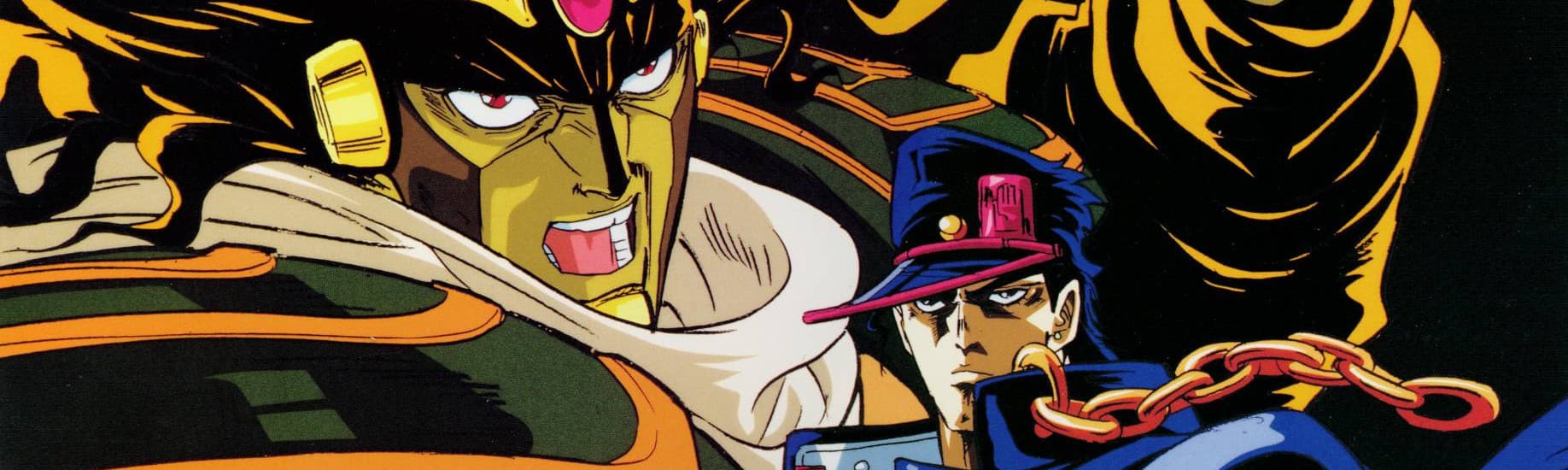

I’m also assuming that anyone reading this is already familiar with the Stardust Crusaders plot line, since explaining it all would be a chore and would also be extremely boring, kinda like explaining a dream you had. Anyways…
The first episode of this anime released in 1993, just a year after the Stardust Crusaders manga wrapped up. Jojo’s Bizarre Adventure wasn’t yet the cultural powerhouse that it is today, and it was probably just seen by folks as the next big shonen series of the year and nothing more. I kept that in mind as I was watching these OVA episodes, and I was also rereading the manga at the same time, which helped me make ample comparisons between the two. My final thoughts: this OVA series isn’t a bad adaptation, but it’s also a little misguided and disadvantaged in certain areas.

Full throttle.
To start, it’s inevitably unsatisfying that this series only got to adapt THREE fights from the manga, all of which happen in the back half of the story, meaning that all character development for the main cast is essentially thrown out. That would eventually be amended when the prequel series came out in the 2000s, but as it stands with this series, the characters are noticeably flatter and/or duller in certain aspects. Namely, Polnareff comes off as more ballsy and sometimes foolishy hotheaded, and Iggy isn’t given much to do in between N’doul and Vanilla Ice, so there’s hardly any sympathy to garner for him. Everybody else is pretty much average.
So, the characters are a bit of a bust, but each stand battle is still pretty entertaining. They overall don’t stray too far off the path of the manga, and the action and excitement in each one still remains. The only major hiccup is some awkward pacing for the first two battles. N’doul’s battle seems slow, Darby’s seems fast. I ended up getting a little bored at times as a result. Dio’s battle, though… that’s what we came here for.
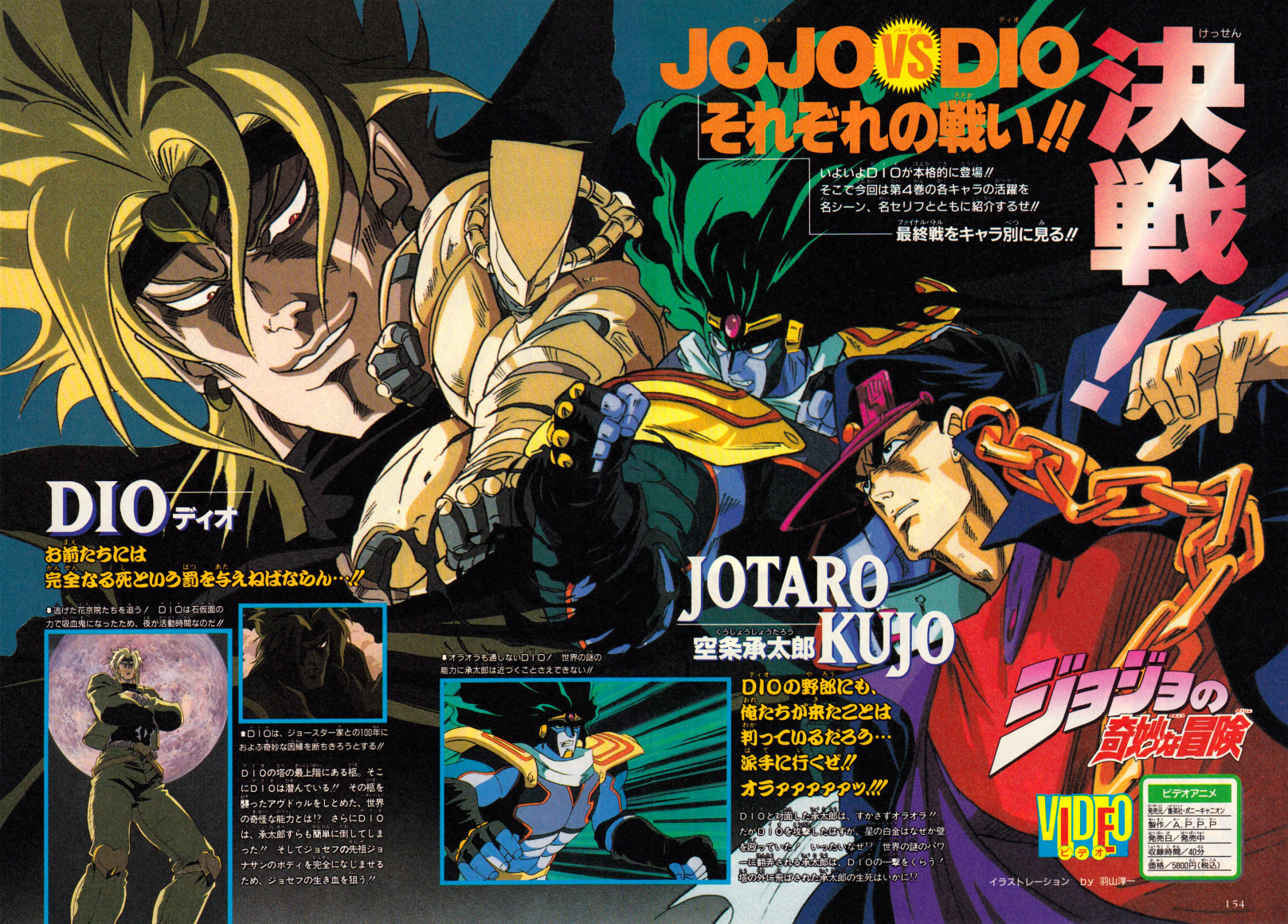
Hiroyuki Kitakubo is the director of this anime. His other directing credits include the classic comedy anime Golden Boy, the half-action half-thriller OVA Black Magic M-66, and a particularly off-the-walls segment in the ex-TREMELY underrated anthology film Robot Carnival. In layman's terms, Kitakubo knew how to pack a punch into just about any anime he was in charge of.
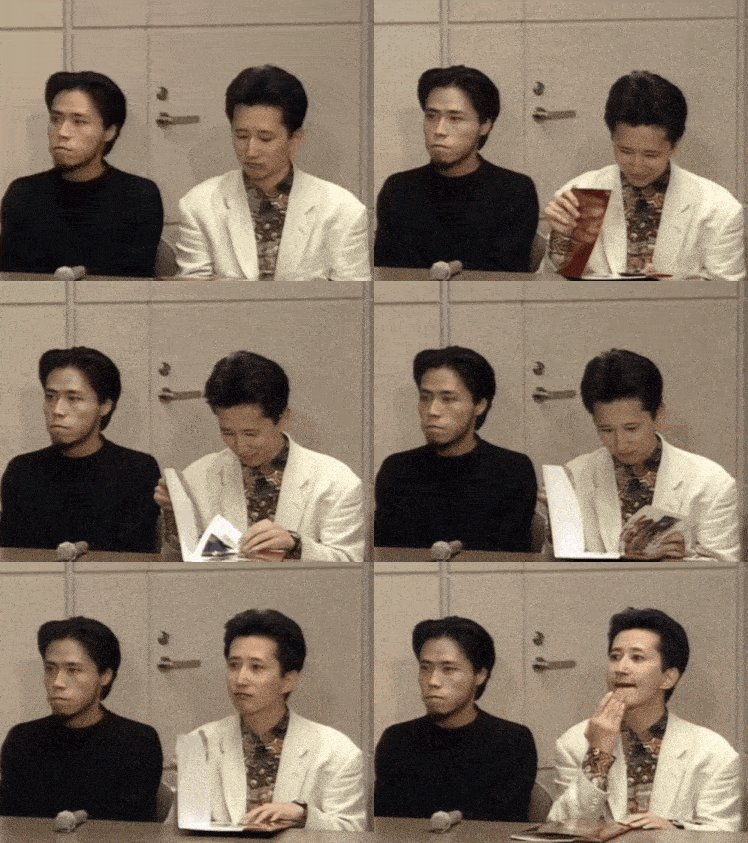
Kitakubo sitting by Araki, when disaster struck...
And for the last episode, he was episode director, script writer, and storyboard artist. And, surprise surprise, that last episode is cooking with gas. Episodes 4 and 5 leading up to it both do good in building to Jotaro vs Dio, but when it happens in Episode 6, it's is on a whole 'nother level. The atmosphere nearly goes into horror territory, which is a direction people don't often associate with Jotaro and Dio's battle today. The animation, which was already solid throughout each episode, goes into overdrive and delivers some absolutely stunning scenes and knockdowns. The entire fight is a gory, hard-hitting thrill. But ironically, it’s also in this episode that you best see the divide between the anime and the manga.
Episode 6 rewrites the Jotaro/Dio battle in order to fit it into one episode. A lot is different, but everything still flows nicely. Actually, the difference from the manga in this episode that I'm focusing on more is a bit of a nitpick. You see, the visual approach of the anime looks to be following in the footsteps of Fist of the North Star: impossibly muscular dudes punching and killing each other and looking badass while doing it. To be fair, that's also how the earlier parts are in the manga, but the manga has still always been very fashionable with its art and character designs. And that aspect frankly appears a little lost on the anime adaptation, and it's especially noticeable when you see how "normal" Dio looks in Episode 6.

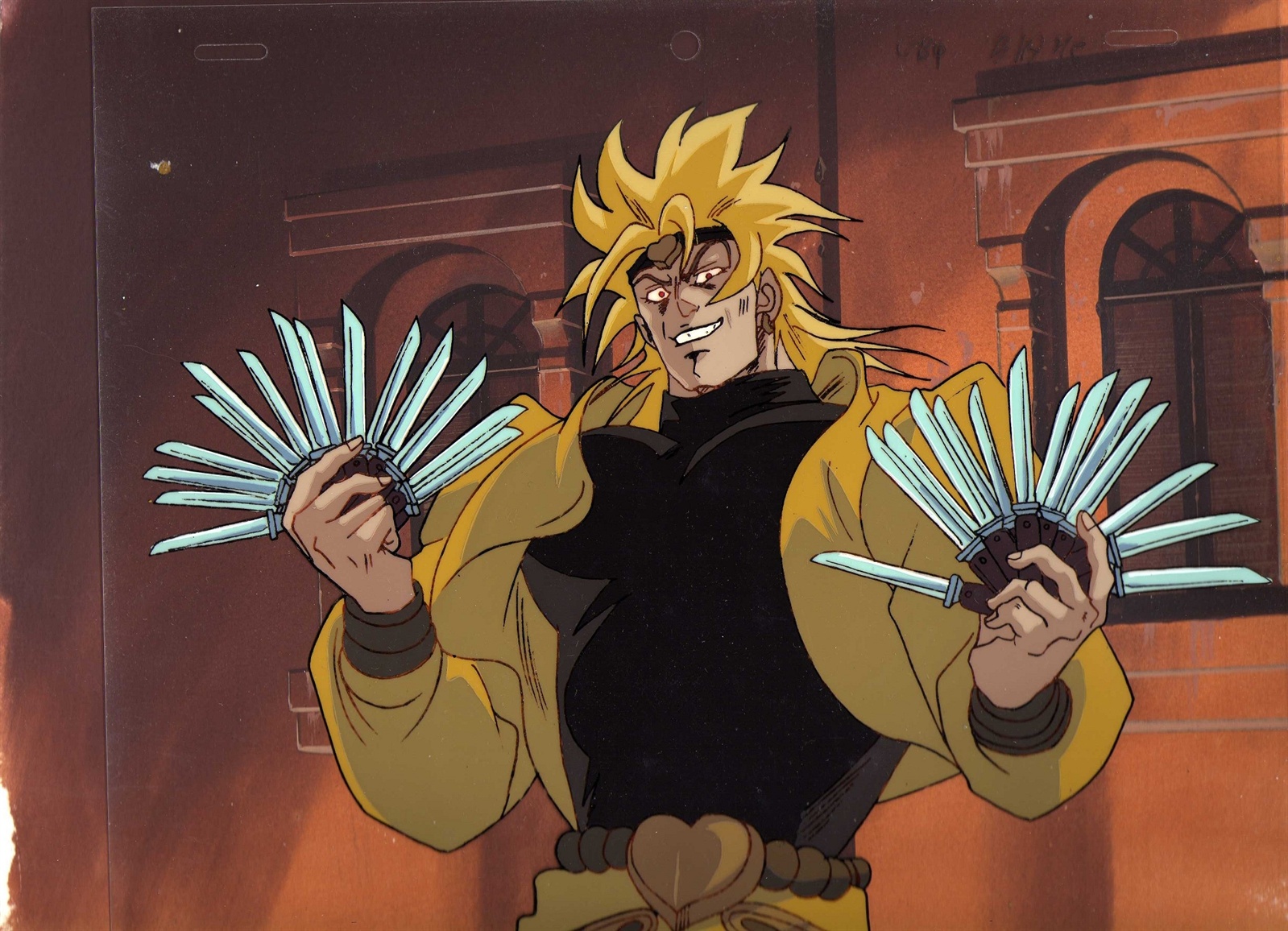
Again, that's a minor complaint, but I notice other little shortcomings like that scattered throughout this anime. Take Iggy's death for another example. In the manga, Iggy is mercilessly kicked and beaten by Vanilla Ice and then left to die. In the anime, Iggy just gets one-shotted by Vanilla Ice's Cream and passes on the spot. Both are incredibly dark, but one stings a tad bit more. And going back to visuals, even the flashiness of the manga altogether seems ignored. Episode 1 at least gives it a nod, but no other episode after it does.

Screencap from Episode 1, obviously DavidPro multiplied this by one thousand.
But how is any of this important? It all means that this anime seems more like it's just an anime about Jojo's, rather than a dedicated adaptation of the work. In other words, the staff behind this anime don't seem all that motivated to explore the manga deeply, and instead they've gone about it as just another job, so it seems like just another OVA from the 90s in a bunch of regards. Is it petty to beg for more out of this older adaptation? Probably. But that doesn't mean I don't want just a little more, okay!
So there, this anime isn't the most faithful to the manga, but it isn't lame or bad because of that. I still find a lot to like about it. Clearly, I've already talked it up some paragraphs ago, but I honestly think it's just cool that this anime exists at all. This series was one of the earliest non-manga additions to the JJBA canon, and it not only serves as a neat time capsule in that regard, but it also gives a unique retelling of the Jojo's story for modern-day fans due to its age and the circumstances of its production. It's something different, basically.
But all in told, would I still recommend this? If you had some complaints about DavidPro’s Part 3 adaptation, I think this series is worth a shot (and presumably the prequel series too, though I haven’t seen it yet). If not, and you just really like the part, I'd recommend this to you too. If you’re just a casual fan with no strong opinions about the series, I think just watching the last episode will do. And if you don't like Jojo's at all, then something's up.
Oh yeah, and also a little note on the voice acting: it’s silly. The sub and dub are both silly. You’ll just have to get over it. The soundtrack is good, though.
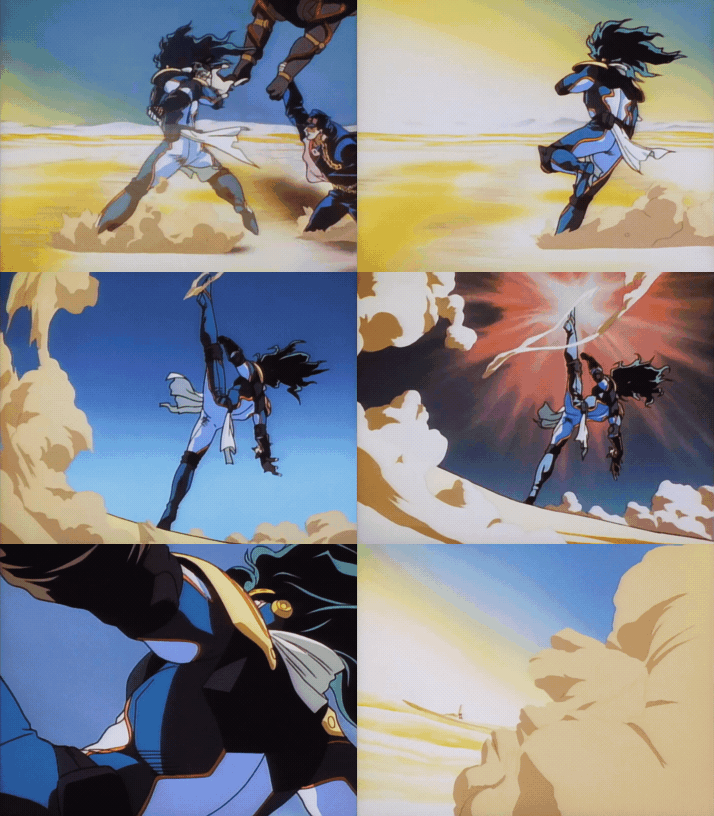
AND STAY OUT!