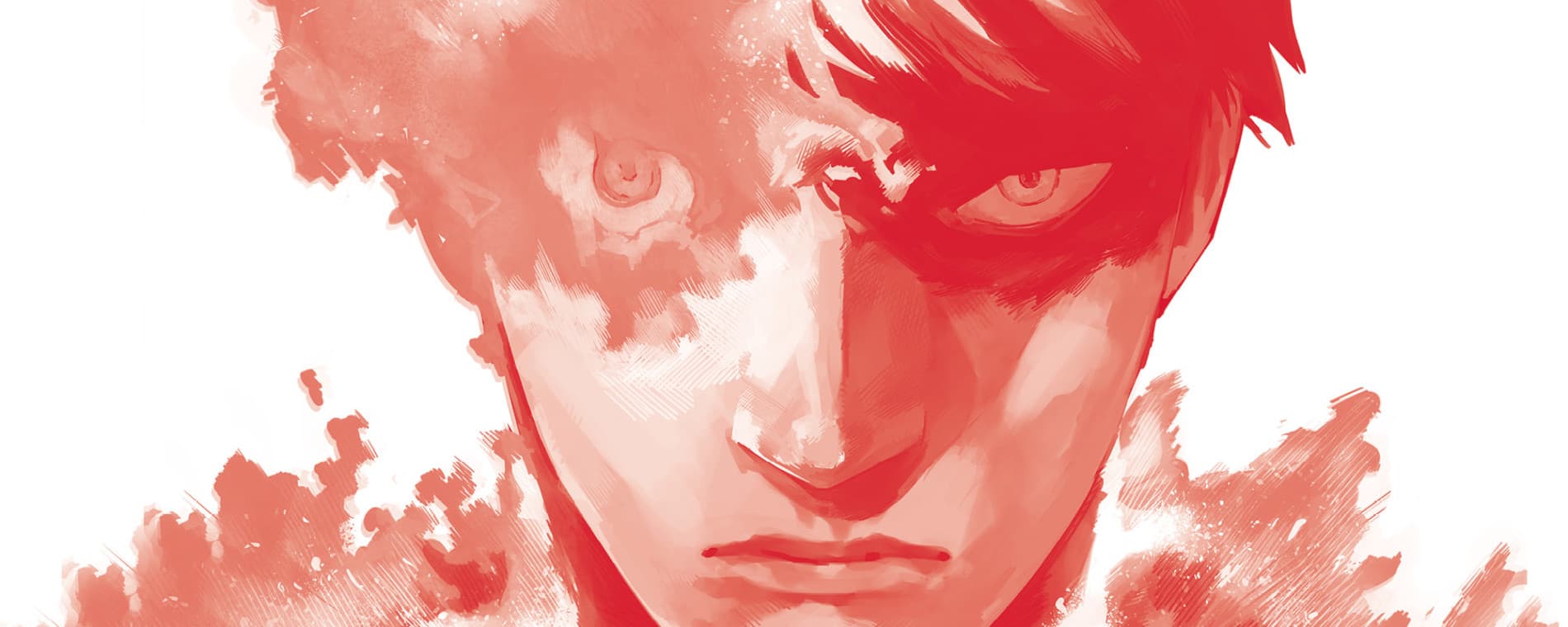
Fire Punch
a review by mondpuppe
a review by mondpuppe
Video version: https://www.youtube.com/watch?v=HucD397SP18

Likely the most interesting thing about Fujimoto‘s illustrations is their attempt to mimic film. Jokes are written as would be in a film script, the characters are moving supported by an inaudible soundtrack, and “Goodbye, Eri” goes so far as to base the entire manga on four evenly sized rectangular pages per page, like a storyboard. It’s enticing to write this style of manga off as nothing than a worse version of the medium it imitates—simply snippets of a film, no sound, no motion. As a friend of mine (likely disparagingly) summarised it: “His focus seems to be emulating films”


Fire Punch is a deconstruction of acting, of adjusting your own values—at least on the surface—for the sake of the world which surrounds you, your whole life culminating on a grand stage; in short, it functions as a fundamental outline of the nature of film, or rather, what film means to people.

The next argument to be made from the disparagers, then, is that this doesn’t change the fact his works are mere imitations of film, and the meta-level of “being in a film” would have simply worked better if the characters really had been, well, in a film. Again, I don’t see it that way. By deliberately being a medium different from film, yet nevertheless being a commentary on film, it becomes MORE effective in its commentary than it would have been had it been another film in the first place. By being outside of film, Fire Punch directly forces us to confront its nature of imitating film.
When Agni has a clichéd superhero training montage that feels adapted straight from a movie, since we’ve all seen such scenes a thousand times, we are made to mentally include an imaginary soundtrack within the scene, which then abruptly cuts off when the scene comedically jumps to Togata making dick jokes, back to playing again when we get kicked back into the montage. We are unknowingly forced into creating an image of an imaginary film within our head, thereby FORCING us, the readers, to directly become a part of the creation of film ourselves. We are not only seeing Fire Punch examine film—by working our brain to fill in the blank spaces, we are examining film ourselves.


37 out of 39 users liked this review
