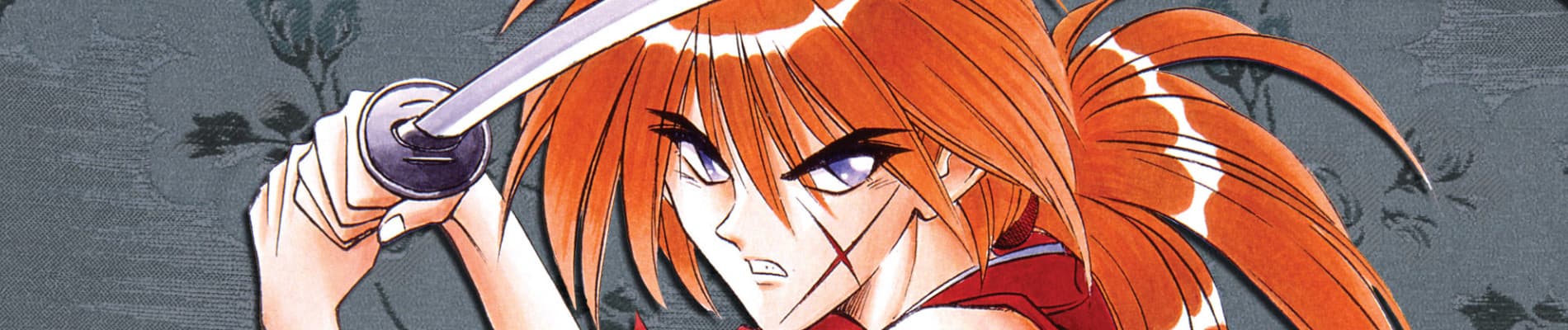
Rurouni Kenshin
a review by Nydren
a review by Nydren
Rurouni Kenshin excels at a great many of things: philosophy, symbolism, social commentary, meaningful dialogue, great characters, and heart. There are some things of worth noting it lacks. This is my second review and I'm not quite sure why I chose Rurouni Kenshin, especially after quitting animanga for 3 years basically, but here I am. I have a plethora of things I would like to touch on.
I will offer an inital spoiler free review, then dive deeper with spoiler later on. Please only read the spoiler free section if you haven't finished RK.

RK takes hold of some of my favorite themes in fiction: The will to live, a quest for forgiveness, a yearning for home, moral philosophy, grandiose goals, the end and birth of new eras, utilitarianism, and the meaning of life in some ways. I believe the core of its themes it where RK shines strongest, as it offers its perspective on many touching and personal views of its cast. If I were to liken to other popular series: Kenshin is basically a combination of Gintoki, Allen Walker, and Thorfinn. RK no doubt served as influence to many great characters we see in manga.
To quickly note some of its flaws: I think there are moments it simply being a shounen held it back, as Watsuki was limited in what he could write and had to give up on some of his desires for the series. I will particularly touch up on the 207 portion of the series later. Aside from this, I believe Watsuki's plot writing is one of his weakest aspects, with Shishio and Kyouto standing far above the rest of the series in plot imo. Jinchuu arc, while thematically written well, felt quite redundant and "hand holding" in its delivery, repeatedly stating the obvious and that which has been iterated the entire 18 volumes thus far. One gripe I had with RK's plot was its predicatability, as everything in the last 10 volumes or so happened exactly as I figured it would, with the only genuine suprise this entire series having, being essentially retracted.
Watsuki's art is pretty average most of the series with it morphing into a clean cut style I REALLY enjoy by the last arc.

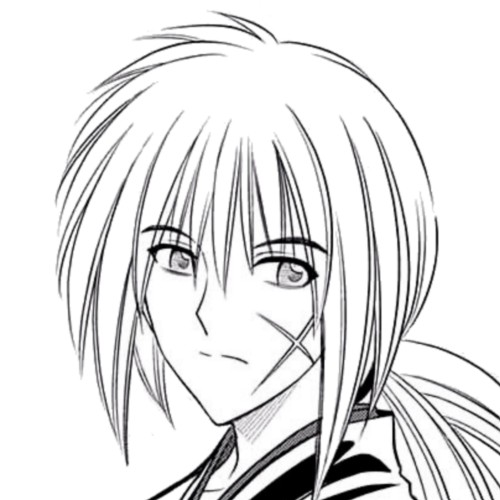
The art style personally reminds me of later DGM artwork, which I also wrote a review on if you want to read :D
Finishing up my complaints before I spew on what I love, I think the action and antagonistic cast can be quite lacking at times. Tokyo arc outside of Oniwabanshu is quite repetitive and stale, as it could have gotten its point across after one or two scuffles, yet drags a wee bit. I think the final 4 enemies of Jinchuu are very bland and lack creativity. While I think Enishi is perfect in his own way and to Kenshin, he feels completely underwhelming compared to the greatness of his predecessor Shishio.
ALRIGHT! Philosophy time. What role do the strong and weak play in the world? What is the purpose of government? How does one bear their sins? How does one interact with the world around them: foe and friend alike? How does one deal with hurt, betrayal, loss, anger, and sadness? How does one move forward with life despite tragedy? What does the end of an era mean, and how does one embrace the new one? These questions, and many more, at taken genuine shots at by RK. The plot and narrative behind Kyoto arc I believe is the strongest in the series, in execution. Shishio is an EXTREMELY compelling antagonist who completely counters Kenshin's will, philosophy, and way of life.
At the birth of a new government and era, where law becomes truth, justice, and protection: how do samurai live within such? Kenshin holds his sword to defend those around him, yet his Hitokiri ways can be put behind him thanks to the new age of law. No longer is killing required, and no longer shall killing take place within his eyesight. Shishio serves to directly counter this, pointing out the weakness, corruption, and failure of the government which stands today. The weak ARE NOT protected in Shishio's eyes, and he wishes to personally demonstrate this.

I want to point out later the nuances and potential implications of this. Regardless, Shishio serves to antagonize not only kenshin in the present, but everything he has worked, suffered, and longed for in the past.
One of the most important themes in RK is the will to live. Each character is dealt a very tragic hand, yet they must pick themselves up and find meaning once more. Kenshin constantly tells people to live: through not only his refusal to kill, but his genuine speeches to those he has bested.

This view is tested when not only does kenshin fight not to protect those he loves, but to live himself. The ultimate testament to his character and adhesion to such a principle, is when he finds the will to live once more despite being within the depths of despair himself.

This moral alongside his tragic and bloodstained life shows his own will, perseverance, and grit. A character who, no matter what, can pick up their sword and keep fighting for what matters to him.
Now before I get into the more spoiler heavy analysis, I would ask this: If any of these themes or values strike a chord with you please give this series a chance. It focuses much more on meaning than many other series out there, rather than just power and fighting.
Enishi is a very personal final antagonist for Kenshin, rather than having to overcome his enemy, he ultimately has to overcome himself. Kenshin must find an answer of how to atone for his sins and a way to repay such debts. I will be the first to say, his answer is OBVIOUS. From chapter 1 we have seen his answer and I think he either dwelled on it for too long, or picked the lowest hanging fruit. Similar to Allen, Kenshin said he could only protect the people in front of him, and that is what he continued to do.
Now on the topic of Kaoru's fake death. I was flabbergasted. I was NOT expecting it at all, and while saddened, I either wish she stayed dead or never was baited in the first place. I think her death would have offered many interesting thematical elements, such as Shishio's victory.

Shishio posited that the weak could not be protected, while kenshin rebutted the opposite. We see that in the end of their duel, we are greeted with this panel.

This panel not only symbolizes Shishio's own self destruction (a genius way of allowing kenshin to not kill, because Shishio NEEDED to die unlike others. He would not have changed, unlike all the others. Shishio was a man of IMMENSE conviction, perseverance, and stubbornness. Which is perfect for this series, but I digress), but also the flow of time to a new age. A time, where as kenshin represents, law protects the weak. As most of Kenshin's opponents end up in a jail or some sort, this allows for him to live out his life of peace and refusal to kill. That is, until, the weak ARE NOT protected. Such as in the case of Kaoru. This is what mentally tears at Kenshin. From hell itself, Shishio taunts him because at the end of the day, the law cannot protect everyone. This presents an interesting dilemma: Could Kenshin have saved Kaoru if he killed? If he had a Katana instead of a Sakabato, the one he loves most may still be alive, yet his refusal to kill has ironically killed the one he loves.
This also presents an interesting idea of a protagonist who can bear the cross he burdens others with. Kenshin has yet to truly lose anything from his mindset of peace. All his suffering from path was met with bloodshed, but no antagonist pushed him to the point of suffering BECAUSE he refused to kill. I think this should have been utilized with at least a minor character, rather than no one dying. This allows Kenshin to spout ideals of peace, while facing the costs of his philosophy rather than sugarcoating and luckily having everything work perfectly.
I think Watsuki handled it really well regardless. We see that, despite Kenshin still losing Kaoru, he finds his will and resolve once more without her and still vows not to kill. Another interesting aspect would have been this: Could he have forgiven Enishi. As Kenshin caused him suffering, and he to him, would they be able to forgive each other in the end? As Kenshin beared the cross of taking lives, how would react to those similarly trying to atone? There are many amazing thematic elements that could have been at play, but once more I digress.
I am ultimately glad Kaoru is alive for many reasons but I won't get into that here. Enishi moving on grants Kenshin some semblance of forgiveness, but I am not too big of a fan of such passion and willpower dying. Personally, if I dedicated my entire life to killing someone, a speech wouldn't let me forgive them lmao. Again, that is why I appreciate and love the unending evil of Shishio, who even in his final moments, laughed his way to conquer hell.
I could yap forever at this point so I will cut the VERY lengthy review here.
I know it was long, but if you stuck through to the end, Thank You! I may finally start getting back into manga and have a lot of series I wanna read in Japanese so stay tuned (maybe) for more updates. Also as a final note, I don't really like scoring series too much with a concrete number cause it feels pretty relative as to what deserves giving points vs taking them away, but regardless, dont mind the 80 too much ig?
Finding your will to live, ways to move forward, and a place to call home is the rurouni's way. The people we love are our strength, our rocks, and our reasons.

10 out of 14 users liked this review
