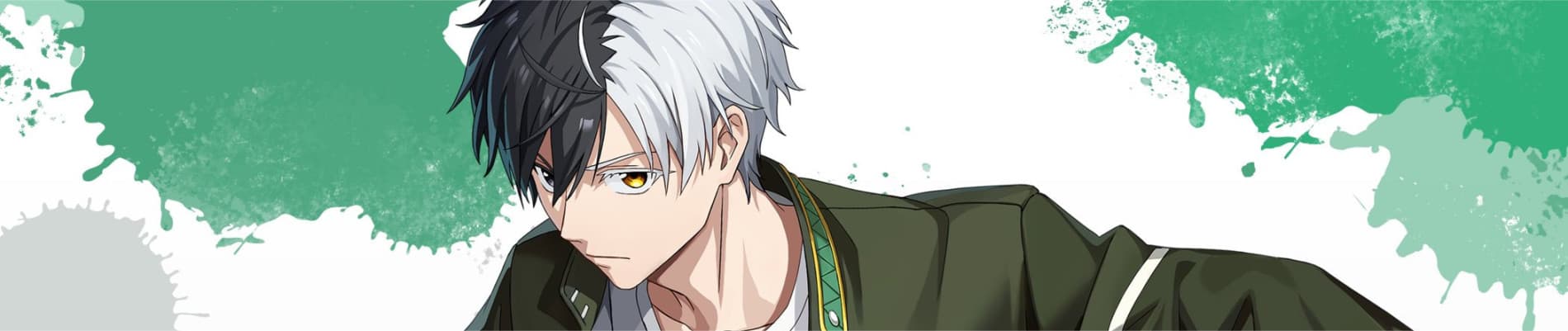
Every once in a while, there is a show that comes around and defies all of your expectations in all of the best ways – the first season of Wind Breaker was precisely that for me. What looked like just another generic action shounen with smooth animation and crisp art turned out to be a heartfelt story about community, stigmatization and self-acceptance, and Wind Breaker’s second season carries on right where the first left off. A couple disclaimers before I get into any details: I have read the manga up until chapter 182 and while I’ll do my best to not spoil any major plot points, I may make allusions to general character arcs; secondly, I will be spoiling the events of this season, so this review is not spoiler-free. In addition, I will be using he/him pronouns for Tsubakino, since I believe that is what is used by the mangaka, but my apologies if this is incorrect in any way.
Starting with the production, Cloverworks does not miss. While there were certainly times where it was evident that frame-saving techniques were being used (often in the form of still shots punctuated by a panning camera shot or action lines to imply movement without actually animating it), the animation was everything it needed to be during all of the moments it counted most – as fluid, dynamic and overall flawless as it was during the first season. The choreography, perhaps the standout aspect of the first season’s production, does not falter in any aspect in season two either, with the Sakaki twins’ fighting style by far being the standout here. Even from the manga, I loved the creativity behind their fight in the Red Light District arc, and the animated adaptation certainly did not disappoint. The soundtrack was also a particular standout, with ‘Stronger’ replaying at several crucial emotional moments, usually involving protection or forgiveness (Nagato and Shizuka, respectively), but a special shout out also needs to be made for Tsubakino’s theme, which was an unexpected, but somehow very fitting choice for his character. The colouring and artistic decisions during Sakura’s more introspective episodes, particularly during the tightrope metaphor, were very well done and communicated the messaging of that arc brilliantly. I think the pacing was also improved upon compared to last season, especially where the tournament arc was weirdly in the middle of the season -- structurally, leading off with the high-action KEEL arc, before relaxing into Sakura's character arc and Tsubakino's introduction before ramping up the stakes with the Red Light District arc felt a lot more appropriate and fixed the biggest issue I had with the first season.
__
Kaji Ren and Tsubakino Tasuku: the Upper-Years__
It may be surprising, but I didn’t actually care much for Kaji’s story when I first read the manga. I thought that the ‘evil split personality’ trope was overdone, and probably a bit too on-the-nose when it came to the Tokyo Revengers 2.0 accusations, especially for the more grounded nature of the remainder of the characterizations and fighting styles. However, seeing it animated certainly changed my mind. Kaji is a very clear foil to Sakura – someone who hated himself (admittedly, in different ways than Sakura did), but someone who has faced the darkest parts of himself and has found himself much further down the path of self-acceptance and self-care, compared to Sakura. At first glance, Kaji seems like a classic anger issues character (with the VA casting of Okamoto Nobuhiko definitely contributing to this – he really does just sound like Bakugo half the time), but Kaji’s emotional depth breaks that mold. Kaji is clearly uncomfortable with socializing or with emotional vulnerability, but he is a lot more emotionally intelligent than initially given credit for. Even though he has all the tact of a bulldozer, he can see Sakura’s fight with himself and he can see himself reflected in it, and he tries his best to be the person Hiiragi was for him, to Sakura. I feel like Kaji in this season is a very good example of Wind Breaker’s depiction of positive masculinity in a way that subverts its traditional association with violence. Kaji is violent, but what makes him a beloved character, both with respect to the rest of the cast and with fans of the series, is not his ability to kick ass (although, I’m sure that doesn’t hurt), it’s his genuine care for Sakura and the way his advice is framed as pure logic, making it very hard for Sakura to refute. Putting another label on coffee won’t make it tea, no matter how good the label is. Sakura denying that he cares for his friends won’t change the fact that he does, or that he has to change the way that he approaches fights, now that he is fighting for someone who isn’t himself – only accepting it will help him overcome ‘freezing up’ when his friends are in danger, and the blind rage that comes from one of his own being hurt. Kaji’s anger isn’t a power-up or something to be celebrated, it’s a side of him that he deeply fears and reviles – it is anger and violence without control, and that is something (often glorified in other depictions of masculinity I have seen) that Wind Breaker does not stand for. This season really did make me eat my words regarding my initial feelings on Kaji’s character – Kaji isn’t who he is because of his ‘superpowered evil side’, Kaji is who he is because of the choices he makes to define himself beyond his blind violence, the people he surrounds himself with to make that happen, and the advice he gives, knowing that he is the best person to do so, even if it makes him uncomfortable.
Tsubakino, on the other hand, is a more divisive character for obvious reasons: he likes wearing skirts, doing make-up, having long hair and looking pretty in the feminine sense of the word. And yet, he is also a very good foil for Sakura. Both of them don’t meet traditional beauty standards in society (as cool as Sakura’s character design looks in anime, if a real-life person looked the way he did, I’m sure that he would face some serious stigmatization) and both of them have been forced to, in the past, hide who they truly are due to societal pressure: Sakura was written off as a violent lost cause and Tsubakino as a “freak”. Tsubakino, unlike Kaji however, is at the end of that road to self-acceptance: he knows who he is, he owns who he is, and he loves who he is. His episodes, with the elderly couple, are very well-done and serve as a great emotional outlet to compliment the Keel arc, which was relatively more action-packed, before heading into the Red Light District. In my opinion, Tsubakino embodies everything that Wind Breaker as a series stands for. Tsubakino exemplifies chasing your own dreams and not hiding who you are because other people cannot accept you, but he also understands the consequences of doing so. He isn’t naive. He wouldn’t pull his punches against Suzuri just because he feels sympathetic towards him; he instead uses the fight (as communication, a la Umemiya) to prove that dreams aren’t weak, that dreams and acceptance are worth fighting for, showing who he is using actions first, and words second, once Suzuri has been defeated. Tsubakino is bold and unapologetic, having jumped from that tightrope long ago. Tsubakino is also very interesting in his sisterly relationship with Shizuka (at which point gendered pronouns become slightly muddled, since it’s made clear that their relationship is mutual sisterhood): he supports her dreams and he will fight for her dreams, even if that means fighting her. I think this mindset is a brilliant reflection of Togame and Choji’s relationship back in season 1, where sometimes, saying ‘no’ to someone is ultimately what is best for the other person, even if that starts conflict. I think this reflects who Tsubakino is perfectly: brave, kind, but also emotionally intelligent enough to make the difficult choices and stand up to the very person he wants to protect. Final note: I love how Tsubakino, as the most feminine-presenting character, is presented as an absolute beast (pole dancing takes an incredible amount of strength) – those high-heeled kicks could definitely kill someone.
All of that to say, people who drop the show or hate on Tsubakino because of how he looks have completely missed the point of the show entirely.
__
Sakura Haruka, the Sequel__
My review of season 1 was less of a review and more of a hastily cobbled together rant of why I love Wind Breaker and Sakura Haruka as a main character. I am pleased to report more of the same is coming. I still love Sakura Haruka and I still think he is a perfect main character for the series. Here’s the thing: Wind Breaker often draws comparisons to Tokyo Revengers, and probably for good reason. They’re both modern delinquent series and Wind Breaker draws very clear inspiration from Tokyo Revengers, especially in regards to the character designs and their ‘one-word’ personality traits. However, why I despise this comparison (no hate to Tokyo Revengers here; that series had a vastly different goal and, by all regards, left a lasting legacy in their own niche of delinquent media) and why I love Wind Breaker more than a lot of its peers in the shounen genre, is embodied in none other than Sakura himself. As previously mentioned, Sakura is a character whose growth is hardly in terms of physical strength and almost wholly in terms of emotional development. He was a lonely person who internalized all of the hate he spent his childhood surrounded by, and externalized that in the form of violence. We started to see hints of it in season 1, but all the stops are out in season 2.
In the KEEL arc, which is a lot more straightforward action than the tournament arc in season 1, we see the consequences of Sakura’s worldview falling apart. It’s not easy, when something you’ve spent so long believing in is swept out from under you, and I like that we get to see Sakura relapsing into old habits of fighting for his own desires (avenge Nagato) rather than protecting the rest of his classmates. I like that we get to see Sakura’s penchant for self-isolation and for internalizing negative events as being his responsibility alone, which was what his mindset was before joining Furin. In the KEEL arc, Sakura slips, but Kaji tells him that he has, and his friends are waiting to catch him when he finally lets himself fall. It’s startling vulnerability for a character who thus far has embraced fighting and violence, a reminder of what he has to lose and what he is fighting for, done very elegantly in the midst of a very well executed shounen fight.
Sakura’s illness plotline was perhaps what I was most looking forward to this season, and the adaptation absolutely nailed it. I love the storytelling behind the entire thing, how Sakura doesn’t expect anyone to be there for him and how he’s accepted that, as well as the visual storytelling behind his empty, desolate apartment (which, minor spoiler warning, becomes more filled with personality as he accepts his friends into his life). I love his interactions with Suo and Nirei that show just how hard his life was before coming to Furin and how much every single adult in his life has let him down before this point, and I love his talk with Kotoha. There’s a lot I could say here, but I feel like I’ll be repeating myself, so I’ll say this: I love how Sakura’s arc lets him be vulnerable. As the main character in a delinquent series who is an absolute badass, I love that Sakura is allowed to be emotionally vulnerable. Sakura is allowed to be just completely wrong about the people around him (a trait which, as Red of the YouTube channel Overly Sarcastic Productions pointed out in one of her trope talks, is surprisingly rare for male lead characters), that Kaji ultimately calls him out for. I love that Sakura is allowed to face his fears of isolation and abandonment and that we are shown that this isn’t easy for him and that he is so heartbreakingly scared, but that Sakura lets himself be vulnerable anyway and chooses to let go of that tightrope.
Speaking of, the adaptation of the tightrope scene was absolute perfection in every sense of the word, especially his monologue about how he never even noticed the pain he was in, until it was gone and he could breathe. Well done, Cloverworks.
All in all, Sakura remains a very lovable main character who learns and grows from every single arc, becoming a better leader and a better person, whilst making strides to figure out what he wants and who he wants to be. I’ll admit that I teared up a bit when he finally admitted that he loved it at Furin. Sakura is just so compassionate and kind, but he is also a person with deep insecurities and fears, but I love that no matter how scared he is of losing his friends or how much he struggles with that fear, Sakura is never, ever portrayed as weak.
__
Endo Yamato__
I’ll keep his section short to avoid spoiling too much, so I’ll focus on the fact that Endo is a great parallel to Sakura, and in some ways, is probably someone who Sakura would have wanted to be like, if not for Furin. Endo believes that being alone makes him stronger, and that the mindset of Umemiya will only drag him down. As I mentioned in my first review, Umemiya defeating Choji was a great way to portray the strength of Furin’s community-focused mindset, but Endo provides a strong challenge against it, and with it, a strong challenge to Sakura’s newfound resolution to stay with Furin and protect what the school stands for. It’s a conflict in both the physical, combat-focused regard, but a conflict on the ideological level, too.
Overall, I enjoyed Endo this season. I don’t want to say too much, because most of what I have to say about this character is reserved for the upcoming War arc, but I think his introduction was done quite well, and I hope to see his upcoming fight animated soon.
__
Conclusion: Brotherhood and Acceptance__
Wind Breaker has always been a story of brotherhood and acceptance far more than it is a story of teenage gangs. I think this season especially is a powerful statement on the meaning and ramifications of acceptance, particularly through the characters of Sakura, Kaji, Tsubakino and Suzuri. All of these children could have ended up as very twisted versions of themselves: violent and angry, with the strength to back it up, they could have done real damage to the community around them, had they been written off and labelled as nothing more than worthless delinquents. Instead, Umemiya (and Furin) saw past that facade of strength and saw who they really were, and accepted them, and helped them accept themselves. Sakura isn’t an unnatural, violent freak of nature, he’s someone who has only ever known loneliness, but possibly has the biggest heart around. Kaji isn’t a mindless fighter only good for violence, he’s awkward, but well-meaning and much more emotionally capable than he lets on. Tsubakino isn’t weird or unnatural, he just loves looking pretty. Suzuri isn’t a heartless, emotionless mercenary, he’s desperate to keep his friends alive and united. Wind Breaker shows the power of acceptance and community, of looking past traditional societal values, of being open-minded to what masculinity means – instead of ruling through fear, like KEEL, Wind Breaker chooses to embrace love and community.
There is more I could say. I could talk about the symbolism of the storm in the opening, and the wind chimes that remain long after the clouds have parted, or the humour, or Suo and Nirei's relationship of mutual respect, or the character writing for the side characters this season, but this review is already long enough, so I'll say this instead. Wind Breaker is a story that tells us that children aren’t lost causes, to be discarded and given up on when they don’t fit into a societal mold. Children deserve love, and that doesn’t mean freedom from consequences (e.g. Natori not receiving forgiveness), but it means that every child deserves a chance to accept who they are and to find out who they want to be, even if they are violent or ‘difficult’. Wind Breaker is a story, ultimately, of love triumphing over hate, and I think that’s a story sorely needed in the apathetic digital age we find ourselves entering today.
56 out of 65 users liked this review