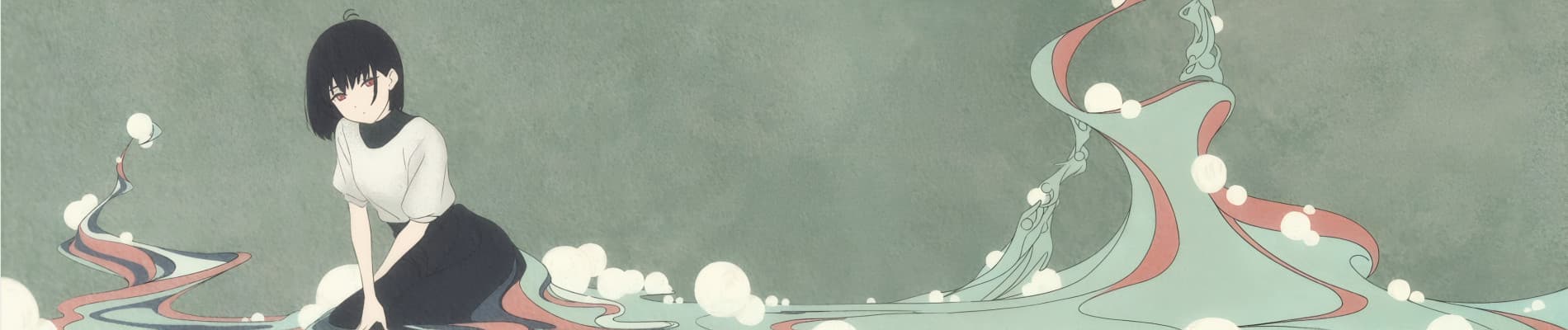
Shoushimin Season 2 is a strong continuation from the foundation laid by first season, further exploring Kobato and Osanai’s characters and what makes them anything but ordinary individuals, for both good and ill. The focus on two larger mysteries, each told over half the season, provides more intricate puzzles for the viewer to follow while giving ample time for it to intertwine with the character drama. With the new status quo established after the first season having Kobato and Osanai go their separate ways, much of the examination of their relationship over the course of the season is more implicit and indirect. Yet it still proves compelling since the characters that Kobato and Osanai enter relationships with serve as foils or reveal new sides to them, providing clear commentary without the need for more heavy-handed scenes and dialogue that tended to crop up in the first season. This growth in their relationship and the full uncovering of their personalities allows the latter half of the season to explore the previously glossed over emotional connection between them, even if it continues to do so indirectly. Structuring the narrative as such does lead to some strain, with the initial focus solely on Urino’s perspective feeling somewhat jarring and alienating, while only examining Kobato and Osanai’s early history in the latter half results it being somewhat undercut by since it comes after a major breakthrough in their relationship. But these issues are ultimately minor shortcomings, hardly detracting from Shoushimin’s continued excellence in combining well crafted mysteries and compelling characters into a single narrative where both elements enhance each other.
The first season of Shoushimin was likely reaching the limits of what could be explored between Kobato and Osanai through their direct interactions. Particularly with the revelations about the extreme side of Osanai’s personality, it was prudent on the character front to have a story where they were apart, or even on opposing sides of a mystery. Attempts to explore or highlight certain aspects of a character through the absence of something else is often difficult to write, but Shoushimin definitely succeeds by having the new “love” interests they introduce, Urino and Tokiko, be clear reflections, if not outright foils for our protagonists. Perhaps less so for Tokiko who, while presenting interesting question about Kobato’s personality and how he connects with other people, is still largely only relevant on the character front. It is Urino who is more efficiently utilised in the narrative, being a foil to Kobato, or at least a reflection of his old self, while revealing more of Osanai’s peculiar way of expressing herself and her preferences in a partner. But most notably of all for the audience, Urino is also the first major actor to get involved in the serial arson mystery, which defies expectation since it is taken for granted that Shoushimin is told primarily through Kobato’s point of view.
The narrative following Urino’s perspective almost exclusively in the opening episodes of the season, with even Osanai’s involvement kept relatively limited, does lead the viewer to feel somewhat alienated due to the unfamiliarity. Perhaps this was the intention since it becomes abundantly clear once the investigation into the arson mystery ramps up that Urino is being used as a reflection of Kobato. This unease and general “off” feeling of how the investigation is progressing while being left with characters we know little about is a tonal signal to the viewer that something is amiss or meant to go awry in the near future. Yet it still might have made for a smoother viewing experience to tie more of Kobato’s perspective in to make the comparison more explicit, at least initially. Particularly since the show presents the arson case as a more of a fair mystery and eventually pivots back to heavily following Kobato’s perspective without much preparation in order to resolve it. Even if it were just additional cuts to scenes of Kobato tackling purely relationship issues or resisting the urge to get involve in another mystery, it would have signalled a much clearer intent for the two to be compared to each other much earlier. And it would have added some nice thematic juxtaposition between Kobato’s ostensibly normal life and Urino diving headfirst into the mystery.
This leaves the mechanical side of solving arson mystery just slightly unsatisfying since we do not follow Kobato’s thoughts the entire way through. The actual puzzle itself is still solidly constructed as a variation on the detective versus “fake” detective type of story where both of them attempt to solve the same case. Though in this instance it does not involve them going head to head in a race where they attempt to stymie each other and mostly has Urino very quickly set himself up as a poor reflection to Kobato with how the praise from early success gets to his head. This leads to the more interesting aspect of how the story is constructed with the arson case effectively being two mysteries layered on top of each other: Who is the arsonist? But more importantly, who has instigated the newspaper club to fixate on this and to what end? Yet having these layers to the mystery does not build towards the intuitive climax where both of these supposedly independent layers click into place to awe the audience, which is by design since it is clear early on that Urino is oblivious to the bigger picture question. While Yonezawa has wrote other works like Hyouka’s Credit Roll of the Fool that deliberately obfuscate the social elements of a mystery, fixating on the puzzle at hand only to later strike both the characters and viewers with how simply the solution really was, the arson case draws the viewer’s attention equally to both these elements.
While it makes solving the arson case itself feel less intellectually impressive since there no grand revelation that recontextualizes all the clues in play at the end, it does allow the narrative to interweave its character exploration far more effectively. The best instance of this is done with the misdirection and lingering suspicions surrounding Osanai’s involvement, which both add to the complexity of the mystery while exploring her character. Ironically, suspicion falling on Osanai despite her being one of the protagonists is never quite eyebrow raising as one might expect. It neither evokes eye rolls because it feels like a blatant red hearing, nor does it feel like a major breakthrough in the paradigm of the mystery because a protagonist is now a convincing suspect. Most viewers, likely from genre savviness or simple storytelling instinct, know that having Osanai be the arsonist would irreversibly change the tone and even genre of the story. Yet given the extreme conclusion of the previous season, it is hard to put it past her character to do something like this. This in itself prompts a reflection of what kind of character Osanai is because either outcome, her indeed being the arsonist or merely being involved in her own intersecting scheme, would be convincing and have interesting implications. The fact that such a possibility can even be entertained while not being outlandish speaks volumes about her character and prompts the question of what Kobato sees in her. Although it might be arguably harder to execute a convincing misdirection, as was done in Shoushimin’s previous season, this multi-faceted mystery still requires a high degree of craft to execute, all while also demonstrating again that Yonezawa has the skill to write both the intellectual components of the mystery and compelling characters.
This forms a season long structure of having Kobato and Osanai spend much of it separate with few scenes of extended interaction. Particularly so in the latter half of the season where the emphasis is on the parallels between the current hit and run incident they are involved in and the first mystery he and Osanai tackled together. While perhaps not incredibly deft or profound when compared to dedicated literary fiction, this indirect approach to character exploration and themes does have an excellent artistic flair to it. The continued outstanding voice acting that brings subtly and layers to the characters, particularly Youmiya Hina’s performance as Osanai, greatly aid in this. Again, it bears mentioning how difficult it usually is to emphasize or contrast something using the absence of it, in this case examining two characters and their relationship by essentially telling stories that dance around directly focusing on it. But Shoushimin executes it in a way that even a viewer who is more used to direct storytelling can pick up and appreciate at least some of it. This is heightened by the continued excellent direction and scene composition that carries over from the first season, having seamless transitions between Kobato’s inner world and the reality of the narrative, giving a strong tone and creating interest in what could easily have been dull dialogue scenes. It would have been more ambitious for the adaptation to intersperse the reflections Kobato has on his first mystery with Osanai throughout the earlier arson case, further emphasising their connection, as strained and abnormal as it might be, through her absence and how they are spending the time apart. However, this retooling would be drastic and ultimately asking far too much while essentially cannibalising much of the second story which has its own artistic merits.
By choosing to keep the two stories compartmentalised from each other, it does make the latter half of the season feel somewhat out of place. This is more so a function of a season of television being its own narrative unit, ideally pacing and organising all its episodes to build towards some objective, or to have them support each other more directly in the case of something that is closer to an anthology. However, because of the arson mystery and the hit and run being written as their own contained narratives, it leaves much of the thematic links between them feeling too indirect. There is still an implicit comparison being made between the two stories since they centre on the relationship between Kobato and Osanai. Urino serves as a reflection the kind of person Kobato used to be which is then shown more directly in the flashbacks of the hit and run mystery. Yet, they were not designed to necessarily be read together so closely like is expected of a season of television. Given that the arson case has Kobato and Osanai piece back together their relationship, the narrative momentum leans towards exploring this new status quo. Yet the hit and run mystery somewhat unintuitively goes back to look at the foundations of their connection together despite the pervious story already convincing the viewer of their affinity.
The hit and run mystery is still an interesting narrative in its own right, with both the actual mechanical mystery being solidly put together and revealing more about Kobato as an individual. Particularly, we get to see what Kobato was like in junior high, which thus far has only been self-described as him being conceited and self-absorbed. It gives interesting insight into his character since it is shown to be only partially true, which then reflects on how Kobato as a character judges himself and how he feels about his current relationship with mysteries in whether it is appropriate to derive satisfaction from solving them. Not only that, but the structure of having the present day narrative run parallel to them solving the case in the past creates this contemplative and nostalgic atmosphere, highlighting the once again indirect comparisons the show has focused on. To see how far Kobato and Osanai’s relationship has come and how they’ve grown and how much has also stayed the same is compelling once the more subtle links click into place. This aids in bringing together the tone of the season together, but it still does not feel like quite enough to seamlessly bridge the two stories.
In particular, Yonezawa’s frequent choice, at least in the Shoushimin series, to have his mysteries also operate on the social level encourages the viewer to constantly be skeptical of what might otherwise be scenes solely dedicated to characterisation. Instead of indulging in the hit and run mystery as being more of a framing device to explore Kobato and Osanai’s history, there is the constant urge to search for some causal link between the two that undermines the attention paid to the thematic parallels and comparisons being made. This does have the effect of keeping a savvy viewer engaged, scrutinizing every interaction in the present for something suspicious, but it does take away some of the impact from the emotional side of the narrative. It is part of Shoushimin’s strength that even if the two hit and runs end up being only similar to each other instead of some interconnected mystery, that it is still an effective and atmospheric exploration of the characters. There is poetry in how Kobato’s pervious arrogance has come back to bite him despite him trying to be more “ordinary”, even if it is in a more karmic form than something literal like the hit and run driver being the same perpetrator or having this be a matter of revenge.
This was likely an unintended effect of writing multiple mysteries in succession that heavily emphasize this structure instead of a pattern Yonezawa was actively trying to cultivate. To be certain, the viewer is not responsible for this since they have been understandably conditioned by the previous mysteries to expect a causal connection between all strands of the narrative being presented. There ought to be the equal possibility in the mind of the viewer that this story is meant solely to examine Kobato’s character, with the suspicions in the present all being red hearings and a way to explore how he cannot resist his nature as a sleuth. However, that idea appears to have never been seriously entertained or expected due to the learned genre savviness from the previous mysteries. Regardless of eventual solution or structure of the hit and run mystery, it is a little sad that the character side has unwittingly become at least slightly subordinated, even if this too might be another instance of Shoushimin suffering from success in how compelling its mysteries are.
Overall, Shoushimin is an exceedingly well-crafted show in its character writing, in the construction of its mysteries, and in its presentation. The characters being more atypical, and even extreme, allows for the story to do have more dramatic mysteries that by now should firmly distinguish itself from Hyouka in the eyes of every viewer. The balance between the mysteries and the character writing is starting to teeter with how the small-scale school stories have been forgone in favour of more dramatic mysteries. Yet the series does still clearly and effectively occupy its niche in the genre, operating somewhere between cosy low stakes mysteries and something more consequential like solving a murder. This serious yet mundane atmosphere with just the right amount drama and stakes allows the show to explore complex characters with more abrasive contradictions and redeeming qualities that might otherwise be expected in a teen drama. While the cinematography and animation has undoubtedly made the adaptation shine, there is still more that could be done to make the two mysteries fit more seamlessly together as a single season of television. Particularly since a conscious choice was made to bypass the light hearted macron case in the novels that might have more tonally balanced out the season. Though perhaps that was done because there is sadly insufficient material for a third season at this point. Shoushimin is still without a doubt a strong 9 out of 10, an excellent addition to the mystery genre that carves out a niche for itself with exceedingly compelling characters.
26.5 out of 30 users liked this review
