
#
The foundation behind my disdain for Innocent Rouge is that prior to this, I regarded Shinichi Sakamoto as a very intelligent author who was highly conscious about his writing. Aside from his impeccable art, I found his depictions of sensitive concepts to be his greatest talent. This talent was evident in Innocent, however, for some reason or another, it is simply not present in Innocent Rouge.
To set the scene, it's necessary to go over what made Innocent so good. The atmosphere is established immediately with Marie-Josèphe Sanson peering into the family torture room; while the art may suggest it, this isn't going to be a pretty story. This era of France is wretched and vile and will do anything to destroy Charles-Henri Sanson's sense of innocence. Sakamoto employs two general methods with depicting the cruel treatment of Innocent's characters: forcing you to soak up the unpleasant sight to evoke a sense of disgust for what happened in this time period, or, abstracting the scene to a metaphorical sense to make you wrought with knowledge of what is actually happening behind the veil.
Method one is seen in the first chapter where Charles-Jean-Baptiste Sanson takes Charles-Henri into the torture room to be abused in the brodequin just as Charles-Jean-Baptiste once watched his father do to his sister. It's a car crash you can't take your eyes off of, with each page the disgust weighs heavier on you. And that is precisely the point. This behavior is integral to the Sanson family dynamic, it shapes who Charles-Henri is as a person, and establishes what he's going to have to go through to achieve his goals of ridding France of capital punishment.
Method two is seen in chapter 42 where, at 11 years old, Marie-Josèphe is raped by Thomas-Arthur Griffin. The following is how Sakamoto decides to depict this scene:
Spoiler, click to viewclick to hide
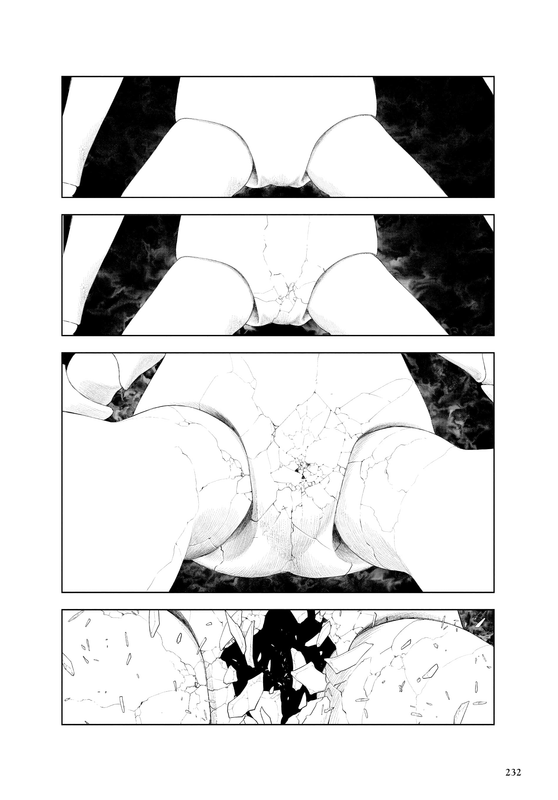
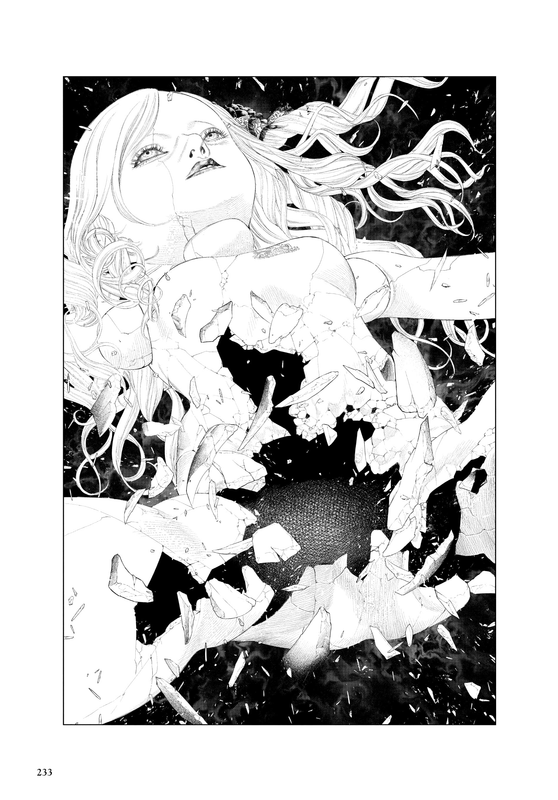
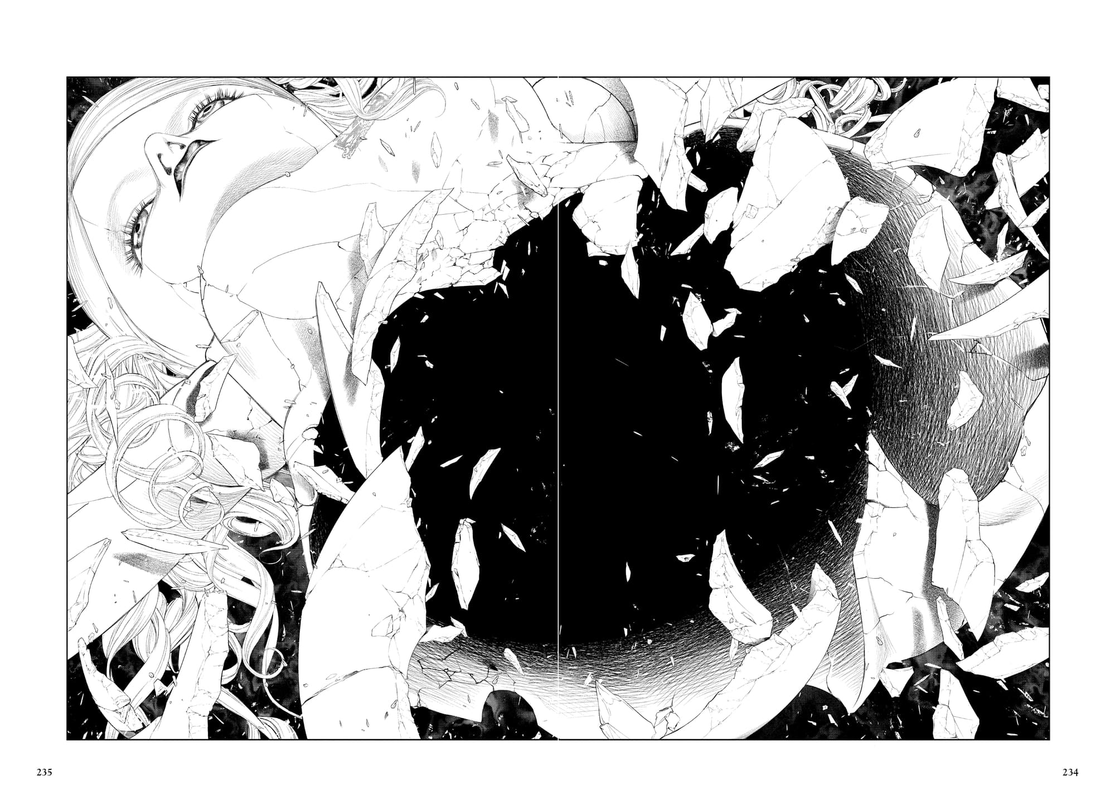
Once we get to Innocent Rouge the matter of necessity and glorification comes into question. Innocent spent a great effort giving context to the atrocities committed and how they shaped the French culture and Sanson family. It felt like a case study on the horrid nature of inequality. Innocent Rouge on the other hand felt like its goal was to be straight up schadenfreude. I feel as if it truly transitioned into this with chapter 18 when we're introduced to Marquis de Sade, a writer. The term sadism was coined as a result of his fictional characters who take pleasure in inflicting pain. Somehow, Sakamoto saw this fun little fact and thought to himself, "I should draw a bloody anal orgy with a woman who has skewers going through her breasts." Other than the desire to make a spectacle out of sexual violence, I don't know what could've compelled him to make this scene. Marquis de Sade plays no role in the story and is not a recurring character, there is nothing added to the story by him doing this, and it's not historically accurate. Anything that could have been established by this scene had already been established in chapter one of Innocent and was executed in an infinitely more appropriate and tasteful fashion. The following chapter is another instance of Sakamoto taking some little tidbit and doing far too much with it as well as further glorifying rape. In her prison cell, Jeanne de Valois-Saint-Rémy is gang raped and molested by a group of male prisoners. The next page shows her, nude, covered in blood stating, "The men of the [prison] ain't much... They can't even satisfy the great Jeanne." The following pages--while not explicitly shown--have Jeanne being raped again. This time by a man with syphilis because apparently it was believed at the time that having sex with as young as a woman as you could find would cure you of it. There is no symbolism, there is no message, there is no purpose, there is no impact.
There isn't an ounce of content that I've just described in the paragraph above that will ever be mentioned again or have any impact on the story. If it were to be removed, the narrative would be the exact same. I have poured countless thought into it and I am at a loss for what purpose there could be for Sakamoto to portray things this way. This isn't an isolated incident either. Rape in Innocent Rouge is routinely used as a cheap gimmick for shock. It's hard to see it as anything other than abuse porn.
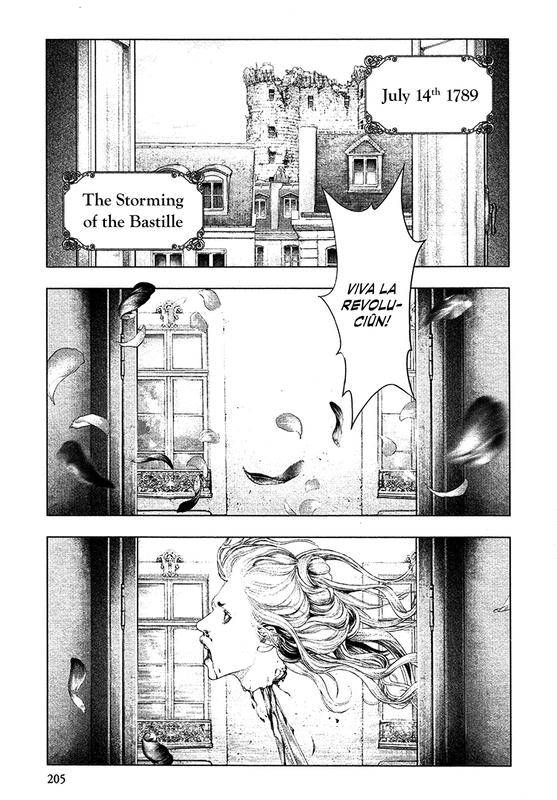 These are not the only flaws. The knowledge that the French Revolution is just moments away is one of the driving forces in this story. When Marie Antoinette was introduced she's almost immediately juxtaposed with the guillotine. And yet, it takes 149/187 chapters (Number includes Innocent's 99 chapters) for the revolution to start. And once it started, my god was it disappointing. The Storming of the Bastille was a single page and you don't even get to see it. In the very same chapter there are 3 time skips and it ends with us being introduced to the execution of Louis XVI. The timeline being nonchronological at a time that is supposed to be the climax was a laughably terrible decision. The story was never able to recover from the immediate reaction of "WTF? We don't get to see anything that happens during the revolution?" and the massive pit of disbelief that this was what I'd been waiting for this whole time. It's astonishing that Sakamoto could fumble things this badly.
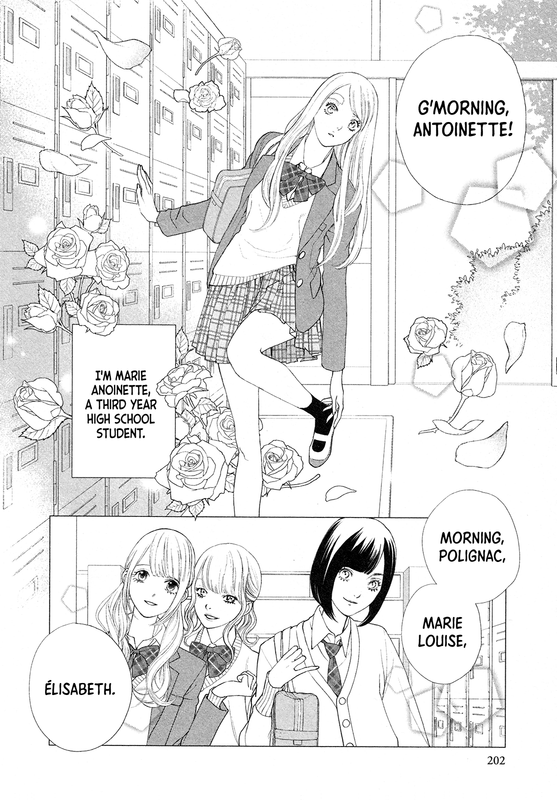 The next 38 chapters would be spent jumping around the same few years telling an out of order story after it butchered all of the interest and momentum it had spent so long creating. Those 38 chapters weren't even solely focused on the events of the revolution and what would come afterwards. At one point they decide to kill the momentum even more and take a break from the story to put Marie Antoinette into an anime high school drama and use it as a surface level comparison of the social cliques that existed then and now. Even though Sakamoto literally already made a critique of the petty social cliques of Versailles and equated them to today all the way back in chapters 93 and 94 when Marie Antoinette was refusing to address Madame du Barry.
Innocent Rouge is an incoherent amalgamation that is an insult to Innocent, victims of abuse, the reader, and Shinichi Sakamoto himself. I would have preferred if it never existed at all and left Innocent incomplete instead. If you haven't read Innocent, give it a read. You can stop there though.