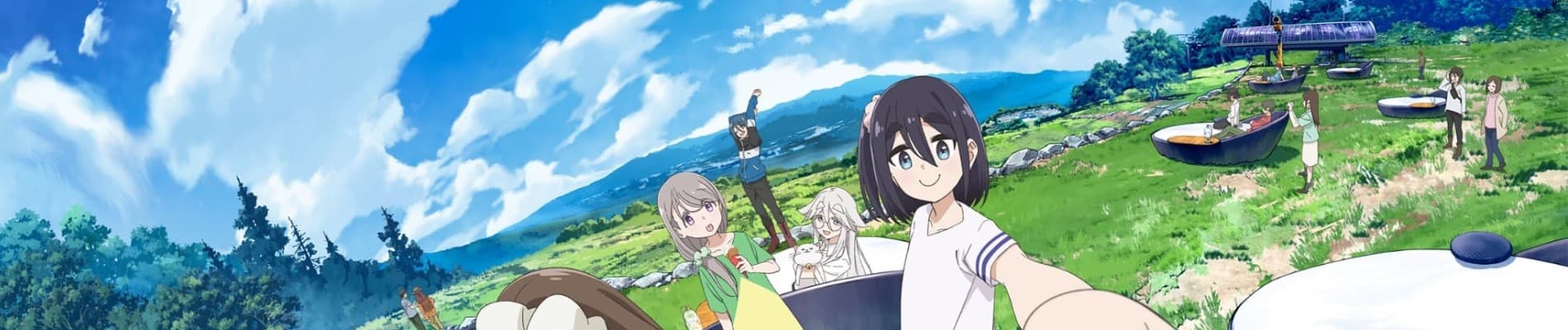
mono
a review by Scheveningen
a review by Scheveningen
Mono is an excellent slice of life comedy, using strong voice acting and directing to land its many jokes while still having room for mellow moments. It cannot be understated how effective the show is with its comedic timing, leveraging its genre to more than compensate for the limited animation resources that was likely at their disposal. While the characters are all still generally archetypal, it is more than sufficient for the genre. Crucially, they have all been brought to life with excellent voice acting and character writing that gives the show an endearing emotional core. This also helps to highlight the various locations the show visits with how the characters respond in ways specific and unique to them, making it feel like a genuine and purposeful trip instead of merely a glorified tourism advert. Despite Mono having a generally upbeat and zany tone, it also shows itself capable of some mellow and even heartwarming moments through effective control of atmosphere. The general direction of the show can still feel a bit unstructured, at least initially, since the framing device of it being ostensibly about a high school photography club mostly falls to the wayside. However, once the show establishes its mostly travelogue format, it starts to hit its stride with each episode being consistently funny and charming.
As a comedy first and foremost, Mono’s excellent comedic timing has been essential to its charm. While many shows in the genre sometimes end up relying too heavily on continuous escalation of absurdity or the sheer energy in the voice acting to sell the joke to the audience, Mono demonstrates a good mix of comedic styles. It knows when to undercut certain moments to land a joke or take advantage of lulls in the plot of each episode as a natural build up to make one through a sudden tonal shift. A particular highlight is the use of deadpan characters like Kurokuma who delivers rather harrowing information about the occult and supernatural as if it were a bland matter of fact, creating the set up for some strong punchlines. This is aided by extensive use of its cinematography to help land the jokes, with cuts to shots in different art styles among other visual methods that accentuate the humour on top of the consistently strong voice acting and character writing. It helps to make up for what is likely a more limited animation budget by essentially moving the pressure away from having detailed scenes and placing it on the creativity of the writing and directing to deliver the punchline. Taking advantage of being a comedy, it allows the show to use relatively efficient or simple animation like the characters becoming chibis, cuts to still images, or even a literal black screen with only words on it to deliver the joke. All this then allows the show to focus more of its animation on particular moments that demand it like some of the panoramas of the locations they visit. Of course, this might all sound like basic expectations of a show, but it is important to note how this is all significantly easier said than done, especially in a comedy. Mono is able to consistently land a relatively wide variety of jokes with little difficulty and few if any misses, perhaps at worse eliciting only a slight smile from the viewer instead of a hearty chuckle. Although not exceptionally novel or brilliant in its writing and execution, it is nonetheless still highly polished.
Mono’s eventual travelogue format also helps in creating comedy from both the situations it places the characters in as well as them playing off each other. This avoids the pitfall some sitcoms find themselves in, becoming stale due to the audience’s overwhelming familiarity with the static setting and character dynamics that form most of its comedy. The change in locations throughout the series gives ample opportunity to create new and interesting scenarios and bring out more of the characters’ personalities. In particular, the stories involving the occult can be initially a little jarring since the supernatural comes up abruptly and is framed as unambiguously real for the sake of the jokes, but they do eventually find their place in the narrative since people often do travel to supposedly haunted areas for one reason or another. At the same time, the show remains consistent with its characterisation and occasionally references previous jokes or events which gives the series a sense of time passing and continuity that other comedies occasionally neglect. Crucial to the travelogue style of story, the characters interact with the activities or events at their destination in ways particular to their character, making what could easily seem like a blatant tourism advert feel sincere and organic. There is always a reason within the narrative for the cast visiting a particular place, be it a quest for ham, manga research, or planning some hare-brained activity, that gives the travelling a sense of intentionality. Most of the exposition about these places is then narrated in character by a member of the cast, which provides some entertaining levity or emotional connection to what is about to transpire. Even though the intention is still very much to show off these places, it all comes together as the cast is taking a trip to these locations and responding in character to create entertaining skits instead of being mere vehicles to show off tourist attractions.
This does at times stray relatively far from Mono’s initial framing device of ostensibly being the adventures of a high school photography club. It is ultimately not a big deal since it becomes clear quite quickly that essentially almost everything in the narrative is done in service of getting the characters into comedic scenarios. But it might have been helpful to simply frame the show from Haruno’s point of view since she is often the intersection point for most of the stories, having a connection with the high school characters, her adult friend, and the other mangakas. It would also have allowed the show to delve a bit more into the few pleasantly surprising scenes that focus on writing a manga and how this travelling about aids in that process. The photography club part of the premise could still dovetail nicely into this with their work helping Haruno retain references of the places for her work. Or at least it would have prevented some viewers from expecting Mono to be more involved in exploring the craft or technical aspect of photography like some subject matter shows do. Despite this not being ideal, the focus does eventually return to the high school characters in the last few episodes, and they do form much of the emotional core of the show. While much of Mono is spent in a very upbeat and high energy tone, or perhaps one of mild comical tension when it comes to the occult stories, it is the usually the high school cast that allow the show its mellow moments. The few scenes where they simply stop to appreciate the view or reflect that their summer adventures are coming to an end gives the show that little additional burst of emotional resonance. It is nothing particularly profound, but it succeeds in demonstrating the show has heart to it instead of the cast being merely a machine for producing jokes. The show being framed as led by the high school characters does make sense in this light, though perhaps less emphasis ought to have been placed on the photography club element. It takes some time for Mono to find its narrative voice and hit its stride, but it is hardly a major issue.
Overall, Mono with its excellent comedic timing, cinematography and character work makes for a fantastic comedy. Despite not billing itself as a travelogue story, that coincidentally also follows a mangaka, it does make for a surprisingly good show in that respect. The locations that are visited are made more compelling by the characters instead of them being there to basically be diegetic advert readers. While there are numerous references to Yuru Camp, they are more of bonuses for a viewer that is familiar with it than anything necessary to appreciate Mono. With the show being exceedingly well polished yet not really breaking any new ground, it seems appropriate to give it a strong 8 out of 10.
18.5 out of 21 users liked this review
