Golden Kamuy
a review by Makaveli
a review by Makaveli
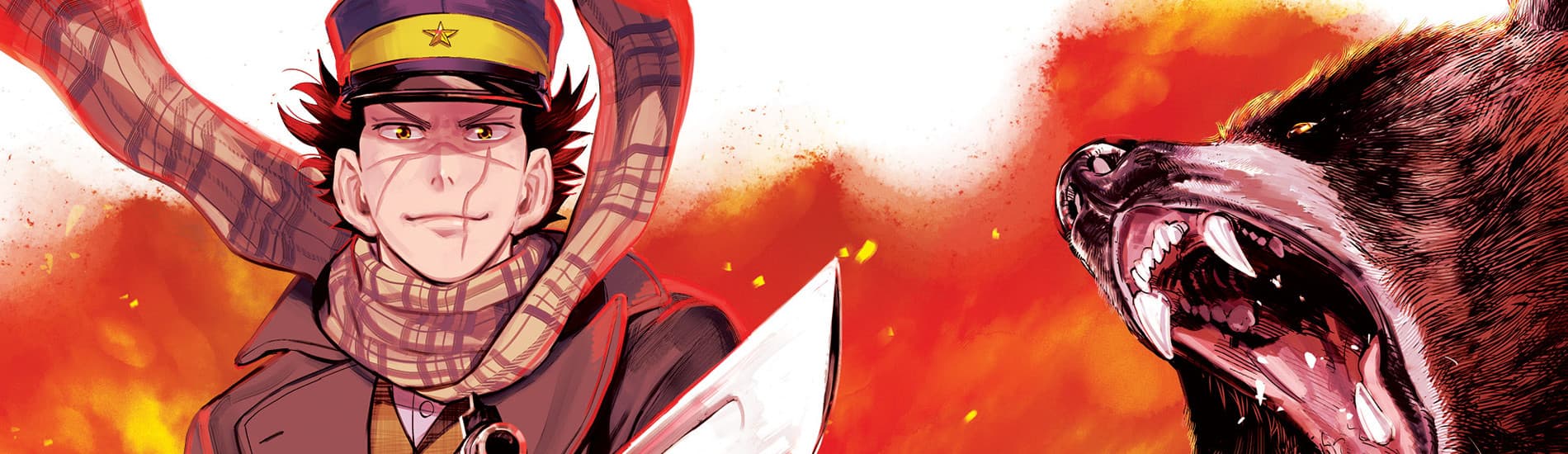
Golden Kamuy is a genre-bending, epic historical manga that achieves its aims of mixing gritty survival adventure, bitingly cynical politics, bizarre comedy, and human-sized, heartfelt drama exceptionally well. It is set in the early 1900s in the Hokkaido region of Japan, following war veteran Saichi Sugimoto, who was known infamously as Sugimoto the Immortal, as he attempts to find a lost treasure of gold owned by the Ainu. He aims to get a future under the widow of a fallen comrade, but soon finds himself involved in an unsafe treasure hunt with tattooed convicts, soldiers, criminals and the revolutionaries. Sugimoto finds himself in an entirely different position though as he finds himself hitching a ride with a very tough and extremely intelligent young Ainu girl, Asirpa, whose cultural expertise is invaluable.
The first thing that stands out about Golden Kamuy is the unusual setting and era: the early Meiji-era Japan, which is not common in manga. Satoru Noda combines actual historical characters, like Hijikata Toshizō (yes, the leader of Shinsengumi), and tackles the far-reaching effects of war, modernization, and colonialism. However, even more than historical fiction, the series immerses itself into the survival genre, featuring gut-wrenching illustrations of hunting, pose-gathering, and spending a winter in the harsh Hokkaido.

Golden Kamuy has one of the strongest character panel work in current seinen manga. Sugimoto is an impressive lead who is not only a battle-hardened soldier but also a character with some emotional wounds and a powerful moral code. But the main focus of the story is Asirpa perhaps. She is street smart, down to earth, and funny and never degraded to a supporting role or a damsel in distress. The chemistry between the two leads is amazing, being tear-jerking and comic at a go. Its supporting cast is full of weird, morally grey-skinned characters, of the mysterious sharpshooter Ogata, the radical Hijikata, and the complete mad, yet charismatic Lieutenant Tsurumi. Each of the characters is planned, and they have their motives and mental depth.
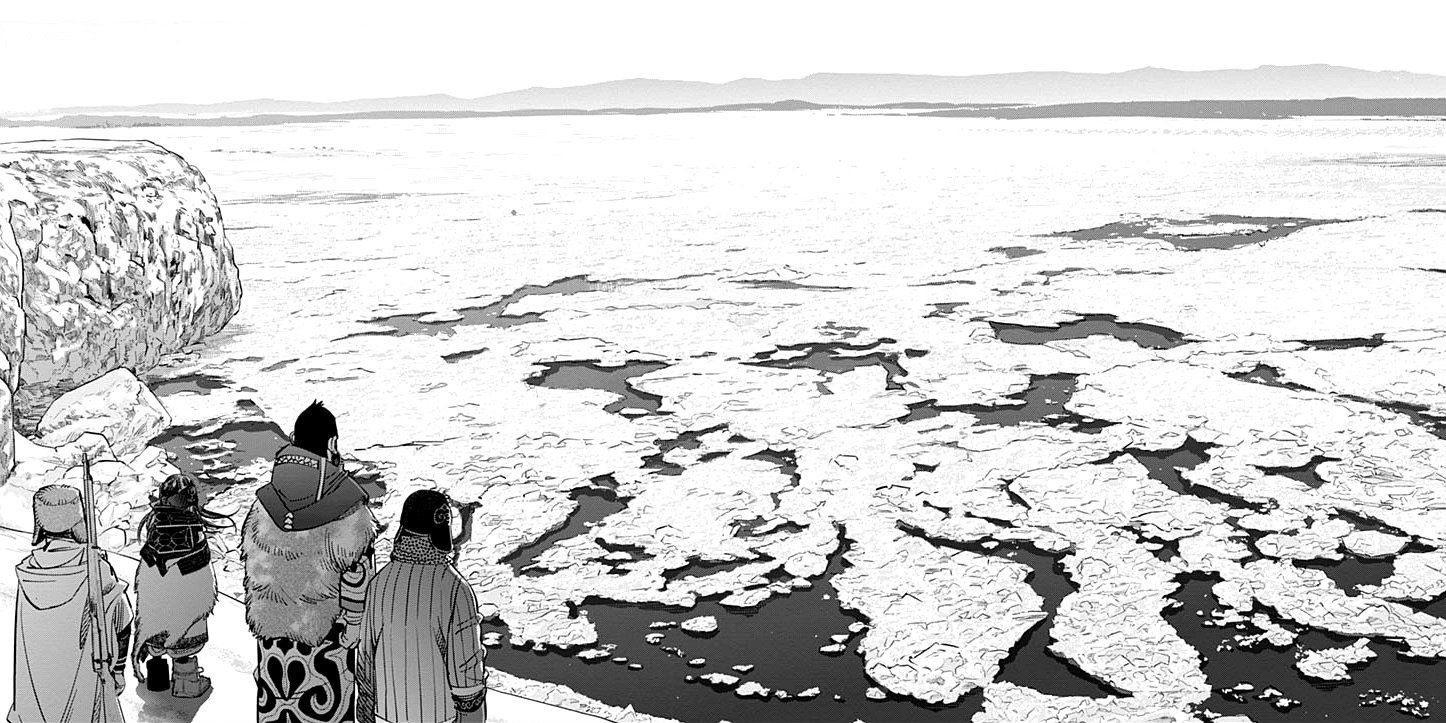
The artwork of Noda is also very dynamic Noda is good at depicting harsh beauty of wilderness, dense fight scenes, and ugly-sometimes surreal humor. Comedy: Yes, comedy: one of the best and most shocking accomplishments of Golden Kamuy is also its humor. The manga also goes to absurd lengths with overdramatic expressions, strange side characters, and eating together scenes. The repetitive joke about Sugimoto getting horrified at the fact that Asirpa loves miso or the cookie cutter-esque way in which she prepares the affectionately named “chitatap” is as sweet and charming as it is funny.
Although the violence portrayed in Golden Kamuy is usually very brutal and the psychological dark side is harsh, there is a feel-good-heart within. It has themes about found family, loyalty, and cultural survival that put it miles above an ordinary action manga. And although the plot may thicken to include military and political intrigue later in the arcs, it never feels overly bloated and pacing and resolution is well under control by Noda.
The manga may be said to have a weakness, that is, the speed by which it shifts between tones and genres. abrupt alternations between gore and slapstick may not suit some readers. Moreover, near the last third of the story, the characters and subplots are rather numerous, and it is crucial to be attentive to details. But to those who are willing to invest, the pay off is quite extraordinary.
A masterpiece of storytelling a lush mixture of survivalist toughness, historical epic, Native presentation and lawless comedy. It provides a totally different experience in manga, the one that does not laugh at its surroundings or characters but never takes itself seriously. It narrates with its streak of cruelty and humanity what people can kill to survive, and die for.

34 out of 35 users liked this review
