Only Yesterday
a review by LaserRaptor
a review by LaserRaptor
For the longest time I was the contrarian who hailed Only Yesterday as Ghibli's best work over all the other technically more impressive films, but as my memories began to fade, I grew afraid to rewatch it. I was afraid that my contrarian position would be shattered if it didn't live up to my memories and I would look like a fraud. Well, by the time the end credits rolled, like Taeko in the movie, I had left the child me and preconceptions behind in memories and found a new grander appreciation for this piece of art. Even first few minutes had planted a childlike grin in my face that didn't leave till the movie was over.
As the movie's title would imply, the primary conceit of the plot is the main character ruminating over her past 10 year old self. When life was simpler, emotions ran high as all experiences new and life changing came in waves. These memories are animated with softer colours and empty backgrounds that heightened the sense of nostalgia. While the english title works fine, I find the literal translation of the the japanese one 'Memories Come Tumbling Down' work even better. Taeko took a break from her job that she neither loves nor hates and returned to the village life, an object of fascination that has remained with her since she heard her friends taking trips to the country side as a 10 year old. Throughout the journey and her brief stay, memories flood her at random moments, memories both bitter and sweet, of dreams and regret that help re-contextualize the mundane events of the present. It is the history that helped form this 27 year old woman.
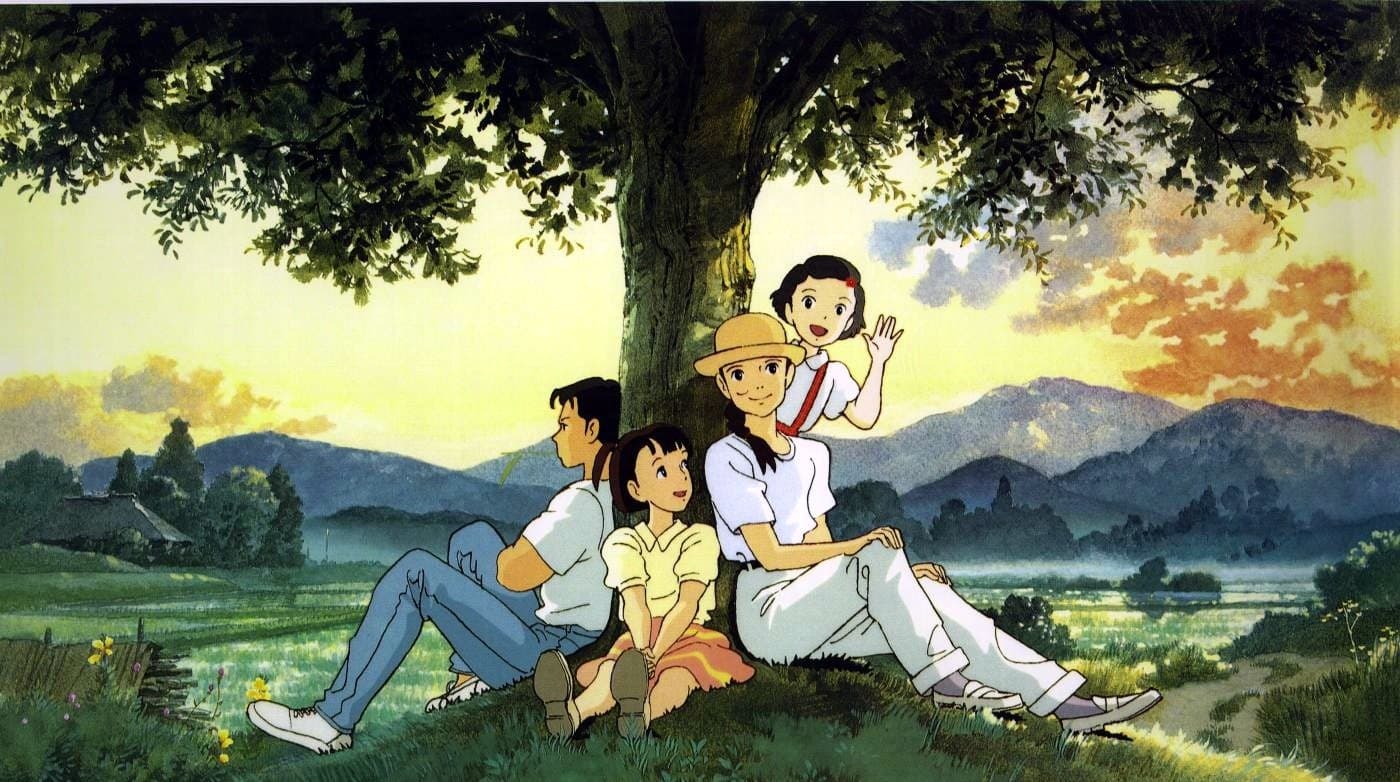
Outside of the multiple flashbacks that make the bulk of the movie, it also deals with a deep respect for the country side, both the beauty and the human labor in creating it. There's a scene where Toshio explains that everything you see, what city dwellers would call freedom of wild nature, is in fact man made. Woods cleared to make room for wood cutting, valleys shaped for easier cultivation and streams created for the human need. But there's a beauty in this transformation, a cohabitation of nature with humans with mutual respect. There's an obvious degree of romanticism to village life portrayed here that is not realistic but the director does his best to keep that reality of hardship hovering in the background while you swim in the bliss of natural beauty.
I read that the source material only had the flashback portions while the framing device of adult Taeko was created by Takahata and I feel this is what elevates this piece over being just a fleeting ode to nostalgia. I remember loving the movie as a kid for the fluffy feeling of nostalgia it presented and the all too grounded real human element that is often missing in anime. But as a 27 year old adult-but-not-feeling-it I can appreciate it far more. The distant past can seem like it happened only yesterday because it is still with us, forming us, changing us as we metamorphose into our older self.
23.5 out of 24 users liked this review
