
Alright, I finished watching Nichijou for the 11th time and it still hasn't aged, not even a bit. If I had a say in the anime awards, I would nominate it as a classic, every year. :P
Score: 10/10
Why?
Well, Nichijou just excels at everything it does. Even though it disguises itself as a chaotic slice-of-life comedy, it is actually a showcasing of exceptional filmmaking & animation principles. And I am here to talk about it a little under that lens.
Let's start with its cinematic composition and visual direction- what works?
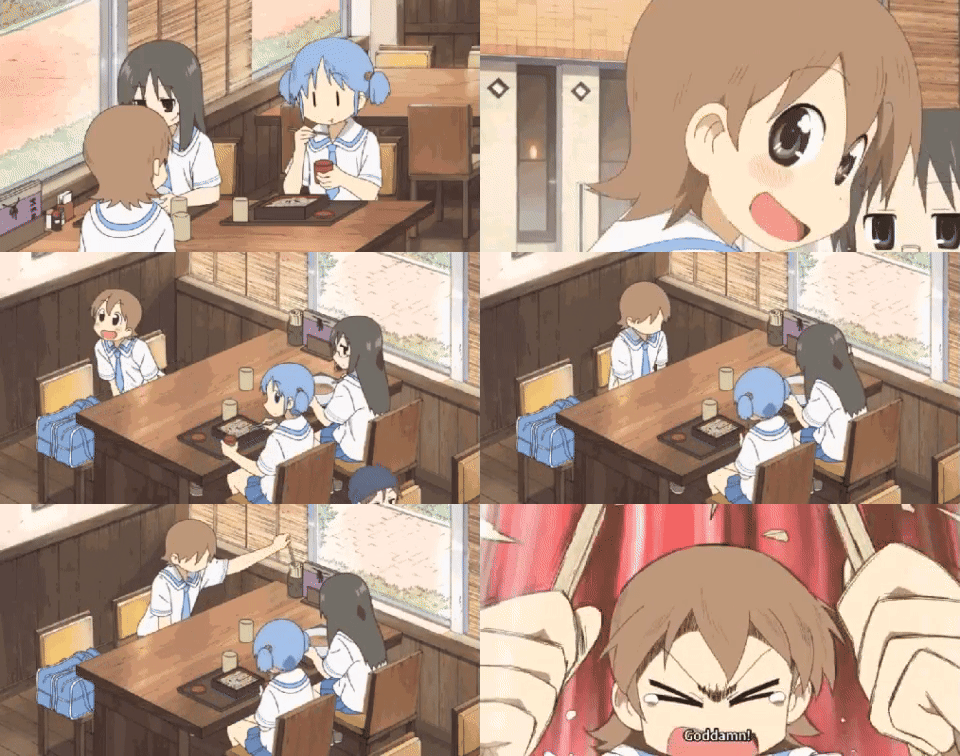
Nichijou has an inventive storyboarding where every gag is previsualized. This isn't just functional to show who stands where or who is doing what, but it is using to emphasize emotion, absurdity, and escalation. What does it do? It creates a rhythm, then there is an escalation, and the surprise. The visuals are trying to match the emotional intensity of the moments, even if the actual scene is mundane. For example, when a character says something embarrassing, there is a sudden wide shot with dramatic shading, followed by either extreme close-ups, unnecessary zooms, angle reversals or just a simple camera shake as if an earthquake has occurred. The result is a heightened ordinary moment where the emotions feel bigger than life, matching how we would actually experience awkwardness or stress. So, the composition is switching between realistic, simplified, and "ultra" stylized animation depending on the scene's tone. The show suddenly shifts into a fluid, detailed, expensive animation for just one punchline. That is the level of passion, creativity and freedom we are looking at. Each joke is treated like a cinematic event. They blow small problems out of proportion visually while trying to mimic real-life internal panic. That's the clear goal of its animation- to make every action feel tactile and alive, thus contributing to immersion.
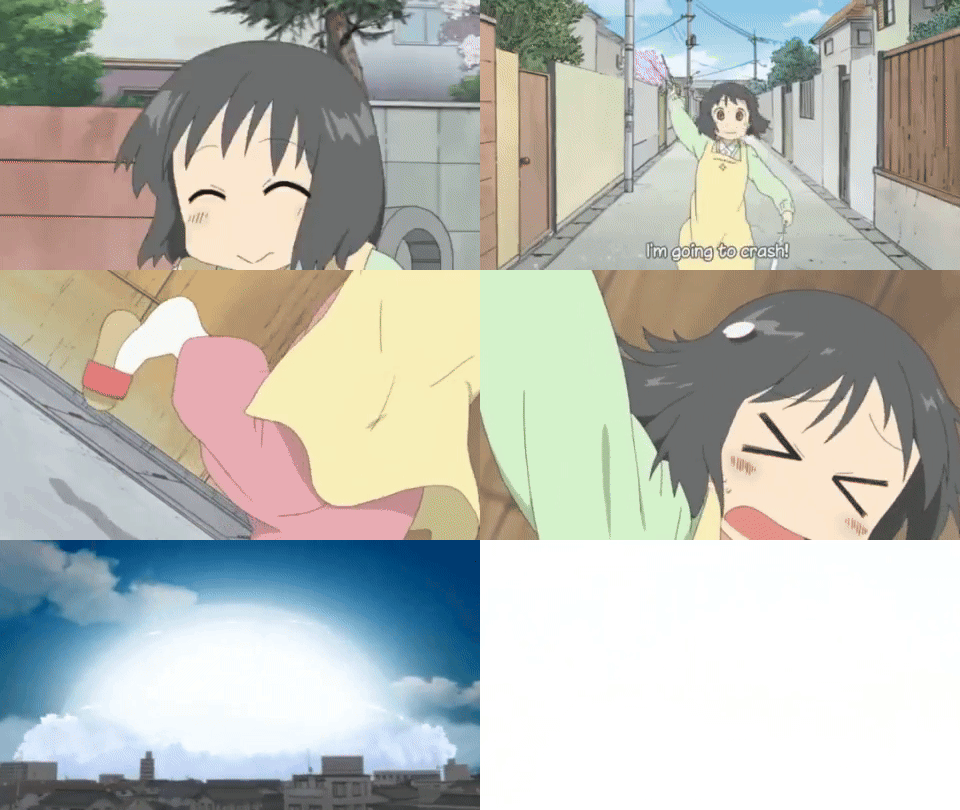
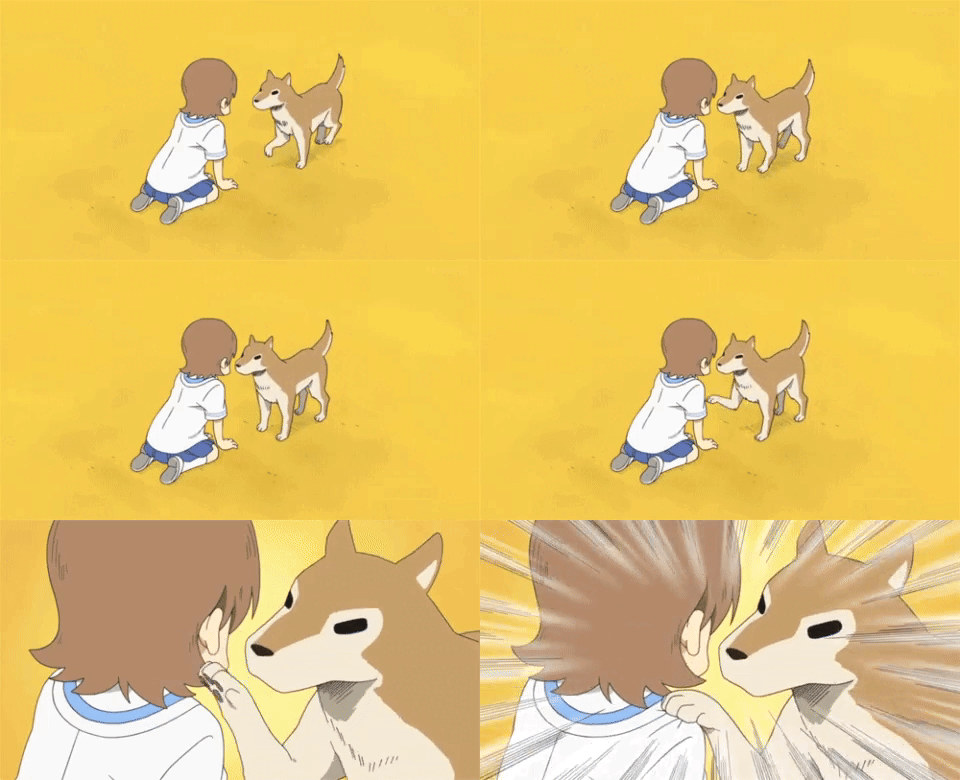
Nichijou also has an anti-narrative structure with a surprising emotional shape- rejecting the traditional plot (beginning, middle, climax) yet still creating an emotional arc. It is by structure an episodic sketch but it also lets its characters evolve over time. The characters' desires are introduced subtly like crescendos into moments of quiet empathy, even though it is told amidst comedy. You see the life of its characters as it is. It is affective progression, where emotions deepen even if the narrative does not traditionally "develop." This is a significant step to go beyond the core expectation. The storytelling here is not emotional or plot-driven; it builds resonance over time through familiarity, contrast and small moments of sincerity. The ensemble also invites reflection because the randomness mirrors your life in a way- dealing with interruptions, sudden emotions, and surreal feelings in the middle of ordinary days. And No, it is not mocking life's randomness, rather here it is celebrating it.
The third component that makes Nichijou complete is its sound design used as comedic pacing. The sound here guides the emotional tempo by transforming pacing from joke to punchline into feeling, expectation and then subversion. For example, when a character gets embarrassed, it cuts to silent freeze frame with only the ticking of the clock, thus building tension until the next line is said. This is emotional punctuation, and it is different for every punchline. The tonal control is so perfect that it syncs with the animation's exaggeration. And that is why even unfunny lines become funny through delivery, like a dry, overly, formal phrase in a silly context. For example, take Sakamoto (the cat) speaking with serious, old-man dignity or Hakase (the professor) speaking with selfish little girl mischievousness. The focus is not on what they say, but how precisely it is delivered. The audiovisual loop is very tight.
Which brings me to the show's fourth strong pillar- wordplay. There are puns, over-formality, accidental double meanings, and miscommunication. Characters in Nichijou misunderstand phrases literally to absurd lengths and the humor lies in how the Japanese language allows shifts in tone through particles and trailing ellipses- for example the "Yakisoba" joke which hinges on the mix-up between yakisoba (fried noodles) and yakisoba pan (noodles in a bun). Every language is a goldmine for puns. Here, Nichijou mines the Japanese language creatively, taking full advantage of its flexibility. It is not just relying on slapstick comedy, but also roots itself in interpersonal dynamics, like when Sakamoto says something wise but is completely ignored. The tonal dissonance is where the humor lies here, not in the dialogue’s content. Of course, it is the Voice Actors who embody these emotions together with the animation. Many jokes land not because of the script but because of how they have been said- pauses, stutters, and the gasps- these are all emphasized purely through timing and context.
The show also has a thematic undercurrent. Yes, beneath the comedy there is a warm idea- everyday life, no matter how trivial, is worth noticing. Nichijou translates to everyday life where the investment builds slowly through tiny, recurring threads; just like in the show where during the early episodes, we see Nano hiding her key. By mid-series, Hakase gives her the option to remove it which is a symbolic scene about acceptance and identity. There is no arc because life has no arc in conventional sense, but there is always a shape that is full of disconnected moments that somehow still lead somewhere emotionally. There is a simple philosophy working here- Ordinary life is full of wonders, and we drift through it quietly and awkwardly, to find our place in that ordinary. It resonates because it's not about drama but how life already is a drama, if you look at it right.
Nichijou is fragmented sketches of that feeling- chaotic, awkward yet a strangely joyful beauty that feels somehow complete. Do I think Nichijou is a masterpiece? I don't know about that, and I genuinely do not care about that label. What I do think is that Nichijou is not a show meant to be dissected for meaning or edge. Don't be that idiot :P
It is a show to feel, to live with, and maybe, to see yourself in it one day. The surreal beauty of your own Nichijou. Your Nichijou might just be the most extraordinary monogatari after all.