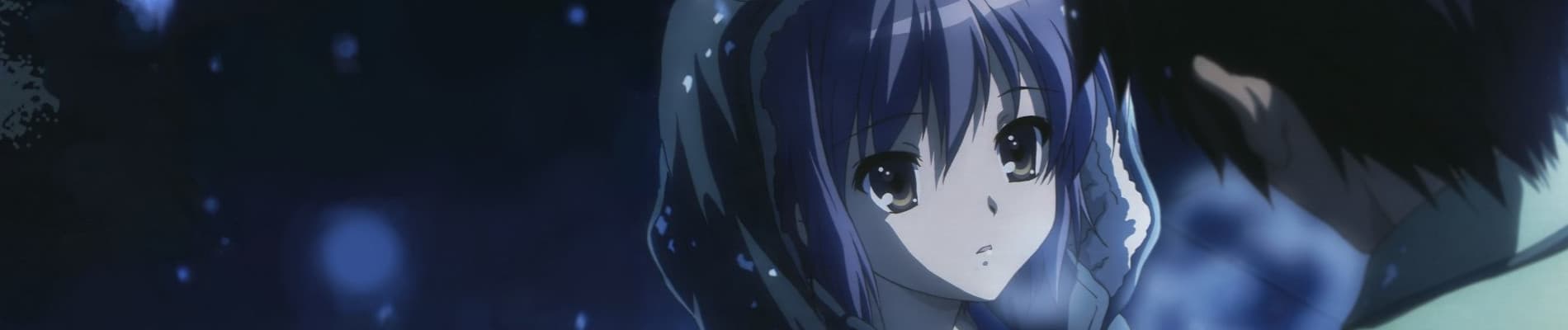
I'm not sure reviews are a great means of conveying what a movie has meant to you, for the ways in which it moves you are mostly subtly permeating and uncannily symbolic; that is especially the case with Suzumiya Haruhi no Shoushitsu which, fortunately, nonetheless is something you can talk about for hours before encountering impediments of the sort.
Kyon is in the slightest nuances of his behavior a most relatable character, and overall a genuinely cool human being. His realizing the difference between passively experiencing friendship and wholeheartedly cherishing the existence of your friends, and resolving to do the latter, is thoroughly endearing and most elegantly depicted; speaking of which,
Koizumi is given dimensionality by manifesting frustration towards his essence being utterly disregarded by the person he finds most charming, and has Kyon realize how enviably miraculous it is to be virtually irreplaceable to someone, for one's spontaneous essence and not for one's expendable attributes.
Nagato, wreaking havoc with the astonishing unreasonableness most unbefitting an algorithmic being, embodies most powerfully the whole series' (not so much) implicit message - namely, that "everything mechanistic and predictable is unbearably boring, and everything good always comes from rejecting the belief that reality and life itself are and can't help but be fundamentally dull and uneventful" - the egoism that overtakes her as she warps reality to one she can find more bearable and live through more optimistically is considered an "error", but it is such only in light of the presumption that what reality and the world most benefit from is a deterministic predictability; not so much so, if you consider the impulse of altering reality's structure to make it a more charming and wholesome one among the most valuable of instincts. Kyon's not reprimanding her and manifesting wholehearted compassion and unswerving affection towards her instead sincerely was profoundly moving.
Mikuru and Haruhi's relentless apprehension towards having their reality irreversibly deprived of John Smith's existence as he is in a coma felt inordinately genuine and realistic, which had me realize once and for all why and how this series has managed to hold such a dear spot in my heart, as well as in that of countless other fans.
Aesthetically faultless and conceptually evocative, it evidently might have benefitted from more thoroughness in its denouement - but then again, who cares, really, about faultlessness of plot development when the work's real, more noble ambitions lie in conveying something exceedingly more broad and substantial? "ハルヒ以上の無神経", as someone would say.
25.5 out of 26 users liked this review