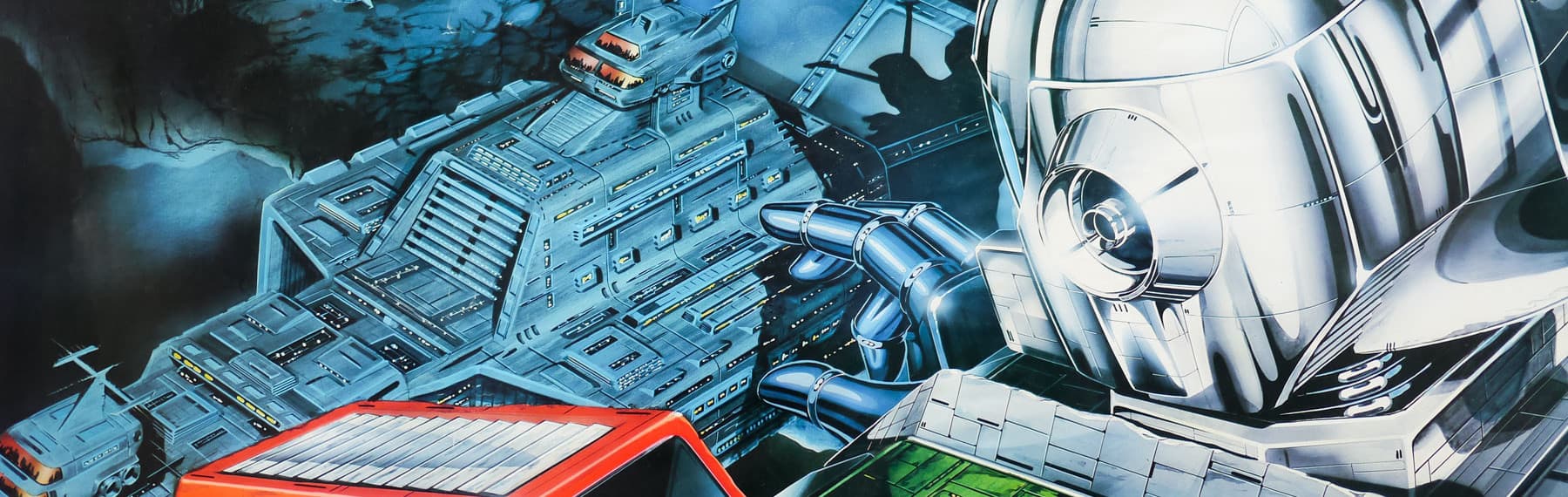
Re-watching Space Runaway Ideon in 2025, forty plus years after its initial airing, no longer feels like rewatching a classic mecha, but daring to look down the barrel of a criticism that humanity chose to ignore. Lake Tomino himself once notoriously known as the other Gundam had the misfortune of overshadowing his commercially viable projects, but upon rewatching, perhaps one of the most haunting, philosophically inclined, and emotionally powerful anime in history is Ideon.
What comes off the best in this rewatch is not the grandeur or superficiality, but its doctrine of ruthless clarity. Ideon does not depend on technical perfection, rather throws the viewers into the face with bold narrative decisions and even more chilling prophetic messages.
Ideon initially seems to be contenting itself with playing with the stock elements of a 1980s super robot: an alien artifact mecha, ancient civilizations, space-going war and a cast of survivors. However, as you go on the mask of face is taken away. Ideon is not a story of triumph in the fight, but that of destined destruction of each other. It is non-heroic, tragically stifled and metaphysically oriented. This reread only highlighted how different it is to tradition mecha anime. Ideon is an ideologist and that is no joke. It is a galactic opera with an escalation instead of a solution and desperate instead of growth.
The animation in the show certainly shows its age, but the elements of silence, little score and heartfelt vocal direction stand the test of the time. The hand-drawn melee is crude and the visual language of the abstract abstract that expresses the Ide power-one that is best summed up by the Be Invoked movie, which to this day is considered one of the most horrific and devastating filmic ends of anime. Watching it once again, the movie is not only an epilogue, but a spiritual judgment.
What was, even more, obvious during the rewatch, was the ideological balance between the two opposing civilizations: that of the Earth-based people on board the SoloShip, and humanoid alien Buff Clan. Both sides are not demonized yet both are largely responsible in their paranoia, selfishness and fear of the unknown. It is a conflict of misconceptions and propagated by retribution- a vicious dance of replicas of wars happening in the real world. Tomino does not make diplomacy unachievable but demonstrates that it cannot be achieved because of fear and emotion.
Karala and Bes' story touched a slightly different note this viewing. The revelation of her being an ally instead of an enemy, her pregnancy, and the symbolic connection between her and Ide itself is even deeper when you already know the metaphysical stakes. Karala turns out a Mary-like character at the end, nonetheless, unlike religious salvation stories, Ideon dashes the viewer any hope. Even the child in the womb does not suffice to stop the path of destruction. The Ide is more of an equation of cosmic balancing; where, should life fail to evolve to comprehend itself, it will be cleaned up.
Ideon is musically sparse and weird. OST does not inspire – it isolates. The tonal changes are uncommonly relaxing. Actually, probably one of the most distinctive things about Ideon on rewatch is the way it weaponizes emotional exhaustion. Compared to Gundam, where you are encouraged to sympathize with characters such as Amuro or Char, Ideon drags you towards the alienation. It is a game in which there is no side to cheer. The mecha conflicts clatter and even turn gruesome, with the power of the Ide devolving in an apocalyptic mess. Approaching it again, though, it gains more qualitative appeal to photographer Tomino and his fatigue as a narrative device, maybe even an element of torture, into driving a point about the expenses of runaway escalation.
Watching it in modern times also sheds a more even light upon how Space Runaway Ideon assisted in the creation of Evangelion, RahXephon, and Gurren Lagann, who either honor or dismantle or outright exact the same themes of Space Runaway Ideon. Ideon walked in such a way that all the fauna of the “deconstructive” mecha anime could run. Where Eva traced the psychological trauma and identity, Ideon was existential in its pure form. It posed a terrifying question: what if it is only a cosmic truth that we do not deserve life to go on?
The weaknesses still exist. Some early episodes can be quite sluggish in pacing. The animation is old and the exposition tends to spill forth in mid-land, info-dumpy gallops. Reflectively, however, these so-called rough edges are also part of the tone of the series. You feel like you should be amused in the traditional sense but you are supposed to survive Ideon. It is like that which makes a rewatch so satisfying, since you knew its final statement now, every choice, every breakdown in communication is tragic foreshadowing.
The morbid story of misunderstanding, divine punishment, and destruction of the horrifying computer AI-driven dystopian works of our collective anxiety in 2025, Sino-centric politics, and crippled ecosystems hover over our subconscious, making the tragedy of Ideon less of a science fiction story and more of a harsh mirror to ourselves. It is not only about a runaway robot. It is about the fugitive state of civilization--our very incomprehension of one another in time.
To those who come back to Ideon after years of absence, do not expect any consolation, redemption. What awaits you instead is a philosophical titan who wears a mech skin that has been dusted with the primordial dwelling of our consciousness and our ultimate demise and this is; a soul-crushing grilling that submerges you in the despair that is the central inevitability of the human predicament and every super giant apple-cart of the future seemingly past and wonders, was there ever a way to prevent it all?
A flawed classic that defies time, civilization & hope. Rewatching Space Runaway Ideon isn't nostalgia, when it's about facing the void once more being aware that it may see back to you even harder.
15 out of 15 users liked this review