**Rating: ★★★★☆ (4.5/5) |
Genre: Fantasy, Adventure, Slice-of-Life | Themes: Parenthood, Mortality, Prejudice**
Somali and the Forest Spirit unfolds in a lush fantasy realm where humans are hunted to near extinction, and mystical beings—golems, witches, minotaurs, and more—dominate the food chain. The story follows Somali, a spirited human child, and her guardian, an emotionless but protective forest golem, as they journey to find others of her kind. What begins as a simple quest evolves into a profound meditation on what it means to live, love, and leave a legacy in a world that thrives on cycles of life and decay.
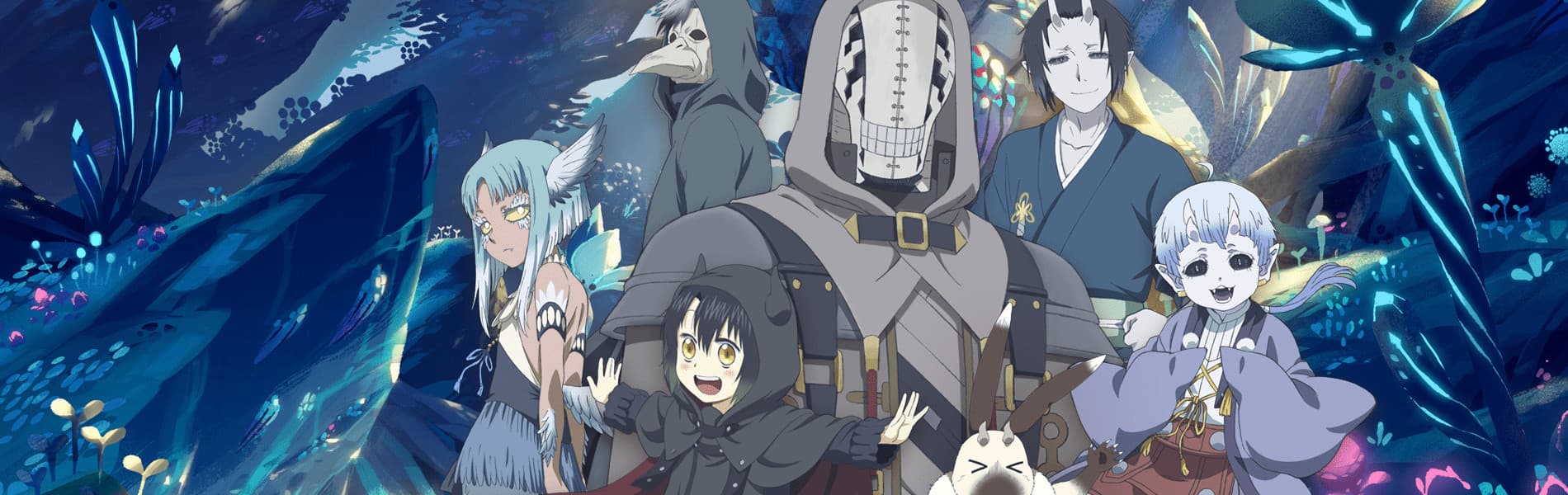
- Studio Satelight’s animation is a love letter to Studio Ghibli’s aesthetic, with painterly backgrounds that breathe life into every locale: sun-dappled forests, eerie witch villages, and bustling monster towns. The creature designs—ranging from adorable to grotesque—reinforce the world’s duality as both wondrous and hostile.
- The golem’s rigid movements contrast with Somali’s boundless energy, visually underscoring their dynamic. Subtle details (e.g., the golem’s crumbling body, Somali’s fraying scarf) foreshadow the series’ central tragedy.
- Found Family: The golem’s mechanical logic clashes with Somali’s childlike love, creating a parenting narrative that’s tender and tragic. His existential crisis—"Can I truly protect her when I lack a soul?"—elevates the story beyond typical adventure tropes.
- Mortality vs. Immortality: The golem’s unchanging nature contrasts with Somali’s fleeting childhood. Episodes like The Colosseum (where a minotaur grieves his human wife) hammer home the agony of loving what cannot last.
- Otherness and Fear: The series mirrors real-world xenophobia. Even kind creatures initially recoil at Somali’s humanity, asking, "Why risk your life for a species that destroys itself?"
- The OST blends Celtic-inspired melodies with haunting piano motifs, amplifying scenes of joy (e.g., Somali dancing) and sorrow (e.g., the golem counting his remaining years). Strategic use of silence—like the golem’s wordless hesitation—speaks volumes.
- The episodic structure shines in vignettes (e.g., the underwater library episode) but drags in slower arcs (e.g., the witch’s trial). While these moments build atmosphere, they dilute urgency for viewers craving plot momentum.
- Adapted from only 14 manga chapters (out of 42), the anime’s open-ended finale feels abrupt. Key arcs—like the "Human Village" lore—are teased but unexplored. A second season could redeem this, but as-is, it’s a glaring caveat.
- Side characters (e.g., the pirate duo Shizuno and Kikila) are charming but underdeveloped. The world’s systemic oppression of humans is acknowledged but rarely challenged beyond Somali’s micro-level interactions.
Somali and the Forest Spirit is a rare anime that prioritizes emotional authenticity over spectacle. Its flaws—primarily pacing and incompleteness—are outweighed by its strengths: a poignant central relationship, world-class art direction, and themes that resonate long after the credits roll.
Who Will Love It?
Who Might Dislike It?
Memorable Quote:
"Even if my time with her is short… I want to fill it with as much happiness as possible." — The Golem
Watch now: Somali and the Forest Spirit ](/anime/108617/somali-and-the-forest-spirit)
19 out of 20 users liked this review