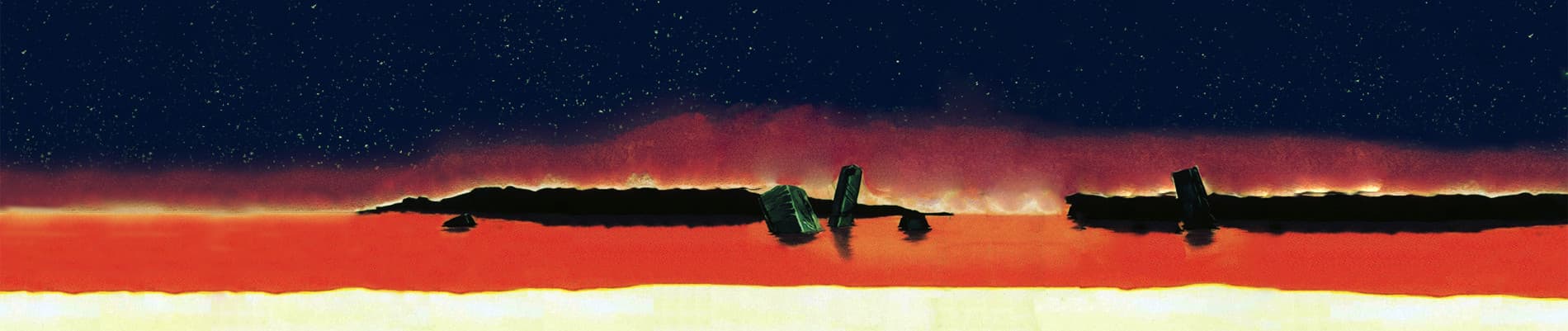
Watching The End of Evangelion for the second time is like falling back into a dream you thought you had already woken up from. However, over months and years, it has become clearer, closer, and scarier. Almost thirty years after its initial release, Hideaki Anno’s promise of the end of the world in the finale of Neon Genesis Evangelion has not lost its momentum. In fact, it only becomes more challenging (at least for me) with each rewatch. It has transcended the boundaries of a movie and become a psychological experience a film scar that will never heal.

The animation remains mind-blowing even today. The amount of artistry involved in these, for instance, the fluid and grotesque ballet of the mass-produced Evangelions to the unforgettable red-hued apocalypse, is incredible. The stark color contrasts, the discordant use of silence, and the chilling combination of music (none more notorious than Komm, sUller Tod) elevate the film beyond the realm of a mere movie into a visual symphony of misery. It is simultaneously dreadful and breathtaking, a characteristic that the series has always possessed, in part.
This is why this film is so great to rewatch because the impact it has varies greatly depending on who you are the second time you watch it. During teenage years, it can be perceived as nihilism. As an adult, it becomes a confrontation. It is all too real: Shinji paralyzed, yearning to fade away, begging for love, yet simultaneously pushed away from it. However, even in the fall of the world, there is a faint glimmer of optimism. The final scene with Shinji confessing, “I am so messed up,” and Asuka’s cold response, “How disgusting,” leaves you breathless not because it provides an answer but because it marks the beginning. Choosing to live, despite the pain, is an option.

Anno’s work is intentional and not meant to be understood but rather experienced. It allows the viewer to confront their own emotions and challenges.
Anno’s work goes beyond deconstructing the mecha genre; he deconstructs the viewer themselves. He prompts us to reflect on our own avoidance of simplicity, even though it’s a concept that doesn’t exist. The film is a critique, not a cathartic experience. It doesn’t represent the ultimate apocalypse but rather a personal journey. Anno uses the medium of the film to physically and emotionally challenge the viewer.
It is not entertaining. It is the art, raw as it is.
Looking back, the film’s polarized receptions were inevitable. Its design significantly disappointed its fans. Anno had promised restoration, but instead, we received a mirror. This mirror is what makes the film memorable. It, along with the original television ending, fulfills the true thesis of Evangelion: that one exists because they suffer, and that one exists because they choose.
After watching it again, the movie not only passes the test of time, but it gazes back at you, in a defiant and challenging manner.

46 out of 47 users liked this review
