Review and Analysis of the film Maquia
Contains Spoilers
Maquia: When the Promised Flower Blooms (Sayonara no Asa ni Yakusoku no Hana o Kazarō) - A Deep and Comprehensive Review
Introduction:
The film Maquia: When the Promised Flower Blooms (in Japanese: さよならの朝に約束の花をかざろう, Sayonara no Asa ni Yakusoku no Hana o Kazarō) is a 2018 Japanese fantasy animation film, directed by Mari Okada and produced by the studio P.A. Works. This production marks the directorial debut of Okada, who previously worked as a talented screenwriter on several famous animations. The film is a poignant and emotional journey through the life and relationships of human beings, seen through the eyes of an immortal girl who learns the meaning of motherhood.
Synopsis:
The film's story revolves around a young girl named Maquia, a member of a legendary race called the "Iorph." The people of Iorph are known for their extremely long lifespans, living for hundreds of years without aging. They live in an isolated community, weaving a special cloth called "Hibiol," which records the history of their lives and serves as a form of traditional writing. One day, the army of the kingdom of Mezarte attacks the Iorph village, seeking the secret to their immortality. During the attack, Maquia miraculously escapes and gets lost in a forest. There, she discovers a newborn baby held in the arms of his deceased mother. Maquia decides to raise the child and names him "Ariel."
Throughout the story, we witness Ariel's growth, while Maquia remains unchanged and does not age. This difference in age is the central theme of the film, as it portrays the relationship between Maquia and Ariel in a unique and impactful way. Maquia learns what motherhood means, while Ariel learns the bitter truths of life as a normal, mortal human. I will try to leave an analysis and an impression in this review for my readers.
Analysis of the Film's Core Elements
(Motherhood, Immortality, War and Peace, Love, Maturation)
Motherhood: Meaning and Sacrifice
One of the most prominent themes of the film is motherhood. Maquia, who initially knows nothing about being a mother, finds that raising Ariel becomes the greatest mission and love of her life. The film meticulously shows how Maquia learns to care for and love Ariel, despite the obstacles they face. Sacrifice is an inseparable part of motherhood, and Maquia makes numerous great sacrifices for Ariel throughout her life. In return, she gives up her identity as an Iorph, distances herself from her community, and is even willing to let Ariel go if it is in his best interest. This sacrifice is a sign of unconditional love that only a mother can offer her child.
Immortality and Finite Time:
The film beautifully and effectively illustrates the contrast between immortal life and the limited time of humans. Maquia, a member of an immortal race, remains forever young, while Ariel grows up and ages like a normal human. This stark difference has a profound impact on their relationship. Initially, Maquia doesn't fully grasp the meaning of time, as she has always lived in the present. But as Ariel grows, Maquia gradually understands the importance and value of time. She learns that every moment of life is precious and must be fully cherished.
War and Peace: The Impact on Individual Lives
In another aspect, the film discusses the effects of war and conflict between nations, especially on the lives of individuals and families. The Mezarte army's attack on the Iorph village completely changes Maquia's life, leading to her displacement and the loss of her friends. War not only brings destruction and death but also causes the separation of families and the breakdown of relationships. The film directly and effectively portrays these negative aspects of war and reiterates the importance of peace and coexistence.
Love and Loss: An Inseparable Part of Life
Love and loss are two other important themes in the film. Through her relationship with Ariel, Maquia learns about unconditional love, but at the same time, she faces the loss of several loved ones. These experiences make Maquia stronger and teach her how to deal with pain and grief. The film meticulously shows that loss is an inseparable part of life, and everyone faces it in one way or another. However, the film also emphasizes that love and memories always remain in our hearts and can help us continue with life.
Character Development: A Journey of Transformation
All the characters in the film, especially Maquia and Ariel, grow and change throughout the story. Maquia transforms from a shy and reclusive girl into a strong woman and a loving mother. Ariel also grows from an infant into a brave and responsible young man. The development of the characters is one of the film's strengths, as the audience can easily relate to them and feel their transformations. This growth shows that life is always changing and that people can learn and grow through their experiences.
The Art of Animation and Character Design: A Captivating Beauty
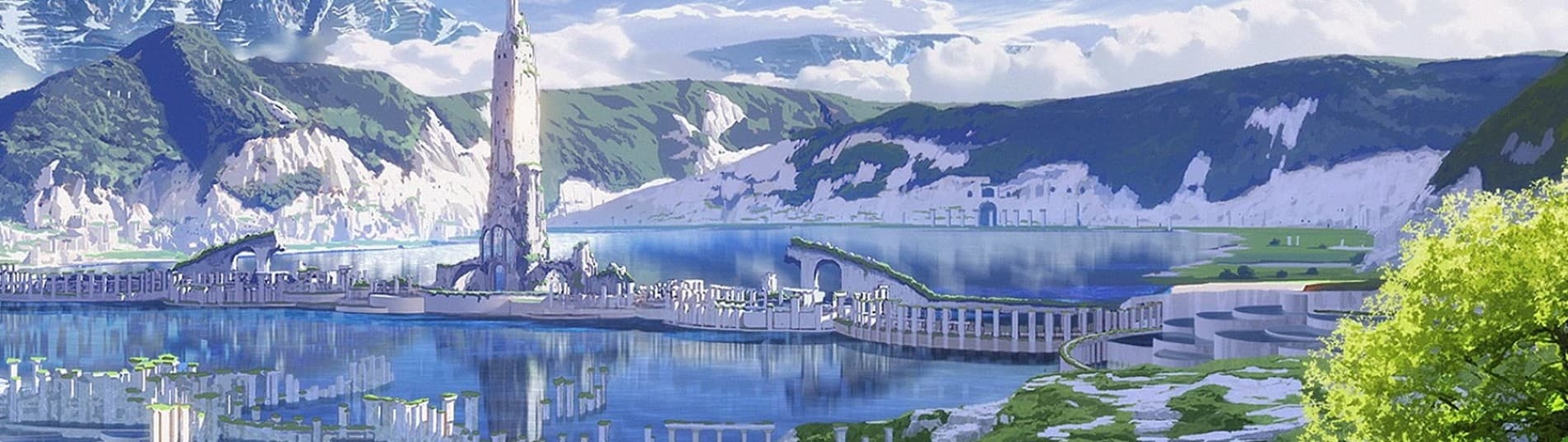
One of the most striking features of the film is its beautiful and captivating animation art. Studio P.A. Works is known for its previous works, which have always been of high quality, and Maquia is no exception. The scenes are drawn with great detail, the colors are used in a vivid and appropriate manner, and the movement of the characters is very natural and fluid. The character design is another important part of the film's art. Each character has their own unique features and is designed in a way that fully expresses their personality and emotions. In particular, Maquia's design is very striking, as it beautifully portrays her youth and immortality.
Music and Sound: An Emotional Impact
The film's music was composed by the renowned composer Kenji Kawai, who has previously worked on many other films and anime series. The music is very emotional and impactful, perfectly matching the scenes and the characters' feelings. The film's sound is also recorded in high quality, and the voice actors perform their roles with great skill. In particular, the voices of Manaka Iwami as Maquia and Miyu Irino as Ariel were very successful in conveying the emotions of their characters.
Philosophical Aspects of the Film: The Deep Questions
The film raises several important philosophical questions, such as the meaning of life, the value of time, the importance of relationships, and the nature of love. These questions make the viewer reflect on their own life and relationships and try to find deeper answers to existential questions. One of the important questions the film poses is whether immortality truly brings happiness. Maquia, despite her long life, often feels lonely and sad. This makes the viewer wonder whether a short but full life of love and connection is better than a long but lonely one, and how we should handle this contradiction we are always chasing.
Comparison with Okada's Other Works
Mari Okada has worked as a talented screenwriter on several famous animations, such as Anohana: The Flower We Saw That Day and The Anthem of the Heart. These works are known for their emotional stories and the deep relationships between characters. Maquia shares these characteristics, but in a new and different way. Compared to Okada's other works, Maquia focuses more on the theme of motherhood and the relationship between a mother and child. The film is also more fantastical and has more mythological elements. However, all of Okada's works share the ability to stir the viewer's emotions and create a deep connection with the characters.
Is the Ending Open or Closed?
The film's ending is somewhat open, allowing the viewer to interpret it for themselves. After Ariel passes away, Maquia visits his grave and places a Hibiol flower on it. Then, she continues to live and meets several other people who were connected to Ariel in some way.
Some viewers believe the ending is closed because Maquia fully comes to terms with Ariel's loss and continues with her life. Others believe the ending is open because Maquia will always remember Ariel and will continue to search for the meaning of life.
The Psychological Dimensions of Maquia: When the Promised Flower Blooms
The film Maquia is not just a fantasy story; it can also be analyzed from a psychological perspective. The relationship between Maquia and Ariel can be seen as a model for the mother-child relationship, with all its stages.
Initially, Maquia feels alienated and afraid of Ariel because she has no prior experience with children. But gradually, she learns to love Ariel and develops a strong sense of responsibility towards him. This stage can be seen as the first stage of motherhood, where the mother is still getting used to her new role. As Ariel grows, his relationship with Maquia becomes more complex. Ariel feels that Maquia is different from other mothers because she does not age. This difference causes some problems between them, especially during adolescence. This stage can be seen as the adolescent stage, where the child tries to gain independence and distances himself from his parents.
In the end, Ariel comes to understand how much Maquia loved him and how much she sacrificed for him. He feels great respect for Maquia, and a stronger bond is formed between them. This stage can be seen as the stage of maturity, where the child fully understands the values of his parents and a healthy relationship is formed between them.
The Sociological Dimensions of Maquia: When the Promised Flower Blooms
The film addresses several important social issues, such as discrimination, alienation, and the relationship between generations. Maquia and the Iorph people face discrimination and mistreatment from others due to their different race and age. This indicates that discrimination based on race still exists in many societies and that social solutions must be found.
Furthermore, the film discusses the importance of intergenerational relationships. Maquia, despite being from a different race, is able to form a strong bond with Ariel and his descendants. This shows that the bond between generations can be very strong and should be valued.
The Film's Impact on Viewers
Maquia has had a profound impact on many viewers. Many have expressed their admiration for its emotional story and the unique relationship between Maquia and Ariel. Additionally, many viewers have mentioned that the film made them reflect on their own lives and relationships. I am one of them, and I rewatch the film every few months, or whenever I feel like it and have no desire for anything else. My impression is evident throughout the article I've written.
In conclusion, Maquia: When the Promised Flower Blooms is an exceptional and impactful Japanese animation film that deals with important topics such as motherhood, immortality, war, love, and loss. With its emotional story, beautiful animation, impactful music, and authentic characters, the film can move any viewer and make them think about their own life and relationships. If you are looking for an animation film that can have a deep impact on you, then Maquia is one of the films you must watch.
10 of 10
35 out of 35 users liked this review
