BEASTARS
a review by EpicSponge101
a review by EpicSponge101

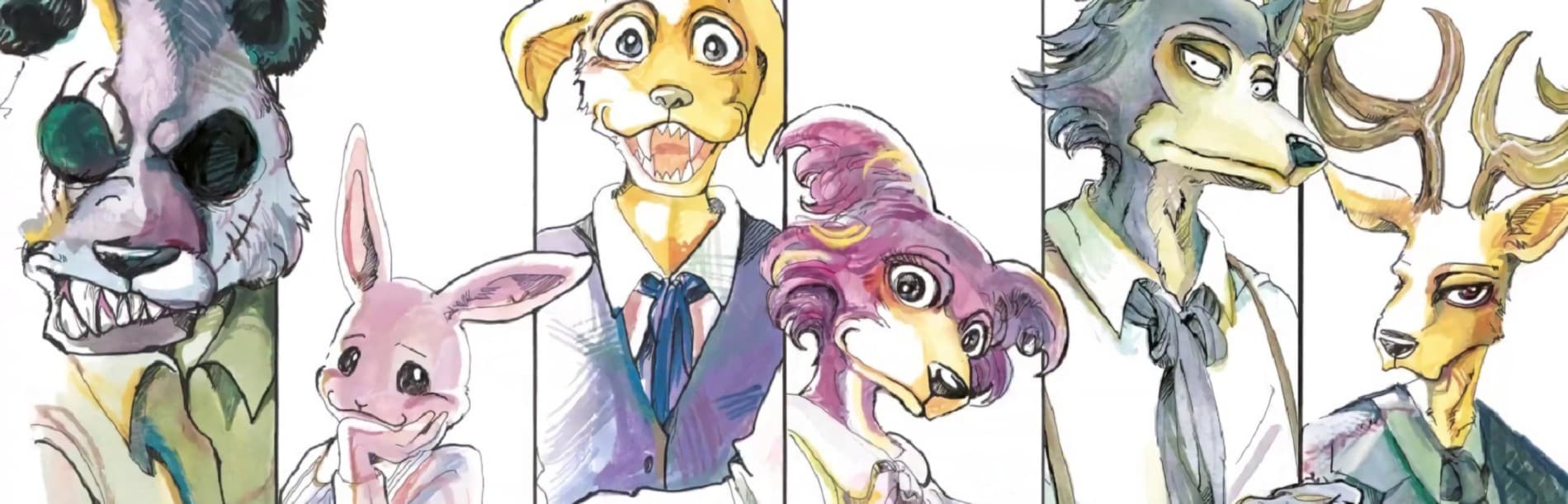
Beastars is a series that needs no introduction, having a colored history of controversy within the larger anime fandom, usually in the form of petty discourse about furries in pop-culture– but that’s neither here nor there. The silly arguments waged between cringeworthy teens may have tainted this franchise in the eyes of some, including my own as a young child, but I think there is a lot to garner from this series beyond what little impact on pop culture it had. Beastars, at its core, is a tumultuous story about human connection with some of the most interesting ideas I’ve had the pleasure of reading in quite a long time. Despite being a manga about anthropomorphic characters forced to abide by animalistic instincts, Paru Itagaki’s Beastars paints a beautiful if not rough-around-the-edges portrait about human experience.
This review will contain some spoilers, but they’ll be marked. For those unfamiliar, I’ll give a basic plot synopsis before getting into the thick of it. Beastars follows a young anthropomorphic grey wolf named Legosi (known as Legosi in scans, but Legoshi in Viz translations) as he comes of age. The manga details the dichotomy of carnivores and herbivores in a society of animals that are called by savage, innate instincts but forced to suppress them due to social order. It uses various character’s interpersonal relationships to explore its unique setting, talk about humanistic themes about the complexity of sociality, and illustrate the convolutedness of love.
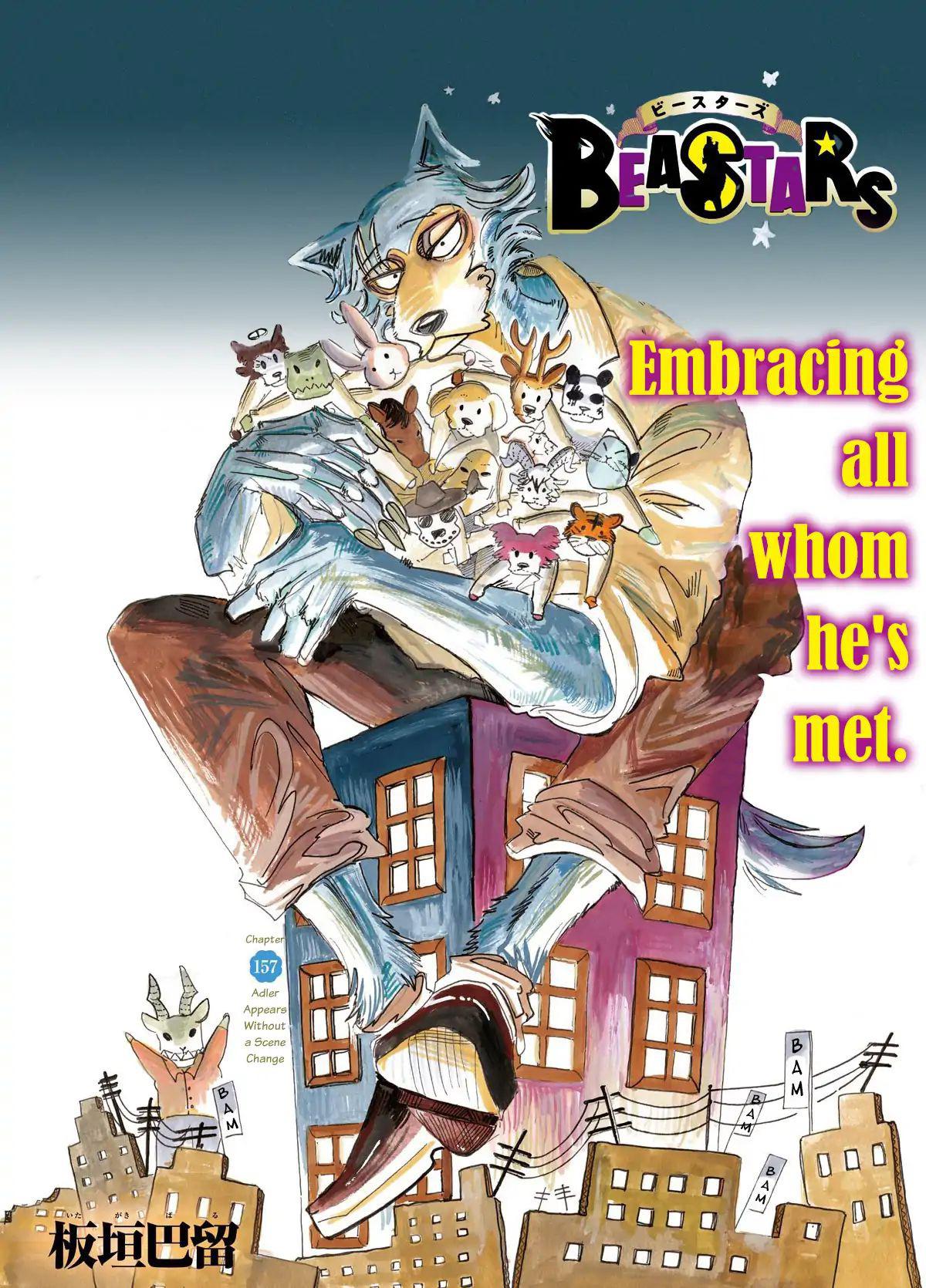
My personal favorite aspect of Beastars is the various compelling characters we follow throughout the story and their turbulent, ever-evolving relationships. I think this is primarily because of how distinct the way Paru wrote these characters is– it’s unlike anything I’ve ever read. Due to their complex societal structure our cast makes aberrant decisions that are wholly devoid of traditional human logic, but make total sense in context of the series. This only works because of Paru’s very natural method for worldbuilding, as she often introduces unique characteristics of the world and animal’s biology using Legosi, and then expands the scope to show us how it affects the world on a greater level. The prime example of this is the centrifugal force that drives the basic plot of this entire manga– the relationship of prey and predator. The members of this world being animals is not merely superficial and instead permeates the entire story in ways you would never expect, beyond being a simple metaphor for discrimination or the like that you will see in works like Zootopia. Instead, we see ALL of our young male carnivores that come of age struggle with their individual animalistic instincts– sort of like puberty but far more life-changing and social hierarchy defining– and later, we see how this metamorphosis for our characters affects adult society. Little bits of worldbuilding are dropped bit by bit until we have a societal structure entirely incomparable to that of humanity’s, with a clear social stratum not separated by financial nor racial means, but instead divided by natural instincts and taxonomic differences. Humanity has issues not persecuting people who have different skin colors as savages, you can only imagine the adverse effect certain races being born with more strength and the innate urge to kill causes. Conversely, however, the carnivores’ beast-like nature puts them on a pedestal and they are the ruling class of society. Rather smartly on Paru’s part, however, it’s not so one-sided; they’re still forced to keep up certain fronts and suppress their meat eating instincts, at least in public. This all cascades into a multi-layered society with herbivores and carnivores in a stalemate for power, with carnivores forced to bottle up their carnivorous desires to the point where they snap and kill someone– or go obtain meat and drugs through illegal means to sate this desire– meanwhile herbivores are constantly in fear of their own lives even if they outnumber carnivores. I explained all of this to illustrate one thing: these characters are not human and make decisions no human would make in certain contexts. Legosi is in constant fear he might accidentally murder the one he loves in a blood-frenzied haze, murder is treated lightly (in comparison to human society, it's treated as juvenile delinquency often in Beastars) and people avert their eyes to their classmates literally being eaten alive, herbivores have a sort of call of the abyss-esque instinct that calls for them to die, and segregation is almost a reasonable argument in this universe.
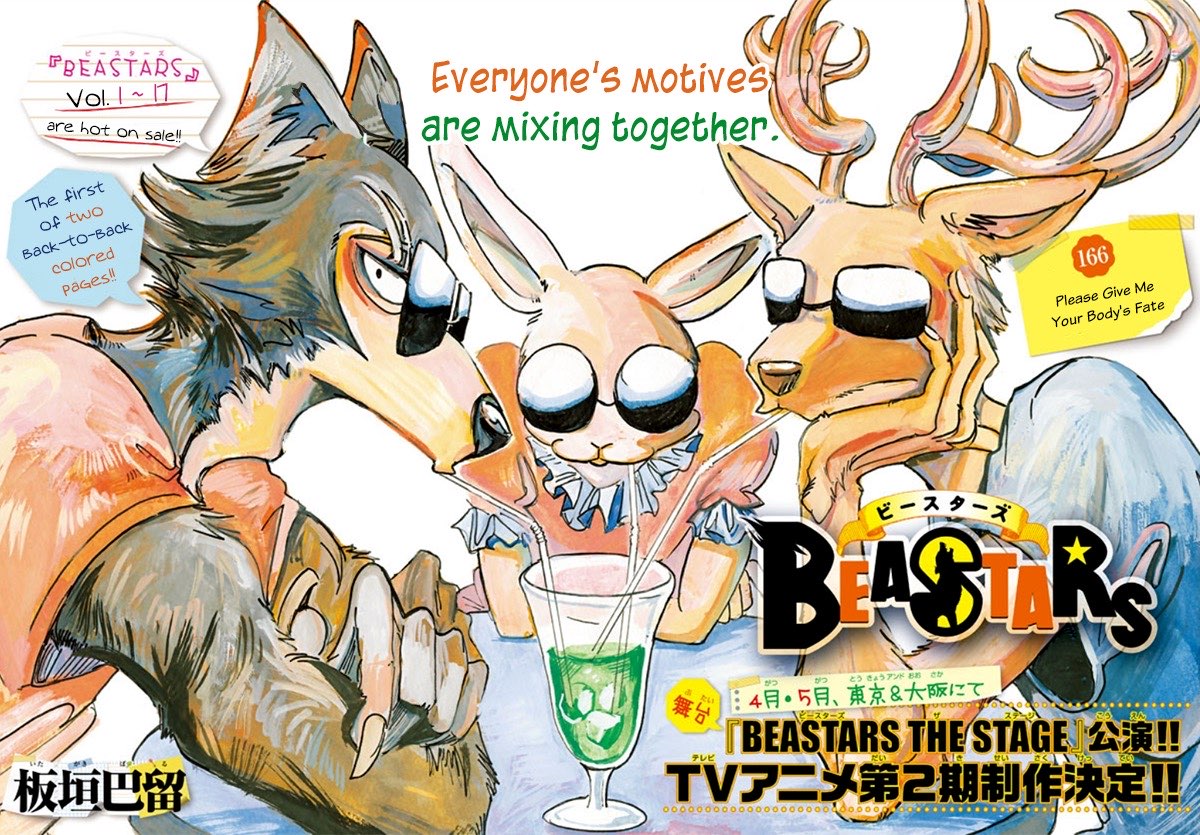
The best part is, despite being so aberrant when compared to human social norms, all of these animalistic social norms are used as a catalyst to comment on human relationships and feelings. This is clear from volume one with Paru’s closing quote for the volume: “This is an animal manga that is a human drama, and I didn’t just blurt out this contradiction because I’m nervous.” While said somewhat in jest, I believe this line sets a tone and highlights the philosophy Paru had while penning this story. Of course, this is further accentuated by things like the goodbye message in the final volume likening interspecies relationships to human ones in their messiness, and naturally the manga itself. The series exhibits love in adverse situations and the power it can hold, the turbulence of one’s early adult years and the importance of personal development and accountability within that time, the undeniable existence of moral greys that allow our society to function, and countless of other examples of very human concepts explored through the lens of animals. Beastars being able to create a species of creature totally alien to humanity while simultaneously perfectly encapsulating so many human problems is a pure stroke of genius that culminates in an eccentric experience that leaves a distinct impression, regardless of whether you think the synthesis of these factors make for a good manga or not. Personally, perhaps the things I appreciate in art the most is its ability to elicit emotion and how each individual work is something unique to its creators and their psyche. Beastars’ web of interpersonal relationships not only excited me, scared me, and made me cry– but it did it in a way that’s unlike anything else I’ve ever experienced. Paru passed with flying colors with the character writing here, even if there’s the occasional rough patch.
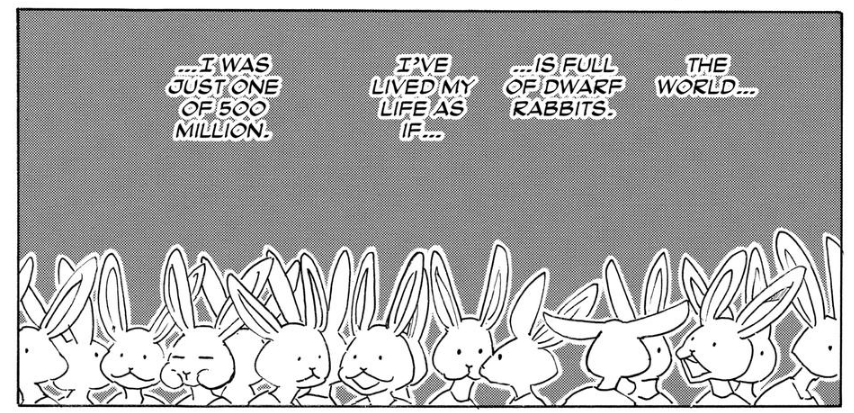
While Beastars nearly perfectly stuck the landing on characters in part due to its worldbuilding, that isn’t to say the world of Beastars is a flawless gem. The very basic social structure of carnivores and herbivores that I’ve already accentuated is done very well, but the details are unfortunately a little messier, which unfortunately unravels the seams that bind our story together at times– particularly in the final arc. In chapter 53 a council of 12 different high schools are introduced to select Beastars that will lead the entire world. It’s not stated whether or not these 12 schools are the only schools that occupy the world of Beastars are the only high schools, but it can be assumed these 12 are the zenith of high schools in Beastars society. However, I am forced to believe these 12 are the only high schools, as there is only one back alley market; the back alley market is a pseudo-necessary organ of animal society that functions as a vital stress reliever for adult animals. According to Louis, the majority of adult animals frequent the market. Additionally, according to Yahya's words at the end of the series, he believes more black alley markets will pop up after the events of the ending. This implies there is only one, which severely limits the scale of our world; we also never see outside of this one big city and the ocean. That would naturally leave one to believe the world is just one city, which simply doesn’t make sense with some other parts of the manga. For instance, in chapter 166, Haru claims she is one of 500 million dwarf rabbits in existence. Which, looking at the scale of our established world as one constrained to a city with only 12 high schools, makes zero sense. While this may seem like nitpicking, it’s confounded by other bits of conflicting information. If the world was large the Yahya shouldn’t have as powerful an impact from mere vigilante acts of justice; if it were big, the shutdown of the back alley market wouldn’t mean anything as there would be hundreds of others. Since Paru never clearly establishes the scope of this world it just feels muddled and confusing, which really sucks because– as established– the world is integral to the characters.
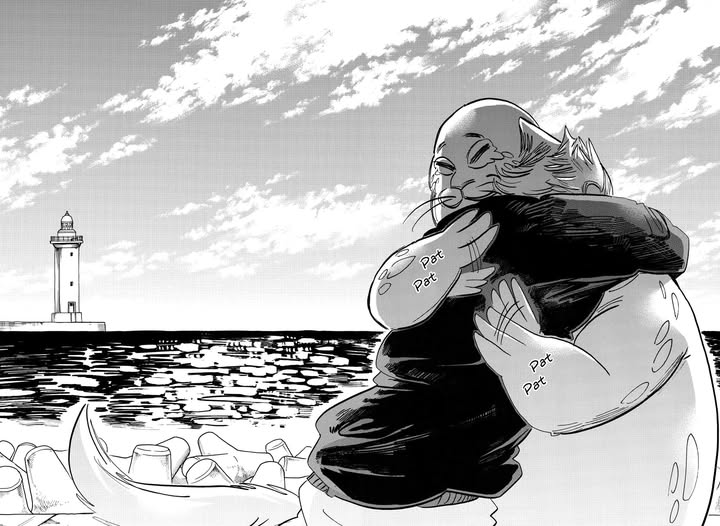
That being said, despite some minor hiccups, I still feel very positively about the world of Beastars. It still allows for a very dynamic and interesting narrative regardless of any surface level inconsistencies, and there are aspects of it I would even say are masterfully executed. The epitome of this for me is how the introduction of oceanic society is balanced with the main story. While it may seem barely relevant from a plot perspective, Zaguan the seal’s explanations of how things function in the big great blue add more than flavor text to our story. It shows a sort of parallel concept to land and air animal society that subtly accentuates and contrasts a lot of prominent struggles in our story. Their acceptance of natural order and laissez faire attitude towards predator-prey relationships is in sharp contrast to anything on the land, and shows us what society could be like were things slightly different for the animals. It contextualizes Legosi’s struggle throughout the story and provides an alternate morality that isn’t necessarily correct nor incorrect, but forces the reader to think and engage with the Beastars world at large. Is the sacrifice of the weight of life worth serenity and peace, or should every life be valued the same? From human logic the answer would be very clear, but the manga asks you to understand things from an entirely separate perspective and empathize with both ways of life. Little stuff like this douses the world of Beastars in oodles of depth in smart, and sometimes subtle ways. I'd also like to highlight the exploration of hybrids as a concept as a strong point in the world building as a concept for me, tragic abominations born out of pure love is just such a fascinating idea to explore.
The last thing for this section that I would like to highlight is the occasional side chapters that depict the life of a non-essential character to the plot, like chapter 20 which shows an example of how herbivore-carnivore relationships (and human relationships on a larger scale) can often subtly intertwine. Legosi is barely conscious of Legom but their connection is deep and rich in meaning in a lot of ways; on top of this, the chapter establishes a lot about the world by exploring these dynamics. Every one-off chapter is super fun and adds a lot to the world in this manner, great stuff.
This segment contains spoilers.
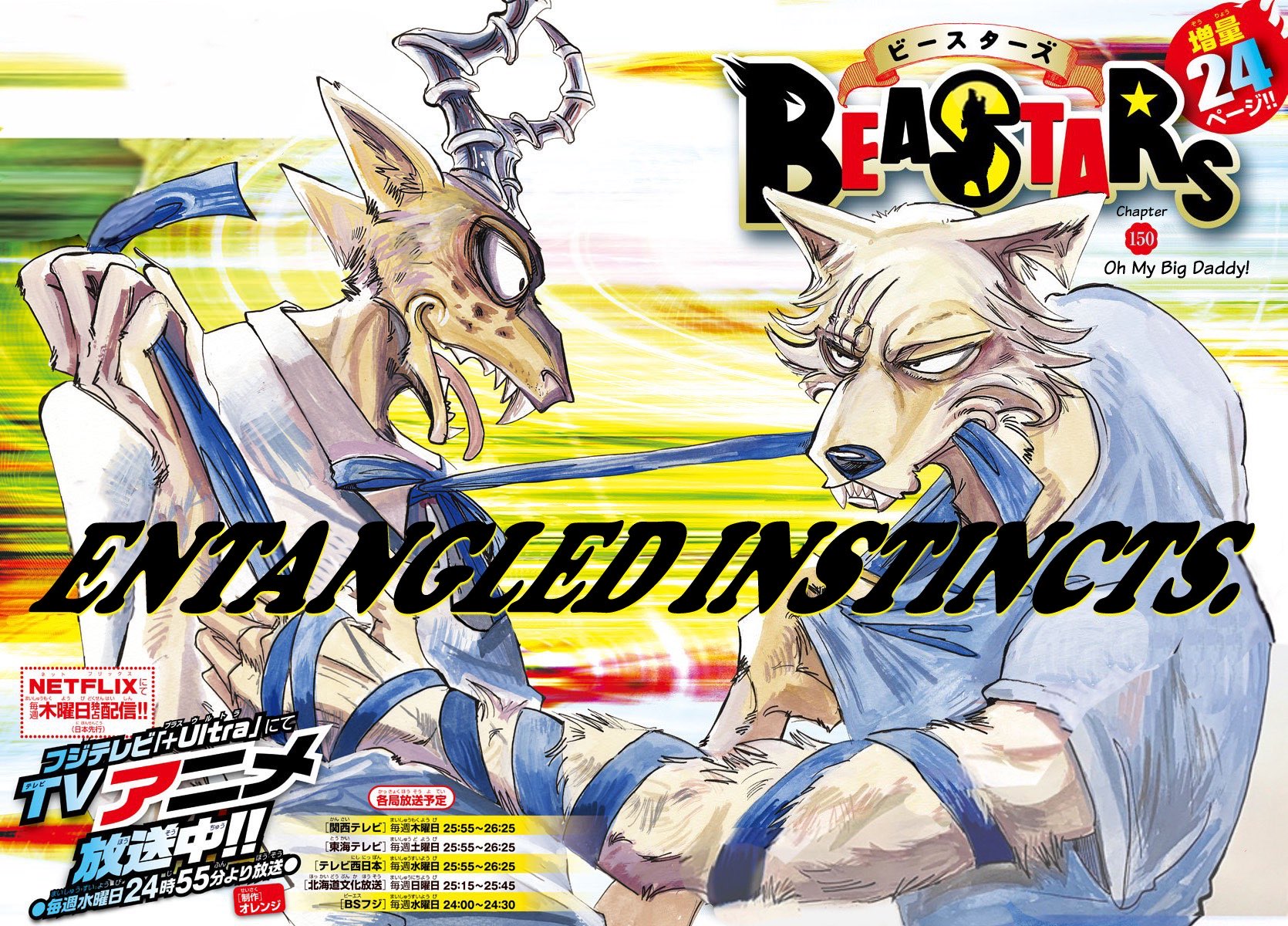
While I know some of the character decisions were controversial, I personally think it was executed very gracefully. Louis’ strict sense of justice and duty forcing him to give up Juno makes perfect sense to me; it runs directly parallel to Yahya, as he chooses to pursue his personal life goals as a social representative rather than settle for a content but “selfish” life of interspecies marriage like Gosha or Legosi. Legosi returning to the shadows was also just the only way for a guy like him, and I was personally very happy for both him and Haru. I think it’s very interesting we’ll never know how their mixed child would turnout, however. I adore how the series doesn’t really make a right or wrong in interspecies children when they could easily be equated to something like an incest baby, and instead lets both the reader and Legosi dwell on the risk and weigh it personally. The only slightly perplexing character conclusion would be Riz’s and Pina’s strange relationship. While Pina is a fucking weirdo, and death is generally undervalued in animal society, choosing to associate with a murderer like Riz is a hard decision to grasp; the animal logic doesn’t really fill in the holes to make this decision justified. Perhaps with more development it could have been better.
Ultimately, the final arc is very rushed and messy, but still has shining moments of goods that do justice to what was established before it. I believe the bad parts happen to be the least important parts of the story as well, and Paru’s passion in writing Beastars overall shines triumphant. I’ve heard the anime adaptation will be cleaning up the more jagged edges of the story which is nice, but I wholly believe the manga is still worth experiencing regardless.
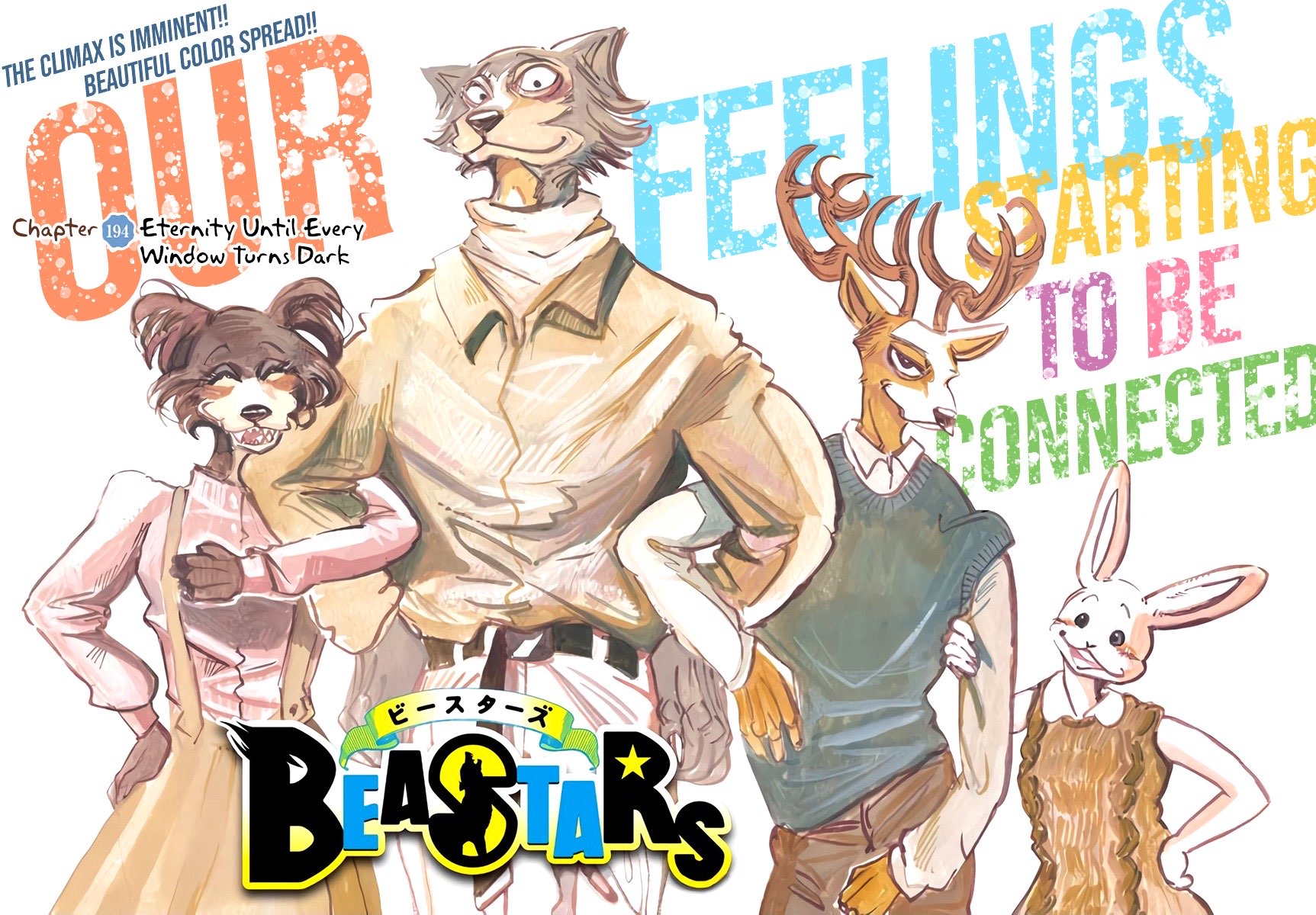
There’s a lot more I could say about each individual character and certain plot decisions, but I don’t want to drive you guys up the wall with boredom. Overall, Beastars is a triumphant success of a manga with beautiful art, zany and entertaining writing, compelling characters, a unique world, and heaps of passion put into every page. I got emotional reading Paru Itagaki’s lament over saying goodbye to Legosi and Beastars, and if by chance you haven’t read it, I hope you get to experience the same saccharine joy I felt while reading Beastars. Incredible stuff, see you all next review ★
33 out of 35 users liked this review
