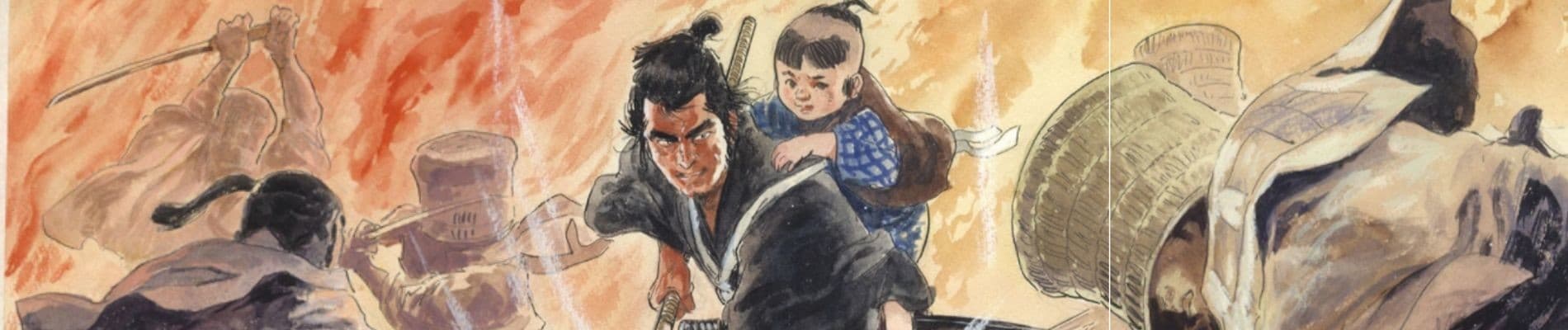
There have been few titles in manga history that have been as monolithic and timeless as Lone Wolf and Cub (Kozure Ōkami). Written by Kazuo Koike (writer) and illustrated by Goseki Kojima, this massive, sprawling saga of vengeance and survival is not only one of the most dramatic examples of gekiga storytelling it is also one of the most pure sit-ups of manga as an art form. It is run longer than 8,700 pages over 28 volumes, a bloodthirsty tale of feudal murder as well as a terrifying reflection on loyalty, honor, and the price of vengeance. Reading Lone Wolf and Cub is to feel the weight of history that is written on each and every panel when the silence is as sharp as steel, and when the way is the road to hell the father and the son walk with such dignity of silence.

Central to the narrative is Ogami Ittō the former executioner of the shogun who is the victim of this plot by the malicious Yagyū clan. Empty of pride and bound with his only son, Daigor, who’s just a little baby, Itt in the end decides to follow the revenge path. Driving his infant son in a baby cart rigged with concealed weaponry, the two are now roving hitmen-on-contract as they seek to achieve their eventual ambitions by striking down the Volk of the Yagy, Humanity itself. It is a hypothesis which has been very simple in outline, but which is infinite in practice. It is built on opposites: life and death, father and violence, love and loss and presented through the painstakingly researched recreation of the Edo period Japan.

Koike is lyrical and practical by writing. The way the episodes are constructed, episodes frequently play out as mini-morality plays with clients, enemies, and bystanders mirroring the aspirations and simplicity of the human condition. There are chapters which provide quick action, and other chapters that dwell in reflective quietness. The tempo can alternate between violent outburst to long scenes of Daigoru watching insects or strangers who treat him kindly, and centers the manga in the human reality and acts of kindness despite all the bloodshed. It is one of the most striking aspects of the series that there is this synthesis in it between aesthetic reserve and brutal urgency.

Kojima art makes the story close to cinematic. His command of panel composition is not only reminiscent of the energy of samurai film (especially Kurosawa) but also the motionlessness in Japanese woodblock prints. Its action is gory but not random; not a movement of a sword is wasted, not one drop of blood is loose. Negative space, making use of wide swathes of white or black enclosing instances of brutality or tranquility, establishes rhythms that dictate the readers eye in a similar way that a film director involves the camera. A small number of manga are able to present motion, silence, and atmosphere as accurately as these do.
The way that fatherhood is treated in Lone Wolf and Cub also makes it unique. Although the story of Itt treasure-hunting is motivated by vengeance, his friendship with Daigor is an emotional cornerstone of the show. Daigorro is not an indifferent companion; he is a part of the quest of his father. His strength, naivete and the dawning realization of his harsh reality make him one of the most unforgettable children in manga. Their relationship transforms this into more than just a story of killings; it becomes a story of legacy, sacrifice and love under the specter of violence.

That being said, Lone Wolf and Cub is no light reading. Its density, its episodic format, its drawings of death can be quite oppressive. Certain arcs frustrate the reader with gout of historical info or lengthy diatribes on politics, weapons, or samurai etiquette. Sometimes, even the formulaic aspect of assassination jobs and such plot points can be detrimental to the emotional impact especially in the later books. But these are also what makes it seem real and engaging. The series might require dedication, but it repays it with all kinds of depth shortages odd manga.
Lone Wolf and Cub, at its core, is more than a masterpiece --- it is college-level work of manga, one that has inspired artist after artist in Japan, and beyond. It wades back and forth through the territory of pop culture and high art, populist violence and artisanal beauty, intimate passion and existential history. For readers willing to take that chance to be on this meifumadō road with Ittō and Daigorō it offers not just a story but an actual experience—one that lingers long after you read the final page.