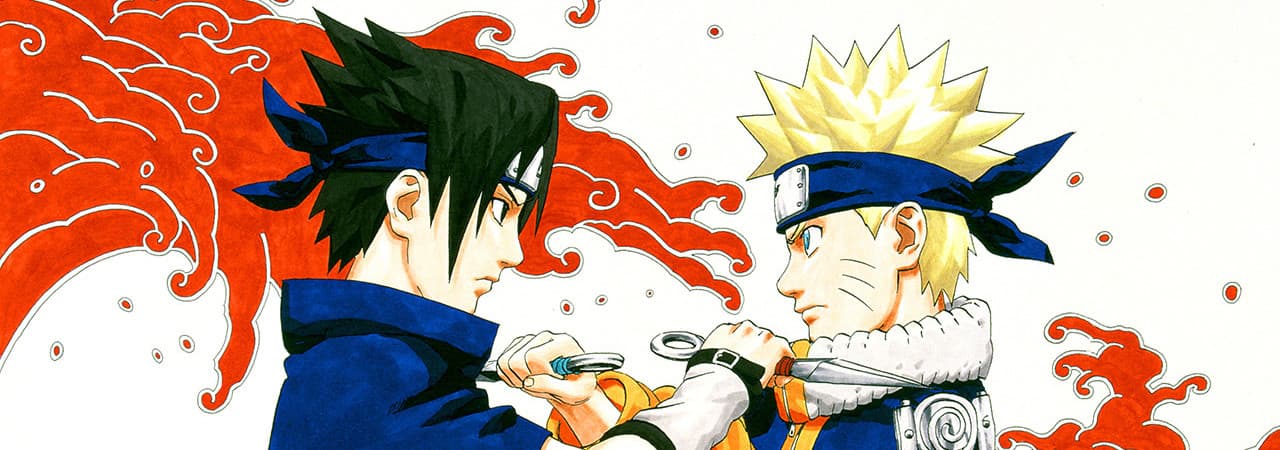
At first glance, Masashi Kishimoto’s Naruto seems like a classic shōnen, driven by rivalries, battles, and the dream of becoming stronger. Yet, when read with a psychological perspective, a deeper core emerges: it is the story of a child who experiences trauma, searches for ways to cope, and ultimately finds healing through empathy.
Naruto grows up as an orphan, isolated by the stigma of the Kyūbi sealed within him. He knows no parents, no sense of belonging, no recognition. This experience shapes his inner child with a profound wound—a feeling of being unwanted. Even when he later finds friends and mentors, a lingering skepticism remains about whether these bonds can last. His early ambition to become Hokage is less a political goal than a protective assertion: if he becomes Hokage, no one can overlook or reject him. Masking his pain through loudness, foolishness, and provocation is the first phase of his survival.
The decisive moments of his development occur in battles—not because he defeats opponents, but because he sees reflections of his own suffering in them. Each confrontation is a symbolic process: Neji embodies feelings of powerlessness and predestination, Gaara shows him how destructive loneliness can be, Nagato confronts him with the cycle of hatred, and Obito demonstrates the danger of succumbing to one’s own wounds. By understanding and guiding these adversaries toward new paths, Naruto simultaneously heals parts of himself. Overcoming external challenges is always a step toward inner healing.
This is especially evident in the changes Naruto brings about in his enemies. Zabuza, the cold mercenary, dies with tears in his eyes because Naruto shows him that he never saw Haku merely as a tool, but that a true bond existed between them. Neji, who believes in his fated cage, learns through Naruto that willpower and choice can be stronger than blood and destiny, beginning to break free from his fatalistic worldview. In the end, this change manifests tragically: Neji, once convinced he was trapped by his role, freely decides to sacrifice his life for Naruto and Hinata—a sacrifice made possible only because Naruto offered him a new perspective on his fate.
Gaara, like Naruto, is a child of loneliness and rejection. Through Naruto, he sees that one can fill their emptiness not with murder but with connection. This transformation makes him Kazekage, a leader who takes responsibility for others. That is why it is so touching that, in the dream world of the Infinite Tsukuyomi at the series’ end, Gaara does not wish for wealth or power, but simply imagines Naruto visiting him. In this quiet, almost understated moment, the depth of Naruto’s friendship is revealed—even the most reserved and silent character longs for genuine warmth.
Nagato, who as Pain destroys the village, recognizes in Naruto’s persistence that hatred is not the only response to suffering and breaks free from the ideology that once controlled him. Even Obito, who brings the world to the brink of ruin, sees in Naruto what he once was and realizes he did not have to be lost.
These characters understand more than anyone else that Naruto is extraordinary. They are the ones who feel his empathy most deeply—not as spectators, but as people trapped in their own pain, unexpectedly finding redemption through him. While others initially see Naruto only as a loud outsider, his enemies recognize the extraordinary power with which he breaks the logic of hatred. That so many of them change even in the face of death shows that Naruto’s influence goes deeper than mere persuasion: he touches the wound behind the mask, the part these characters have denied for the longest time.
Naruto’s true strength, therefore, does not lie in his jutsus, but in his radical empathy. While other ninjas seek to destroy their enemies, he asks: What pain made this person become who they are? He refuses the logic of hatred and searches for the wounded child behind the enemy image. Battles often end not in victory, but in a form of redemption. Naruto becomes less a fighter and more a healer through connection, understanding that personal suffering only gains meaning when one acknowledges the wounds of others.
The reconciliation with his parents becomes especially important. In his encounters with Minato and Kushina, he receives posthumously what was missing in his childhood: the sense of being wanted and loved. For his inner child, this allows the first wound—the feeling of being abandoned—to begin healing. Yet even after this, a trace of mistrust remains: a quiet voice questioning whether he can truly trust those who now respect him. This voice materializes in Kurama, the Kyūbi. Kurama embodies hatred, the memory of rejection, and the feeling of being a mere vessel. The crucial turning point occurs when Naruto stops fighting Kurama and instead offers trust. In this integration of hatred lies the deepest healing: Naruto accepts the part of himself he had long tried to reject and transforms it into strength.
In the end, Naruto is not about a simple victory, but about post-traumatic growth. He becomes Hokage, but the title is more a symbol than a goal: it signifies that he has broken the cycle of trauma and hatred that shaped generations. Naruto is not only accepted, but he has accepted himself and his inner child. The child who never knew belonging has become a man capable of giving others a home. Naruto is therefore not merely an adventure story, but a parable about the possibility of healing: that one can gain empathy from pain and draw hope for others from trauma.
33.5 out of 38 users liked this review
