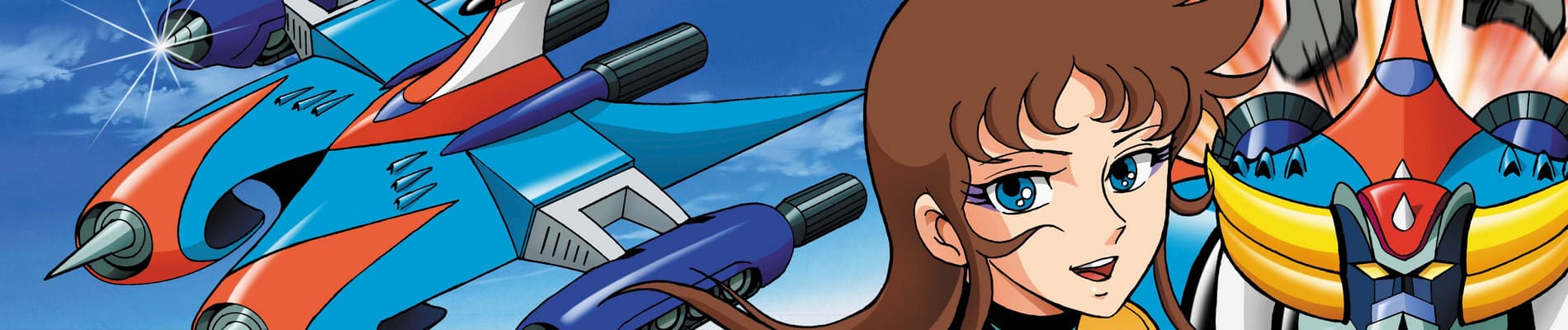

UFO Robo Grendizer first aired in Japan 50 years ago as the second sequel to the incredibly successful Mazinger Z, and it was the first anime to become a hit in Italy, France, and many Arab countries. But while it wasn't quite as popular in Japan as the first two series in the franchise and didn't sell as many toys, Grendizer stands far above Mazinger Z and Great Mazinger in the story that it tells and in the way that it tells it.

Let's get the simple stuff out of the way: UFO Robo Grendizer follows a young man named Daisuke Umon who is in fact Duke Fleed, the prince of another planet called Fleed. After his home was destroyed by evil aliens called the Vegan Empire, Duke takes the "guardian" of Fleed, the titular Grendizer, and crash-lands on earth, where he is found by Dr. Genzo Umon of the Space Science Laboratory. Joined by Koji Kabuto, the hero of Mazinger Z who has been relegated to sidekick, along with the eclectic Makiba family, UFO-obsessed father Danbei, young Goro, and Duke's sort-of love interest Hikaru, Duke Fleed and the Space Science Laboratory defend Japan and the earth from the Vega's march towards universal conquest.
If you've seen Mazinger Z or Great Mazinger, the setup should sound familiar. Grendizer on the surface is functionally the same as the previous two series: protagonist gets in super-powered robot and fights bad people want to destroy said robot and the entire world; cue episodic, monster-of-the-week show that rarely, if ever, deviates from the formula. Grendizer improves a lot of technical aspects over the past two series, like sound design and animation quality, but still feels like a pretty standard 70s super robot anime. But as I've said for every entry in this series so far, you don't come to these shows for a challenge to storytelling conventions or a breakdown of the human condition—you come to them because giant robots are fucking awesome; and sometimes, if you're lucky, these formulaic toy commercials will actually have something interesting to say.

Mazinger Z opened the door for this aspect of the super robot genre, and there were a few episodes sprinkled throughout it that played up some character drama and complex stories of enemy soldiers fighting against their will and issues of pride and confidence among the heroes. Great Mazinger then ran through this door, going as far as to talk about issues of race and the cost of war on innocent civilians. But UFO Robo Grendizer is what you find on the other side of this door, a series which takes the interesting ideas of love, war, personal trauma, and conflicting character dynamics and throws them into nearly every episode. And despite the fact that the show is episodic, it isn't afraid to have its characters change: Koji learns to manage his pride as he plays second fiddle to Duke; Hikaru begins to fight so she won't be a burden to her friends; Goro and Danbei both end the show more mature than they began it. Halfway through the series, Duke's little sister Maria is introduced, and she brings a great emotional weight and is so dynamic with the other characters that her presence really elevates the rest of the story.
Duke himself is a fascinating character. While he seems to not change all that much throughout the series, I don't think that's necessarily a bad thing because he is set up at the beginning of the story as a character defined by his past. Though he's usually the one saving the day in Grendizer, his primary conflict throughout the series is overcoming his own past and what has happened to Planet Fleed and the people that he loved. Because of this history, the conflict with Vega is much more interesting, much more personal. This is exacerbated during a number of episodes where Duke is brought face-to-face with other survivors from Planet Fleed such as his old lover and his best friend, and another episode in which a Vega soldier imitates his mother. Despite Mazinger Z and Great Mazinger both caring about their characters, Grendizer is the first in the trilogy to tie the conflict of its characters to the conflict of its broader plot, and this connection between the emotional side of the show and its narrative really works in its favour.

This isn't to say that the show doesn't have its issues. For example, plot points seem to be dropped pretty much on a whim. This happens a lot with the show's attempts at romance, with Hikaru's feelings for Duke and Koji's feelings for Hikaru seeming to vanish into thin air. Hikaru on the whole is sort of just there for the last 30 episodes or so, though she has her moments. And despite how well I think the show uses its monster-of-the-week formula, there are certainly some episodes around the middle that are boring and are, in my opinion, unnecessary bloat. That said, unlike the first two Mazinger series, I think the good here outweighs the bad. For the most part, even when there's no character development going on, even when the plot seems sort of stagnant, Grendizer is still enjoyable thanks to a good blend of lighthearted kids' show and and epic space opera.
The final seven episodes serve as a loosely-connected culmination of the series, where the Vega move beyond simply destroying Grendizer to conquering the earth because Planet Vega is incredibly unstable and will soon die. These episodes are, in my opinion, the highlight of the show as they up the emotional ante tenfold. Episode 68 is a brutal look at the horror of war and betrayal through the lens of Maria and her childhood friend Kane. Episode 72, which introduces Duke's ex-fiancee Rubina, the daughter of the King Vega, is for me the best episode of the entire Mazinger seires (and the first to make me cry). And the show's final scene which sees Duke and Maria leave the earth, venture across the cosmos, and return to Planet Fleed drove home to me just how far this franchise has come in terms of creating art within its commercialized formula. The shots as Grendizer flies across the stars remind me so much of later mecha series that I can't help but wonder if some young mecha animators and storytellers drew inspiration from this show as they did its predecessors.

Ultimately, Grendizer (and the Mazinger franchise as a whole) is a big piece of anime history that continually gets smaller and smaller in the rearview mirror. There's practically zero online discussion of this show, even less than Mazinger Z or Great Mazinger. I'm not so blind as to question why this is. It's easy, after all, to dismiss anime like UFO Robo Grendizer as "outdated" or "irrelevant" because of how far the industry and the artform has come in the 50 years since it first aired in Japan. Yes, the show is what it is: a 74 episode, monster-of-the-week, super robot anime. There are dozens of others like it, including two other shows in its own series that are both more successful and more influential. But I think that's missing the point.
I think it's important to know where the things you like come from, and though Grendizer isn't my favourite show of all time, it certainly helped lay the groundwork for some of them. While Mazinger Z will always be more famous, Grendizer will always stand out to me as a pivotal step in the evolution of mecha. Grendizer does what it does really well. And if you're interested in or curious about retro anime or the mecha genre, I think it's worth checking out. It might not be perfect, but it's definitely a good time. And along the way, it elevates the super robot from a campy and forgettable piece of anime history to something more interesting, more lasting, and more real.
