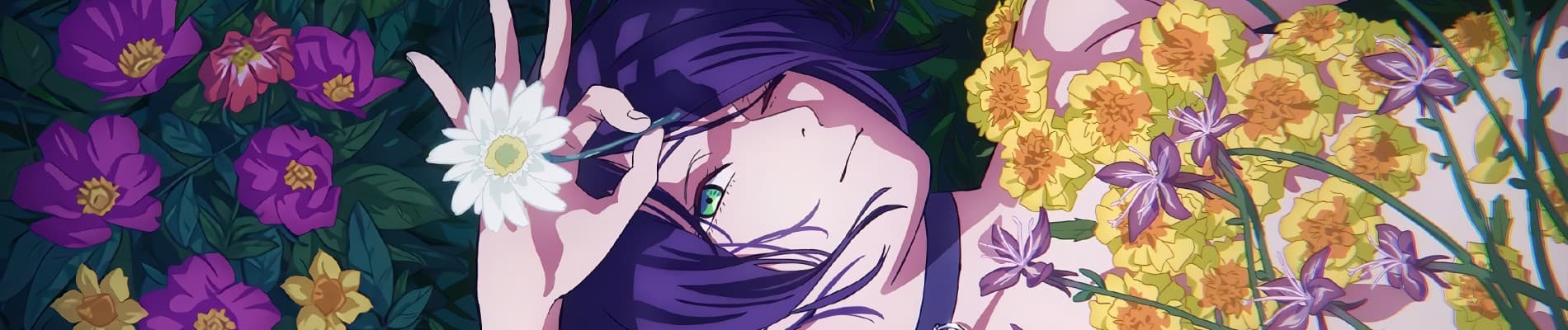
This film manages to pull off an almost herculean task - not only living up to, but also somehow surpassing (in some aspects), the Reze Arc - one of Fujimoto's greatest accomplishments in Chainsaw Man.
Story and Characters
In the manga, there is a heavy layer of subtext, lies and pretention in almost every single scene of this story. Everyone, except Denji, is trying to be someone they are not. Aki can't bring himself to admit that he cares about his co-workers, even if they are devils. The Angel can't bring himself to admit that dying would be bad, actually. Most importantly, Reze isn't able to admit to either herself or Denji that she does actually love him. However, it is her closeness to Denji (the only person who is honest with himself), that brings Reze around to changing her mind about who she wants to be.
Reina Ueda shines here the most. It's not some insane scream or particularly standout monologue that makes her the film's biggest highlight, but just her understanding of the character. There are small nuances to every line that she delivers. Voice cracks, softening, stress and so much more are placed almost impeccably in places which demand the eternal anguish of Reze's unsure mind to come across. A particularly memorable line being when she mentions that a peaceful life is most desirable, and you can make out the hurt and despair in a voice which regrets never having had any herself. Ueda does a fantastic job with such smaller, more subtle stuff with her acting.
Of course, so does the rest of the cast. There is a lot of character interactions and movement going on in this film, but the arc itself manages almost half a dozen characters very well with openings and ending of shorter development arcs, which reflects well in the film. There are standouts like the Angel Devil and Reze (and the way their arcs end up overlapping in the most beautifully crafted tragic ending), but everyone does manage to get enough of a focus to warrant their roles in the film.
Speaking of Reze, might as well get to the person the entire arc is centered around -
Reze is a masterpiece of a character. There is such subtlety to her execution and development - one that you do not find in shonen stuff polluted with overtly obvious characters. Despite appearing for a very small runtime, she manages to have a deep effect on not just Denji as a character, but also the audience's understanding of the entire show's themes. Her tragedy of a backstory and parallels with Denji would have been enough, but her present-day arc of struggling between brain and heart is as close as Chainsaw Man gets to spelling out its final themes so early on.
Pacing, Style, Tone
The Reze Arc is fantastic in how it manages to pace itself as a bomb - lighting the fuse with Denji and her first meeting, and letting it run all the way to the explosion during the festival scene. And somehow, despite the change in director, CSM has found a compromise between the more cinematic first season and the insane action that MAPPA probably now wants to stick to after Jujutsu Kaisen Season 2. We still get the quiet slice-of-life montages with melodious piano in the background, but they are balanced by the raw, explosive action of the second half almost perfectly - delivering something that echoes the manga way more with its intention and execution.
The animation might be divisive, especially during the Typhoon Devil fight sequence and its way more One Piece-esque character design philosophy during the more heavy movement sequences. In my case, I find these to be an incredible way to convey chaotic movement that defies order, so I personally loved them a lot. The more cinematic stuff remains consistent with Season 1 in its lighting and camerawork, but the character designs themselves have certainly been simplified compared to before. Not a huge fan of that, but I can appreciate the effort put into trying to respect the previous work while making changes. It manages to strike a good balance.
Continuing the idea of its bomb-like pacing, I also loved how it plays with color and lighting to reflect the mood and tone of any particular scene. Scenes with Makima usually don't have a lot of light even during the day, while scenes with Aki are well-lit even in the night. Scenes with Reze switch between being an inviting blue and a dreadfully uncomfortable red. It is really amazing to see more anime starting to play with vibrant color switches and lighting to add to characters, and I wish we see more of this in many, many more shows from now on.
Music
Holy. Shit.
Whoever on the committee first thought of putting Kenshi Yonezu and Kensuke Ushio on the same project was an absolute genius - and that continues to be true (with a surprise Hikaru Utada!)
Iris Out and Jane Doe have been on my playlist, on loop, ever since they released - but what blew me away even more was Ushio's score. Expectations were already high with his work on Dandadan in particular, and he somehow surpasses them.
In vast contrast to what you would expect, Ushio decides to play with loud and quiet music in opposite ways. The more wholesome, character-focused sequences are populated with the loudest orchestral scores while action is usually tinged with the quiet electronic riffs that Ushio does best. And as one would expect, the former go much harder than the latter with their absolute emotional appeal.
(On the other hand, that one track during the final fight with an entire choir singing the word 'bomb' in different ways individually stood out the most)
Final Verdict
An easy must-watch. Reze Arc is not only a great continuation to the Chainsaw Man saga, but also a film which stands well on its own with its cinematic merit. There is an undeniable vision to its animation, style, tone and emotions - one which pays off so well quite heavily due to Reina Ueda's generational voice talent.
Take your time, appreciate the nuance and messages beyond its simplistic narrative structure and you'll find a romance tragedy that is somehow more relevant today than it was when first written. A devastating look into the power of oppressive authority, how it destroys and manipulates the misfortunate, and most importantly - the pain of growing up to the reality of rational thinking.