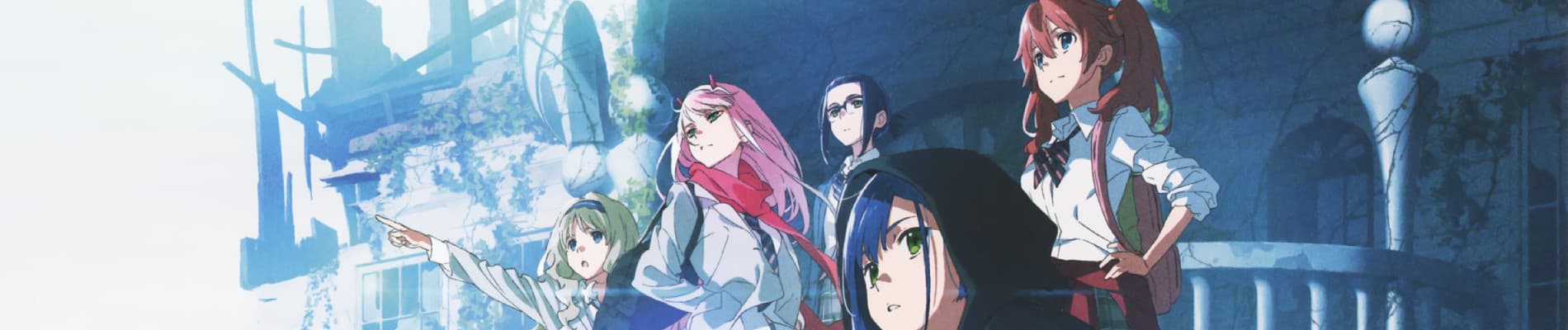
Darling in the FranXX Review
Darling in the FranXX is one of the strangest anime experiences I’ve had. On one hand, I genuinely enjoyed it and it had moments that were fantastic. On the other, it constantly felt like the writers didn’t know what story they wanted to tell, and by the end, it had completely lost the plot. It’s a show with flashes of brilliance buried under uneven execution, wasted potential, and an ending that collapsed under its own weight.
The strength of the series lies in its characters and coming-of-age themes. For much of the first half, watching Squad 13 slowly discover what it means to be human—forming relationships, learning about individuality, love, and purpose—was engaging and often heartfelt. The character arcs for people like Hiro, Zero Two, Goro, Mitsuru, and Kokoro were particularly strong. Hiro and Zero Two’s story stood out as the emotional anchor of the entire series. The reveal that they met as children, paired with the picture book motif, was one of the best parts of the show. It was consistent, well-developed, and gave their relationship real weight. When the series leaned into this kind of storytelling, it worked incredibly well.
But not every character was given the same treatment. A few, like Zorome and Miku, received almost no meaningful development beyond comic relief. Ikuno’s confession was crammed into one episode and then dropped entirely. The unevenness in character focus made parts of the squad feel underutilized, which hurt the overall cohesion of the cast.
One of the biggest issues was the lack of real consequences. The entire premise is that parasites are disposable, destined to die young, and exist only to fight. Yet not a single main member of Squad 13 dies throughout the series. It doesn’t need to be Akame ga Kill levels of body count, but when a core theme is “these children are born to burn out and die,” never following through undermines the tragedy of their existence. Instead, they all survive with what feels like heavy plot armor, making battles feel less impactful.
The problems compound in the second half. Around episodes 20–21, the show was primed to end on a bittersweet note. The Klaxosaur conflict had reached a climax, Hiro and Zero Two’s relationship was settled, and the parasites were moving into an uncertain future. Instead, the story ballooned into a galactic-scale war against the VIRM. Overnight, the tone shifted from an intimate coming-of-age mecha story into a full-blown space opera that it hadn’t earned. Zero Two suddenly gained random power-ups, like turning a VIRM into a sword, with no explanation. By the finale, the show was juggling cosmic themes it never built the foundation for, and the rushed execution showed.
Another rushed arc was the whole “humans returning to the surface” storyline. This should’ve been one of the most important parts of the show—seeing how the survivors would rebuild and reconnect with the natural world. Instead, it was handled in a few quick scenes, then brushed aside for more spectacle. By the time it came back around in the finale, it felt hollow and tacked on.
And then there’s the ending. Instead of tragedy or triumph, it landed in an unsatisfying middle. Hiro and Zero Two’s sacrifice had potential, but the way it was presented lacked emotional punch. The reincarnation/soul reunion scene at the very end felt cheesy, rushed, and unearned. It wasn’t heartbreaking enough to devastate, and it wasn’t uplifting enough to satisfy. It just left me with a shrug.
On the technical side, the show excelled. The animation was gorgeous, especially in fight scenes and emotional moments. Studio Trigger and A-1 Pictures brought their A-game visually, giving the series a unique and vibrant aesthetic. The music was equally strong. The soundtrack added atmosphere to both quiet scenes and large battles, and the opening theme was a standout—it’s one of those intros you don’t want to skip because it fits the tone so perfectly. These production values helped elevate the show, even when the writing faltered.
But then there’s the fanservice. While some of it fit the symbolic themes the show was aiming for, much of it was overdone and unnecessary. The way the FranXX were piloted was already suggestive, and on top of that, constant close-ups, poses, and framing choices made it feel like fanservice was often prioritized over consistent storytelling. It didn’t ruin the series, but it did cheapen it at times, especially when it distracted from serious moments.
In the end, Darling in the FranXX is a show I’d call a “beautiful mess.” It had all the pieces of something great: strong characters, meaningful themes about humanity and love, emotional symbolism with the picture book, and gorgeous animation with a killer soundtrack. But it undermined itself with plot armor, underdeveloped side characters, jarring fanservice, and a finale that abandoned the grounded tragedy it was building toward in favor of an unearned galactic war and a hollow ending.
Final Thoughts
Despite all its flaws, I don’t regret watching Darling in the FranXX. I enjoyed a lot of it, and there are parts that will stick with me, but it’s frustrating because it could have been so much more. If it had ended earlier and committed to its own themes instead of chasing spectacle, it could’ve been an amazing show. Instead, it’s one I’ll remember as both enjoyable and deeply disappointing.
Score: 64/100
13 out of 15 users liked this review