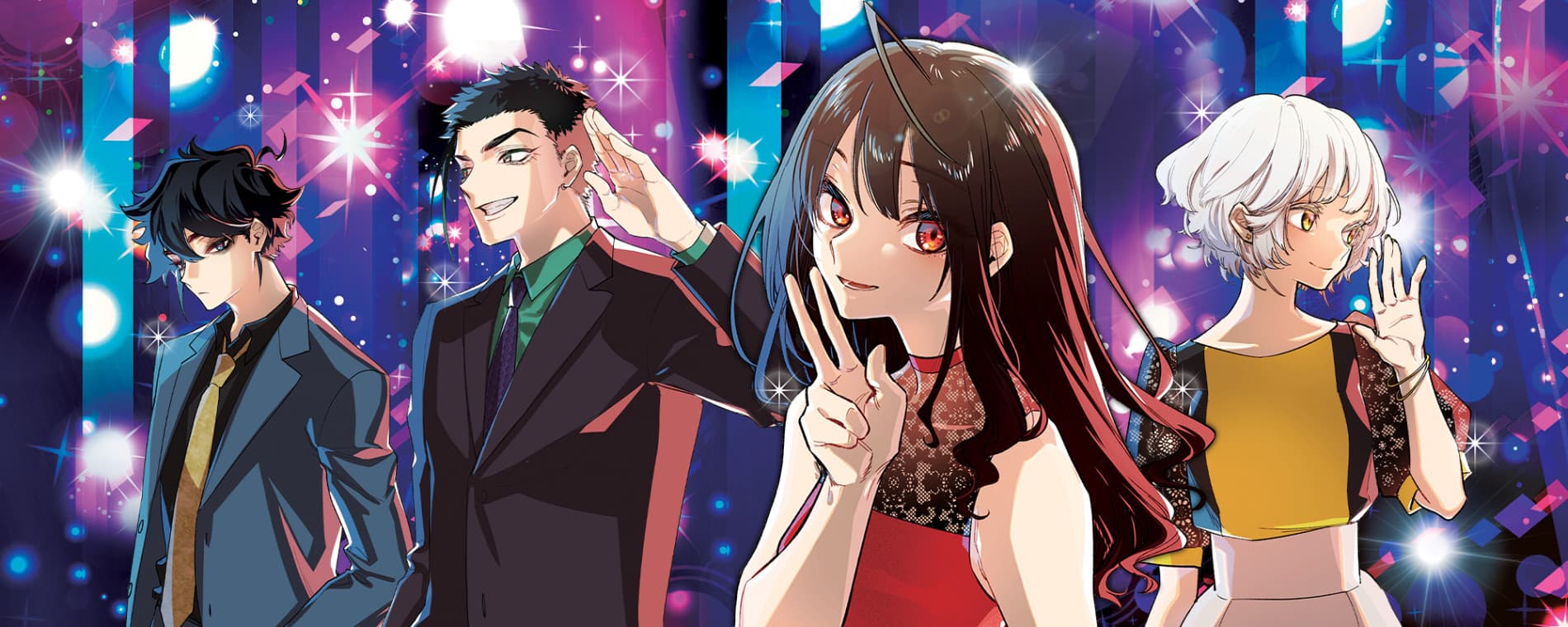
It must’ve been the summer of 8th grade. Sitting in my room, windows open, a slight breeze blowing through. It was probably around then that I fell in love for the first time ever. That's right—Kei Yonagi (the protagonist of Act-Age) captivated my young, impressionable heart.
spoilers ahead!
Tatsuya Matsuki presents to the readers the story of a young girl who can only be described as a genius. And yeah, this sounds like another shonen protagonist with god-given talent rising through the ranks. We've seen it a million times (think ROBOTxLASERBEAM, Hibiki: Shousetsuka ni Naru Houhou), all those "chosen one" stories where some kid is just inexplicably better than everyone else at their thing. But Act-Age takes that idea and makes it interesting.
Kei Yonagi is a totally peerless, genius, method actress. To her, acting is like remembering. Acting out sadness is just a matter of remembering the day her mother died. Happiness, remembering how it felt when her siblings were born. When she watches a movie, she’s not just being told a story. Every princess, every swordsman, every beggar, every prostitute, they live a life she will never live. But their emotions, their emotions are so intimately familiar to her, so much so that she almost drowns in the feeling of being someone else, forgetting herself. And when she dives deep enough into her ocean of memories and draws out those same emotions from the depths of her heart, she is no longer a 16 year old high school girl. She is a peasant unable to speak out against tyrannical soldiers, a strong-willed demoness enraged at her cheating husband, or a young boy on a steam engine bound for the stars. Her ability to delve into her past and conjure up the most pungent, rotten, and harrowing feelings in order to act is frankly frightening, but also enthralling at the same time. She’s so deep into it that she’s consumed by her role—she is the character and the character is her.

The first time we see her acting consume her is in a particular scene in the very first chapter that sold me completely on the series. Yonagi is participating in an audition for a role, tasked with displaying “sadness” (whatever that’s supposed to mean). Yonagi—the genius actress she is—exudes an utterly despondent aura, embodying the essence of misery with every cubic inch of her being. One judge carelessly views her performance as lacking effort and scolds her for not taking the audition seriously. Another judge who recognizes her talent prompts her to act in a way that even an idiot (poking fun at the other judge) can understand. It was this moment that grabbed my attention and never let it go. In an instant she goes from simply inhabiting sadness to manifesting it fully. She’s suddenly crying, tears streaming down her face. “Like this?” she says in response to the judges’ request, and just like that, I could no longer take my eyes off of her for the remainder of the 123 chapter-length series.

Matsuki’s characterization of Yonagi and the supporting cast in Act-Age is obviously an important factor in what makes this work so special, but writing is only half of the work in manga, and my god, does Shiro Usazaki deliver in terms of the other half. Her art has this raw, visceral quality—the ink practically leaps off the page, and her illustrations make you feel what the story wants to convey (she's working on Ichi The Witch rn and it looks amazing!) This is especially prevalent in the striking wide panels that appear when the tension is peaking. Usazaki brings you from closely packed panels filled with heightened emotions, and then releases it all onto a double-page spread of artistic catharsis. Yonagi’s acting is rooted in her emotions, and the art matches the intensity required in all of her performances. Usazaki’s artwork has a cold quality to it that sends shivers down your spine, freezing you in the spot, forcing you to feel the weight of Yonagi’s emotional state when required. One thing I love about the art is the way she draws eyes. They say that eyes are the metaphorical window to the soul, and Usazaki perfectly demonstrates this, beautifully illustrating the eyes of every character, laying their souls in that moment bare. When characters are angry, their eyes narrow, their eyes literally spiral with rage. When characters are sad, their eyes are wide open, tears beading up in their eyes. And when a heartbreaking farewell occurs, you can see the galaxy through their irises—encapsulating how it feels to say goodbye.

Shonen has always had the reputation of poor female protagonists and/or supporting cast, and excess objectification of these women, so it’s nice to read a work where the girls are properly explored and fleshed out. Kei Yonagi is a blunt, socially awkward kind of girl who’s unabashedly herself. There’s a marked lack of fanservice, and she has a proper identity instead of just looking good for the cover. Yonagi is simply a weird genius girl who likes romance movies, cries on command, and doesn’t understand why people think she’s scary. As her siblings say, she would be plain creepy if she wasn’t an actress.
The biggest issue with this manga is (obviously) the lack of a proper conclusion due to the author’s abhorrent actions. The ending is abrupt and does not even offer a semblance of closure, something that axed manga are usually allowed to do. A result of this is that many characters have incomplete development or appear to be written in a shallow way, leaving you to wonder what more they could have become, which is quite frustrating. However, despite the complete lack of an ending, Yonagi’s development is there—she goes from somewhat of a freak to someone who is able to connect with others on a deeper level, and it’s hard not to get attached to that. The content of the manga is enjoyable enough to ignore the fact that you won’t ever get to know what happens next and just read it anyway.
Even now, five years older than the kid who fell for Kei Yonagi that summer, I can't stop thinking about this manga. Despite the lack of an ending. Every time someone asks for a recommendation, I introduce them to her. I'm like a little kid showing someone a drawing I made, hoping they like it. Hoping they see what I saw. Hoping they're enchanted the same way I was.
Because here's the thing: even incomplete, Act-Age is something special. It's 123 chapters of a girl who takes her pain and turns it into art, who refuses to be anything other than exactly what she is. It's Usazaki's stunning panels. It's a fresh take on the hackneyed "genius protagonist" trope. It's a manga about acting that makes you care about acting.
Should you read it? If you want a cool female lead, gorgeous art, zero fanservice, and something different in shonen, then yeah. Absolutely. If you need a proper ending or don’t want to separate art from artist, maybe skip it.
But if you do read it, you'll get it. You'll see why I can't let it go. Why every time I reread it I'm back in my room again: windows open, breeze blowing through, eyes glued to the page.
Spellbound by that genius actress who stole my heart all those years ago.
3 out of 3 users liked this review
