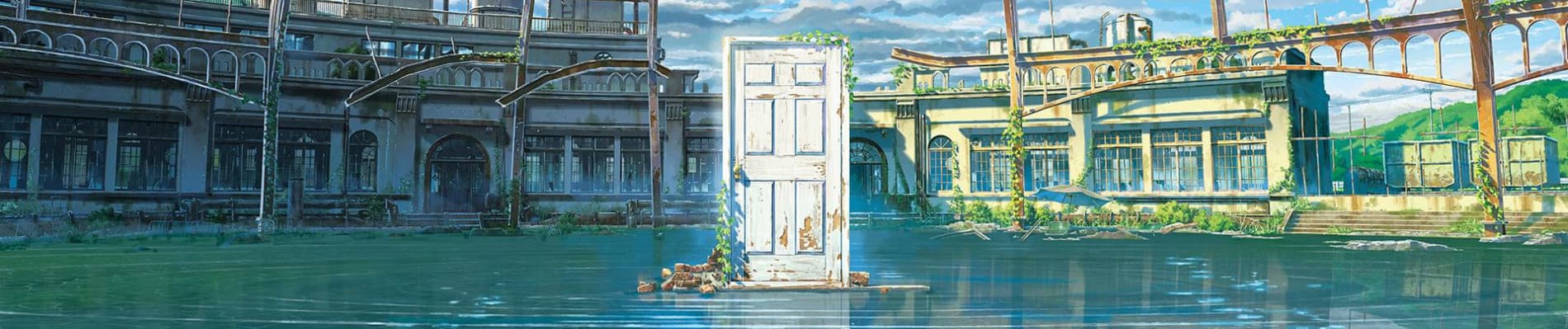

At first, Suzume no Tojimari didn’t hit me right away.
It looked like a simple road movie.But somewhere between the laughter, the quiet, and the stillness of the abandoned places, I realized I was crying. The story had slipped beneath my skin without warning.
It’s not just about doors. It’s about what we leave behind when they close the pieces of ourselves that stay trapped in time. Each door feels like a heartbeat, each closure a small act of letting go.
“The past doesn’t disappear; it waits for us to face it.”
Sadaijin.
That strange, almost divine cat that walks the line between guardian and trickster.
At first, he feels like comic relief playful, untouchable but soon you realize he’s carrying something heavier. His presence mirrors the cost of memory and the loneliness of sacrifice.
Sadaijin isn’t there to guide; he’s there to remind. That love and duty don’t always coexist peacefully. That even gods can long to be loved. His transformation hit me harder than I expected a quiet heartbreak wrapped in mystery.
Souta’s mission to protect the world from disaster isn’t loud or grandiose. It’s quiet, disciplined, human.
He represents that rare kind of goodness that doesn’t shout, the one that stands up simply because it’s the right thing to do.
What I love most is how his strength isn’t built on power, but on vulnerability. Even as he turns into something far from human, he never stops reaching out, never stops believing.
Together, Suzume and Souta aren’t a couple in love, they’re two people learning how to keep moving, even when everything around them has fallen apart.
The animation is almost overwhelming in its beauty sunlight cutting through rain, dust floating in forgotten rooms, reflections trembling in puddles.
The sound design deserves special mention, doors creak like sighs, the earth rumbles like grief, and the wind carries memories that feel almost tangible.
RADWIMPS’ score, delicate yet powerful, doesn’t add emotion it reveals it. There are moments when the music and silence become indistinguishable, and that’s when the film breathes.
What Shinkai does best here is balance the mundane and the mythic. He gives tragedy a shape and hope a sound. You feel the weight of real disasters through the lens of something spiritual, personal, and tenderly human.
By the end, Suzume no Tojimari stopped being a movie for me it became an echo.
A reminder that sometimes, healing doesn’t come from forgetting, but from learning to look back without fear.
Every door Suzume closes feels like an act of courage: not to seal the past away, but to keep it safe.
It’s a film that invites you to grieve, to hope, and to remember.
And when it’s over, you realize it’s not really over because a part of you stays behind, standing quietly at that last door, listening to the silence after the storm.
Score: 8/10
12.5 out of 19 users liked this review
