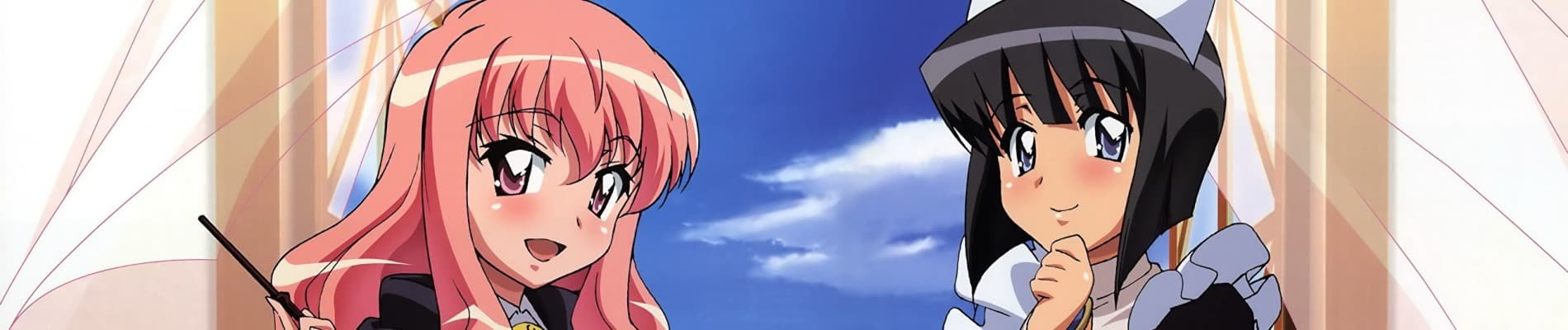
The Familiar of Zero (Zero no Tsukaima) holds a foundational place in the modern anime landscape, essentially serving as a proof-of-concept for the now prominent isekai romantic comedy. While the series often drowns itself in the very tropes it helped popularise, namely the harem setting and the physically aggressive tsundere archetype, it succeeds because its core relationship, between the "Zero" mage Louise and her summoned familiar Saito, is given the time and focus required to feel genuinely earned. It is inconsistent and sometimes frustrating, but its eventual emotional payoff secures a strong 7.5 out of 10.
The most common point of friction for new viewers is the relentless hostility of Louise toward Saito. She is physically and verbally abusive, a detail that is often played for cheap comedy. However, dismissing this as simple, offensive fan service misses the narrative purpose of their antagonistic start.
Louise is not just a spoiled noble; she is a deeply insecure character operating under the weight of a brutal class system. In Halkeginia, magic equals power and status, and her inability to use the standard elements has left her a pariah -- the "Zero." Her harsh, controlling attitude toward Saito is a defense mechanism of sorts; she is projecting her frustration and fiercely clinging to the only person she can command.
This intentional, abrasive beginning makes their later emotional connection far more impactful. Because the series starts at a baseline of aggression and servitude, every small act of kindness, every moment of mutual protection, and every flicker of jealousy or concern becomes a significant milestone. Their journey is not about love at first sight; it is a painful, drawn-out demolition of emotional barriers that ultimately makes their final, committed romance feel justified and actually earned.
Another area where the series excels is its use of the isekai premise to explore themes of social critique. Saito is a literal outsider, which connects him and Louise as, while she is in her own world, she is ostracized in a very similar manner. Saito is constantly pushing back against Halkeginia's ingrained moral and class hierarchy, where non-mages are treated as subhuman. His defiance of the norm provides essential tension and highlights the fundamental injustices of Louise’s world.
Furthermore, his power, derived from the "Gandalfr" runes, is not a simple gift but a source of both extraordinary capability and immense servitude. The show handles the contrast between Saito's modern sensibilities and the continent's medieval politics well, elevating the narrative beyond standard school antics into a genuine power struggle with light political intrigue. This shift toward high-stakes military action and the eventual resolution of the continent's conflicts ensures that the show offers more than just relationship drama.
It is true that The Familiar of Zero suffers from a noticeable inconsistency in writing quality across its four seasons. The relationship focus often gets derailed by the obligatory harem/ecchi elements, particularly during Season 3, which felt directionless and overloaded with fan service. While the girls in Saito’s harem are generally better developed than in many modern isekai, these plot deviations occasionally feel like forced roadblocks rather than meaningful narrative threads.
Despite these flaws, the anime is a masterclass in committed storytelling. It was written and adapted with a clear endpoint in mind, allowing the core romance to grow organically over time, rewarding the viewer's patience. The music, driven by Shinkichi Mitsumune’s elegant piano and violin scores, beautifully underpins the series' most emotionally resonant moments, lending genuine gravity to the relationship's development.
Ultimately, The Familiar of Zero is very clearly a product of early 2000s anime tropes, but its longevity is a testament to its heart. For those who can appreciate its characters' deeper insecurities, it delivers a complete, satisfying, and influential coming-of-age romance that remains close to my heart even to this day.
8.5 out of 9 users liked this review