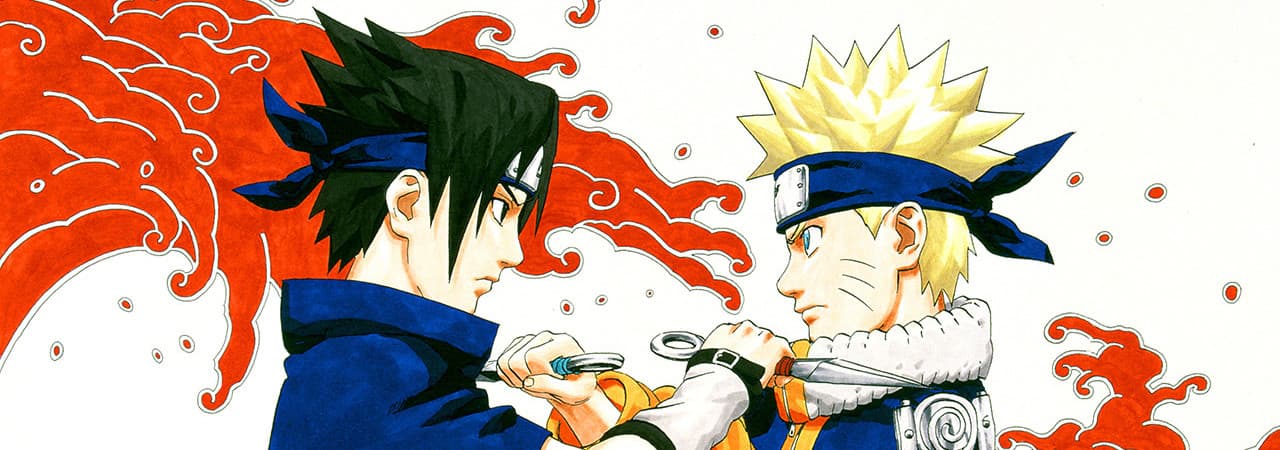
Re-reading Naruto is like reliving childhood, not revisiting the romanticized naivety of youth. Beneath the legendary headbands and endless speeches about friendship lies a tale that, in its youth, sought to explore the experience of growing up, facing hardships, and embracing a sense of peace. What makes Naruto intriguing on reread is not the nostalgia, but the realization that it was not originally intended for children. Kishimoto’s first volumes are vibrant and diluted by the innocence of youth, representing a rebellion against the shinobi world that it glorifies. The plucky story of the mouthy orphan seeking recognition was not, in any way, about becoming Hokage; it was about becoming a man.
From an age-related perspective, the most remarkable aspect is the extent to which tragedy Kishimoto concealed behind shounen. This very village that celebrates Naruto’s success is the one that secluded him. Heroes like Jiraiya meet their end in pursuit of an unattainable peace, while villains like Nagato, Itachi, and even Madara were not born evil but were ideologically defeated. The distinction between good and bad, which appears so thin on rereading, is that Kishimoto’s world lacks inherent morality but instead revolves around cycles of wisdom and wounds.
The initial arcs still retain that classic, kinetic pacing, clean panels, ingenious fight choreography, and emotional throughlines that cut with precision. The arc of Zabuza and Haku serves as the emotional blueprint of the series, presenting the idea of shinobi as a means and humankind as the forbidden weakness. It is the first and likely the only time Naruto truly revolutionizes his idealism. However, as the plot expands, the emotional depth is overshadowed by the sheer magnitude. The Chunin Exams to Pain arc is a masterful piece of escalation and identity, each conflict seemingly a continuation of Naruto’s psyche. Yet, the war arc, despite its grandeur, succumbs to its own mythos. Kishimoto’s worldbuilding has become so expansive that it loses emotional authenticity.
And still, at its most bloated Naruto never gives up. It is a tale that has faith in the greatness of knowledge with such embarrassing faith. All flashbacks, all references to "I never give up" are not an indication of sloppy writing, it is obsession. Kishimoto is like a monk who is in need of enlightenment and cannot release the thought that empathy could overcome war. It is childish, yes--but child-manly too. It is beautiful, and this is because of the same idealism which exasperates the experienced reader.
Technically, Kishimoto’s art undergoes significant development. The harsh and angular edges of Part I give way to smoother and filmic spreads in Part II. His shot framing, particularly in emotional moments like Naruto standing alone in the swing, Itachi’s final smile, and Jiraiya’s last words in the rain, has become an indelible part of the genre’s collective memory. Few mangaka possess the ability to convey visual silence like Kishimoto does; the silence between impactful moments, those blank panels where everything is left unspoken, resonates with the weight of what has been lost.
However, upon rereading Naruto, its contradictions become apparent. It’s a tale of breaking the cycle through characters who perpetuate it. While it promotes individuality, it resolves all issues through legacy. Naruto doesn’t rebel against the Will of Fire; instead, he inherits it. His final triumph lacks the sense of rebellion but rather absorbs into the same system that caused his life’s misery. There’s a melancholy, almost tragic, quality to it. The boy who dreamed of transforming the world ends up preserving it. After all, peace is nothing but an illusion.
Despite its flaws, wordiness, and sometimes painful debauchery, Naruto stands out as one of the few manga that surpasses the expectations of its medium due to its unwavering emotional belief. It’s imperfect, word-heavy, and occasionally crass, but it carries a belief in itself. It has faith in the strength of human connection and the notion that no one should endure pain alone. When you revisit it, that earnestness cuts through the noise of contemporary cynicism. Perhaps that’s what makes it eternal—not perfection, but earnestness.
Naruto doesn’t need to be reread to rediscover its greatness; rather, it’s a reminder that the greatness wasn’t its ultimate goal. It’s the voice of a generation yearning to be heard. It’s raw, loud, and crude, but undeniably alive. And when the dust of the final war settles and the boy finally reaches the sun he’s been chasing his entire life, you can’t help but feel that transient, sweet warmth of growing up with him, coupled with the silent sadness of knowing that he was never going to remain a boy forever.
31 out of 33 users liked this review
