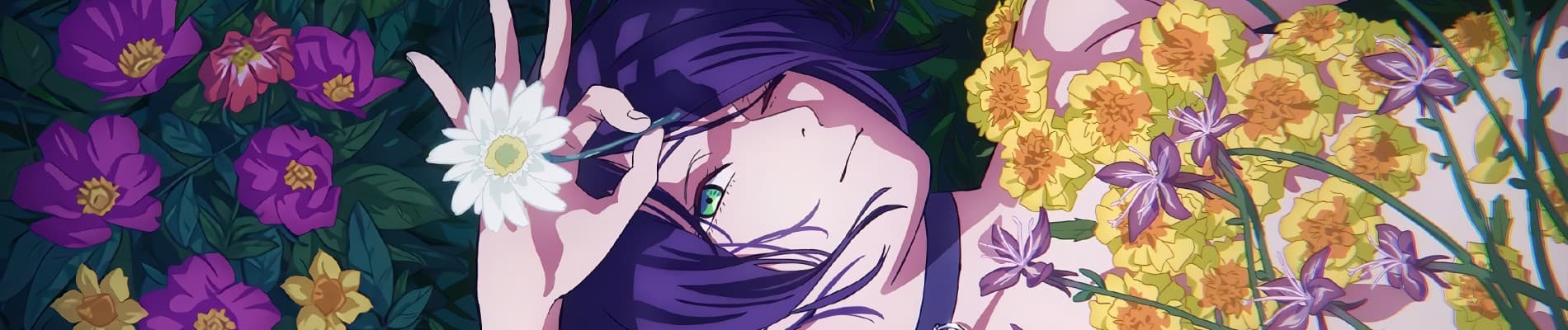
Recently, I watched the compilation film of Chainsaw Man—something that, truth be told, wasn’t originally in my plans. The opportunity came up after a friend mentioned that the compiled movie version of the anime was better than the original series. He had stopped watching the anime halfway through but praised the film a lot, which made me curious. So, I decided to check it out.
In my opinion, the result was very similar to the anime. The differences lie mainly in pacing, editing, and narrative structure, but the essential content is practically the same—which, for me, isn’t exactly a good thing. I still found the material dull and poorly adapted. I say this as someone who isn’t a fan of the Chainsaw Man manga, although I do recognize that its author, Tatsuki Fujimoto, has undeniable qualities.
Fujimoto is a very unique mangaka. I quite like his art, which breaks away from conventional patterns. It’s crooked, imperfect, and full of personality—something I prefer over overly polished or generic drawings. I often value a manga’s art more than its plot, and in that sense, his style appeals to me. I also appreciate the absurd and daring ideas he explores, which are present in both the manga and this film.
On the other hand, there’s something that deeply bothers me: how cinematic Fujimoto is. It’s evident that he’s a film enthusiast—his works make it clear how much he absorbs from cinematic language. He tries to bring that sensibility into manga form, which, personally, I find less immersive. I’m not much of a film person myself; I like some movies, but not the formulas and patterns that dominate the industry.
This cinematic influence in Fujimoto’s work feels discordant within manga. It’s like when a Western piece tries to emulate Japanese style and ends up sounding artificial; similarly, when Japanese authors try to incorporate a very Western aesthetic, the result often loses authenticity. In Chainsaw Man, the attempt to apply a “film aesthetic” within the structure of a manga—and consequently, the anime—feels forced and visually uninteresting.
In short, while the Chainsaw Man movie maintains the same spirit as the anime, it also carries the same flaws: an adaptation that, despite being technically competent, fails to capture the force and impact that Fujimoto’s work could have. It’s an interesting experiment, but one that ultimately reinforces how the author’s cinematic vision—at least for me—creates more distance than connection between the viewer and the story’s potential.
After revisiting Fujimoto’s style, I turned my attention back to the compilation film of Chainsaw Man—the one summarizing the first part of the anime. As in the series, I felt the film loses much of what makes the manga unique. The main reason is direction: weak, lacking identity, and unable to convey the singularity of the original work.
Visually, the result is also disappointing. The film looks generic and uninspired, even inferior to Jujutsu Kaisen, which clearly served as a reference. Jujutsu Kaisen’s design is more creative, and even its direction feels stronger. Had Chainsaw Man’s film been helmed by the same director, I believe the result would have been much better—the action scenes in that series, for instance, are far more impactful.
Ultimately, what weighs most against the film is the combination of weak direction and bland aesthetics. Even the manga, with all its problems, presents this part of the story in a rawer, more engaging way. The adapted material—which covers the Power introduction arc, the hotel arc, and the katana devil fight—has few strengths, but the manga still conveys its atmosphere much better.
That said, there are still standout moments. The iconic “vomit scene,” the death of a major character, and Makima’s power displays remain visually striking and well executed, both in the manga and in the film. Aki’s use of the fox devil and some of Power’s interactions also provide good moments, even amid the inconsistent direction.
After those compilation films, I watched the direct continuation: the Reze Arc movie. And this is where the analysis becomes more complex—especially when it comes to the story.
The film’s plot has its highs and lows, and interestingly, both its strengths and weaknesses stem from the same source: Fujimoto himself. Right at the beginning, there’s a scene that made me think, “someone needs to stop Tatsuki Fujimoto.” His writing sometimes feels overly artificial, as if he’s trying to turn every moment into something greater than it is. There’s a forced theatricality, an overdone sense of drama, that doesn’t feel natural within the narrative.
These scenes, which also appear in the manga, bother me because they break immersion—they seem to exist only to show how symbolic and profound the author wants to be. Even so, Fujimoto manages to balance this at times, like in the cinema chapter—one of the most memorable parts of the manga. This sequence, where Denji and Makima watch several movies together, was adapted early in this production and, despite criticisms, remains one of the film’s most interesting moments.
There are scenes in Chainsaw Man that, while absurd, are iconic and fun. It’s important to make a distinction here: there’s a difference between the absurd and the theatrical. When Fujimoto embraces chaos, I love it—that chaotic, over-the-top aesthetic is part of the work’s charm. The problem arises when he tries too hard to be theatrical, creating moments that feel staged just to appear “artistic.” That kind of forced dramatization, for me, rarely works.
Concluding the narrative discussion, we move to direction—another key point. I’ve already criticized the TV anime’s direction quite a bit, and although I’m not sure if the same director handled this film, the difference is noticeable: this one is more careful and creative. That said, there are still moments where the work could’ve been more refined.
It’s difficult to define what makes direction “good”—it depends on creativity, intuition, and the director’s sensitivity. But subjectively, I know when a direction impacts me emotionally and when it doesn’t. In this case, I can say the direction in this Chainsaw Man film is better than the anime’s, but still short of what it could be.
These directorial flaws, alongside weaknesses in the script (largely stemming from Fujimoto himself), are the film’s main downsides. Even so, the overall balance is positive—especially when compared to the previous adaptation.
Watching this film, I couldn’t help but think of a natural contrast: Hayao Miyazaki’s work. I recently watched his new feature, and even if I’m not a fan of all his ideas, it’s impossible to deny his flawless direction. Miyazaki—along with Isao Takahata, whom I consider even more brilliant—is an example of a director whose mark is present in every frame. His creativity and sense of rhythm are masterful; even when I don’t like the content, I admire the execution.
I get the same feeling watching works by Hideaki Anno (Evangelion) or other great directors: you can feel their uniqueness in every scene. That creative pulse, that authorial energy, is what I find missing in Chainsaw Man. The direction here is far from bad—it just lacks the distinctive identity that separates the greats from the competent.
Still, that doesn’t ruin the experience. The direction is consistent and functional—just not brilliant. And as an adaptation, the film does a good job within its limitations. After all, adapting a manga (or light novel) into film format is extremely challenging. The original structure is often episodic, which doesn’t always translate well into a continuous, self-contained format.
Even successful productions face that dilemma. The No Game No Life film, for example—an adaptation of the seventh light novel, my favorite in the series—is great, but suffers from structural and pacing issues. The same goes for the Made in Abyss movie, which, though beautiful and emotionally powerful, doesn’t always hold up narratively outside the serialized format.
That’s why I think Chainsaw Man: Reze Arc handles this difficulty relatively well. It doesn’t fix all the problems inherent to adapting manga for cinema, but it does enough to stand out as a solid experience, even with its stumbles.
One of the aspects that caught my attention most in Chainsaw Man: Reze Arc was its narrative structure. It’s curious how well the format works in film, even though it was originally designed for manga. That happens because the adapted arc has a very straightforward construction: a brief introduction, a new character, a clear situation—and then total chaos and relentless action. That simplicity, which can feel like a flaw on the page, translates into perfect pacing for cinema.
The film follows that logic exactly: it starts slowly, sets the stage, and then races full speed to the end. It’s a structure that works wonderfully within its premise. Of course, it’s not perfect—a truly flawless film must be conceived as one, not as an adaptation—but within its limits, it’s a successful example of adaptation.
Moving on to visuals, I have to admit: I never liked the TV anime’s design. I found it generic, with poorly integrated CGI—something that has become a recurring issue in MAPPA’s productions. And that’s curious, because MAPPA has proven capable of using CGI far more creatively, as seen in Dorohedoro, whose direction and aesthetics were exactly what I hoped to see in Chainsaw Man.
That’s why this film surprised me positively. The visuals are far superior to the anime—more fluid, more cohesive, and with a measured dose of creativity that makes a world of difference. It’s that kind of well-balanced experimentalism that adds personality without becoming gratuitous or overdone. The result is a visually vibrant film, with intelligent use of light, color, and framing.
The action scenes are the absolute highlight. More than half the movie is pure, unrestrained combat—and what combat! Fluid, inventive, and exciting. Unlike Ufotable’s approach, which sometimes overindulges in flashy stylization, this action is visceral and cinematic without losing a sense of weight and impact. At several points, CGI is used subtly and effectively, without drawing negative attention—something the anime couldn’t balance.
Comparing it to other MAPPA works, the film reminded me a lot of the Jujutsu Kaisen movie. Like that one, Chainsaw Man: Reze Arc has a self-contained story, well adapted and with its own cinematic energy. The difference is that here there’s special attention to lighting and fight choreography—reminiscent of the creativity seen in Jujutsu Kaisen’s second season, with its dynamic transitions and clever light play.
As for the soundtrack, this has always been a weak point for Chainsaw Man. The TV anime, in particular, had forgettable tracks that lacked the identity a story this unique deserves. The film doesn’t completely solve that problem, but uses its score more effectively. Familiar themes, like the ending song by Maximum The Hormone, are inserted energetically mid-battle—a bold but fitting choice.
Even if the soundtrack isn’t memorable, it serves the narrative well and enhances immersion without clashing with the story’s chaotic and emotional tone.
Overall, Chainsaw Man: Reze Arc surprised me. It’s a much better experience than the TV anime—better directed, visually consistent, and with a narrative structure that does justice to the source material. It’s not a perfect film: there are pacing issues, some questionable directing decisions, and a soundtrack that could’ve been stronger. But as an adaptation, it elevates the original content and delivers something truly cinematic.
Even though I’m not a Chainsaw Man fan—not of the manga nor the series—I left the theater satisfied. It was an intense, technically solid, and above all, entertaining experience. If I had rated the anime around 7.2 or 7.5, the film deserves a leap: 8.5.
Could it have been better? Perhaps. With bolder direction and a stronger soundtrack, yes. But even so, it’s a film I wholeheartedly recommend—an adaptation that, at last, does justice to the chaotic potential of Chainsaw Man.
28 out of 31 users liked this review