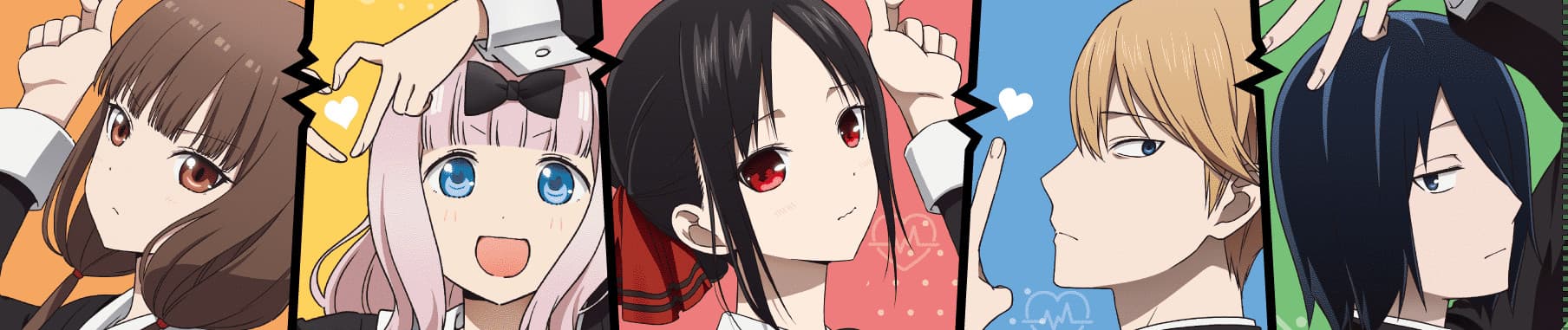
Fundamentally, Kaguya-sama: Love is War Ultra Romantic is a tale of two geniuses too proud to admit they are in love, although by this third season, it rises beyond its romantic-comedy framework and turns into an emotional third act, character climax, and tonal equilibrium. What is brilliant about the show is not just the manner and humor of the show but the way to conceptualize love as not only a battle of wits but a very vulnerable form of surrendering. Season 3 picks all the earlier seasons put and brings them to a near theatrical climax, the end of which feels like both a proclamation of triumph, as well as an invitation to new horizons.
The plot remains the same: Kaguya Shinomiya and Miyuki Shirogane keep their mind games in the student council room displaying both attempts to get the other person to speak up the first. However, the tension has changed now. It turns into a field of emotional self-reflection as opposed to the battlefield of pride. We begin to perceive the holes of their mental armor, their fears, their insecurities, and the good intentions behind the parades of thoughtful manipulation. The war gradually becomes the process of self-acceptance and trust. It is no longer about who wins, it is about who will be first to be honest.
The secret of this season is that it strikes a balance between its riotous comedic spirit and scenes of breathtaking vulnerability. The visual direction is razor sharp, A-1 pictures are still framing even the most basic of scenes such as a psychological duel, with dramatic lighting, over-the-top voice acting and film-like shooting, to make the ridiculous seem even more ridiculous. But, with the pyrotechnics of hyperbolism, the show has confidence in restraining itself. Episodes such as the silent streak of self-confidence in Ishigami and emotional growth in Iino demonstrate the fact that Kaguya-sama is not a love comedy; but rather it is a character-oriented show about maturing. Every student council member grows in very subtle ways to learn how to love and be loved without losing a part of one self.
However, the jewel of this season is the "Ultra Romantic" finale. All of the accumulation of the three seasons is brought to one of the most gratifying and emotionally rich confessions in anime. It is accomplished in a way the show delays and mixes music, tension, and silent longing and that is pure cinematic art. It is not based on melodrama; it gets every bit of emotion. The relationship of Kaguya and Shirogane eventually develops beyond the baseness of being stuck to each other to understanding each other. The fireworks on the roof scene is an excellent metaphor, love just as the fireworks is a brief, messy and beautiful thing that a person does not win, but gets.
The self-awareness of Ultra Romantic is what makes it stand out of the rest of romcoms. It realizes that it is overblown, that it is ridiculous, but amid the messiness of it all it tells the truth about human feeling. The sincerity is never compromised in the comedy, but rather it is enriched by it. You laugh at the ridiculous circumstances, but you remain to get the true emotional conflict underneath it. Here the narration is akin to mocking the pride of the characters but the text is near to being poetic--making satire into reflection.
Another attention-grabber is voice performance, Aoi Koga (Kaguya) and Makoto Furukawa (Shirogane) do career-defining roles. Their performances bring to life all the changes in the tone, the comic battles as well as the emotional confession. Every emotional beat is even more hard with the help of the sound design and music score, especially the emotional leitmotifs that fill at the central moments. Even the opening and closing themes are based on the development of the plot, slick, childish but with an increasing touch of maturity.
At the conclusion of Ultra Romantic, it seems that you have not only witnessed a confession, but the resolution of an emotional thesis. It is hard to imagine a series that is so funny in its essence to so dramatic and heartwarming without losing its identity. Kaguya-sama balances that with the perfect amount- it remains ridiculous, it remains chock full of comic appeal, but with a heart that is no longer hidden. The war might be over, but the sentiments it aroused are more real than ever.
Ultra Romantic is not simply a season--it is a payoff years in the making. It is the climax of waiting, suspense and personality shaping packed in humorous and ridiculousness. In a book that started with the love on the chessboard being controlled by two geniuses, the conclusion is to remember that love was not something that could ever be outwitted in the first place. Something to give oneself up to. And when Kaguya and Shirogane finally do, it is nothing less than beautiful.
37 out of 39 users liked this review
