This review will be written from someone who’s been through attentive suicide and a few traumas perspective (aka me):
I also expect you have already watched every episode, as the review has spoilers.
I want to start this review with a conversation between me and my friend, who also saw the anime:
Me: (friend’s name) I watched “Takopi’s original sin”, there should be a word to describe how traumatic this piece is, because trigger warning or trauma won’t do
Friend: This anime is the trigger warning
Me: Trigger warning didn't know it could be so traumatizing
So with that, viewers are advised.
Getting to the more technical aspects of the review, this is how I will rate this anime:
Art /10
Music /10
Characters /30
Story/Development /30
Enjoyment /20
Art:
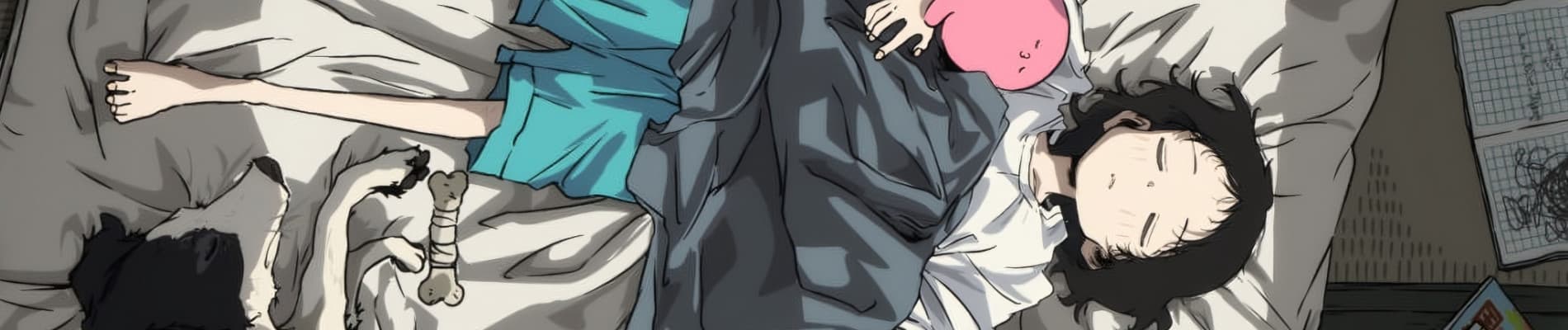
The animation was executed gracefully. One of my favorite parts when it comes to the art is the giant difference between the characters' states. When they are feeling down and when they are ok, for example, when Shizuka was just beaten up, it was clear what she felt for the dirt marks and bruises, in contrast to when she was not beaten and with Takopi or Chappy, she opens up a smile, her eyes literally shine, her skin is clear, her clothes are clean. Another case is with Naoki Azuma, the excess of detail really helps understand he is lost, “nowhere to run” the camera distorts, and there are more tears than usual, big stressed eyes, it really shows how the character is feeling with no open gaps for interpretation. The exaggeration of details can be bad sometimes, but as for me, it helps me understand better what the character is feeling and helps me relate to them.
10/10
Music:
Music was mostly unnoticeable most of the time during the anime, so I will be focusing on the intro and outro.
Intro:
Completely deceiving, but I guess it was on purpose, I think it was supposed to be on Takopi’s pov, since he, in the whole anime, is portrayed as this innocent, doesn't understand what murder is, kind of being, so let’s go with that. After searching for a translation of the intro, it really looks like a kid wondering why things happen because a kid doesn't really understand adult stuff, even though the three main characters are forced to act as adults as an escapatory reaction/survival instinct.
Outro:
Also looks like a song made for kids in a weird way, but with deeper meaning and adult themes, but also behaving like a kid. It has hopeful lyrics and leaves you to think.
7/10
Characters:
There are three main characters, and I will go through each one of them.
Shizuka Kuze:
This character is a 9-year-old KID, a fourth grader, and it is very important to be constantly reminded, why? Can you judge a kid for believing? Can you say she was dumb or selfish for not completely understanding the situation? Well, no, Shizuka is not only a kid, she is the only one of the three to completely act as one, and the most relatable for me (I will defend her a lot). Every step she took, every choice she made, made me cry, some more than others. She is a walking representation of depression from school bullying. Her life changed after the death of Marina, and Takopi took her place. From the perspective of a child who apparently does not understand death and its consequences, to seeing your bully dead and realizing your suffering will finally end, is rewarding. Later on, she realizes life isn't as bad. She finds out she can make friends and be happy, but in a way, she will regret it in the future, probably blaming herself for Marina’s death and also dragging Naoki with her, and afterwards asking him to take the blame for her so she can go to Tokyo to meet Chappy and her dad. That happened, Naoki took the blame, and she went to Tokyo. Police did not believe Naoki (who would believe a 9-year-old took a camera and hit it so hard on someone’s head that the person died) and Shizuka met her dad (awwwww), who pretended not to know her and left her for dead in Tokyo ALONE. At that moment, she felt no one was on her side and killed Takopi, which I see as losing hope of everything, the friends she had made? Well, that doesn't matter since she thinks Naoki is locked down, her mom wasn't present from the beginning, and her only hope to see Chappy was crushed.
Marina Kirarazaka:
This character is a 9-year-old KID, a fourth grader, yes, still reminding everyone of that, so you can remember not to blame a kid for acting as a kid. Marina is the whole anime taking the blame for her parents for not parenting. As if it were her fault, her life is falling apart, and her mom doesn't help either; she blames her daughter and obligates her to be on her side because she is too scared to go through the divorce alone. This is some serious bad parenting. Marina’s mom hits her constantly, and Marina, not understanding why and also blaming herself and Shizuka for her parents' divorce, acts the same way as her mother and bullies Shizuka, hitting her. For me, Marina has no blame at all; her parents are responsible for her education, and they failed on that. What can Marina do? Follow what her teacher at school says? No, because her teacher is more depressed than the kids, she has no living will whatsoever. Her classmates? They are all kids just like her, not really an example. It’s hard to give an opinion on what she is because her character is not built yet; she is just a reflection of her parents, as well as all the other kids. I can get a few neurological facts here, but I won't; we are talking about anime, not medicine.
Naoki Azuma:
The prodigy with traumatic parents. This is the character I felt the most pity for; he is constantly pressured to act as an adult and is the most “adult” character among the three. Yes, he is also a 9-year-old KID, a fourth grader. Naoki tries too hard; he is expected a lot by his mom, and it causes trauma in him. He is a people pleaser; he tries to get everyone to like him, but fails in making real friends. Naoki is dragged into the story by Shizuka because she asked, and Naoki likes her. In my opinion, Naoki would be even worse if he didn't have a brother; he is the one to save Naoki by only talking.
Takopi:
An alien who came to earth to make everyone happy with “happy gadgets”, this is the most shallow character and the one with the most importance. Takopi came to Earth to mess with everyone. He was needed and made a difference, but only after he messed with everyone and made everyone's life worse. He doesn’t know what consequences are and doesn’t deal with them. We don't know his age, nor his context and backstory. He is impulsive and poorly written.
28/30
Story/Development:
Making a story is hard; making a story with time travel? I’ve come to a conclusion that is actually close to impossible. Takopi’s Original Sin tried to scrap all the problems with time travel by excluding the explanation of details, which came to cause an even bigger problem: the lack of consequences. I will be fair. There were consequences, but it is not realistic, even for kids; it is important to deal with consequences, and Takopi came to earth to do what he does best, be a kid, even more than the actual children in the anime. We can see that the story doesn't develop. Takopi, every time he goes back to change things ends up making the same mistakes. There were some things I didn't understand, like at the end it was revealed that Takopi escaped his mom so she wouldn't erase his memories, and it follows with him forgetting everything, and when he remembers everything, he sacrifices himself (finally dealing with the consequences) to solve everything by going back in time to the beginning, and somehow the children remember him and because of that they simply became friends. Taking a different perspective on how this anime’s time travel mechanics work, we can say that everything happened, and the mind erasing wasn't working correctly. We can say we did have development; the characters learnt with their actions, and Takopi sacrificed himself for good and left a mark on every child he “helped”. I think being open minded to what the creator wanted to show with the story is important, the anime industry is changing and so should we, adapt and change, learn to see an artwork isn't bad just because it doesn't follow physics laws, but to consider it’s fiction and message they want to give along with the connection you end up having with the piece.
27/30
Enjoyment:
This is where things go down. I almost dropped this anime twice because it was too much for me. While watching, I kept remembering all my past and everything I went through, and how similar I felt at the time to how the characters feel; it was weirdly similar. I had zero enjoyment watching this. Maybe a few of my traumas will haunt me again, but that doesn't matter. I made it through and was surprised at how strong I was to go through all this without attempting to kill myself. I just suffered from beginning to end, crying every 5 minutes, and it was worth it. The end is very similar to what actually happened to me; I could only get out of it because of friendships, so I guess it is true: friendship is magic.
12/20
At a scene in the last episode, Shizuka keeps asking herself what she could have done to “solve” her problems. And yeah, when you’re a kid, you can’t do much, nothing should be expected from you, and the anime makes that very much clear. When you are a kid and going through hard aspects of life, such as bullying, you should look for a human connection and talk about your problems; keeping to yourself will only harm you. “Takopi Original Sin” is not about an alien that came to earth to solve all your problems with “happy gadgets”, Takopi represents the hope you should always have when times are rough, the one thing about you that should never die. Takopi is here as a reminder that he lives inside of you and will never fade.
32 out of 34 users liked this review