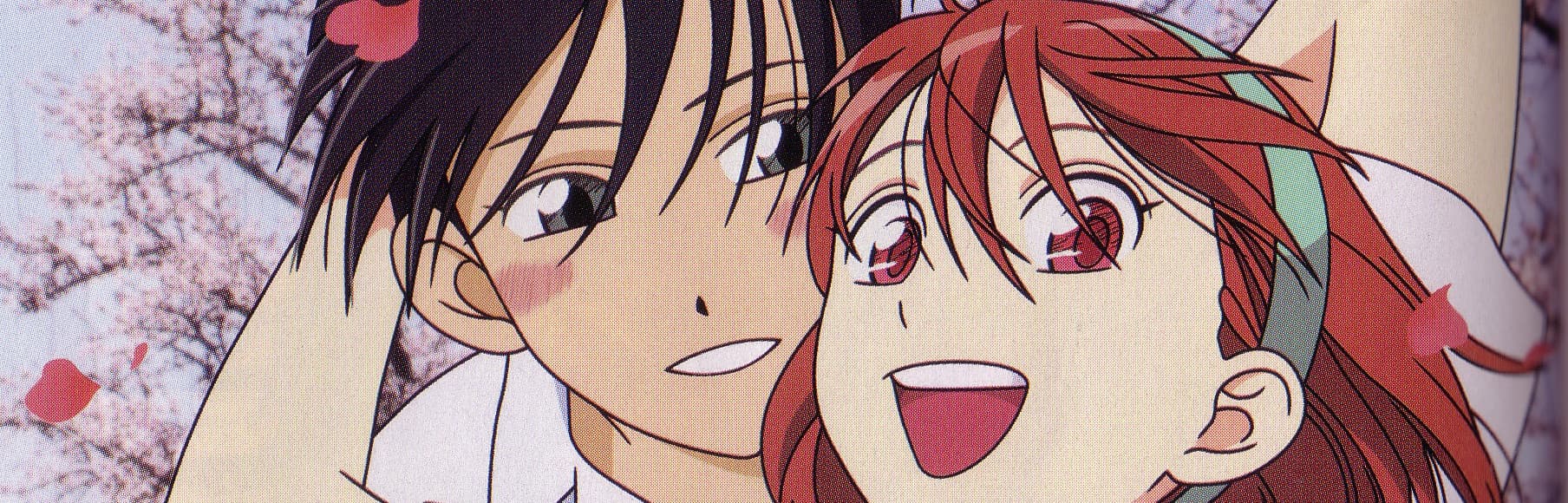
Is Kare Kano worth watching? There are 2 points of criticism about the show that I've seen expressed more than others, and often neither of them is explained thoroughly. The first one is that the show, particularly its animation, suffered because of the budget constraints. And the second is that the ending was handled poorly. In this review I will go over both of these points, and you can decide for yourself whether to watch the anime or not.
So, the first point is about animation not being very good. What seems to be true is that Kare Kano does try to avoid full animation or rather stick to limited animation as much as possible (the former here meaning animation sequences with a relatively high amount of frames between two keyframes). I also noticed that there were somewhat a lot of zoom-ins and still frames, and sometimes animation was reused. Despite all of this, I can't really call Kare Kano's visual presentation boring. Besides what I already mentioned, there are real-life photographs and manga panels, text utilized to convey extra information or characters' thoughts/questions, scenes in uncommon angles, special effects (like paper tearing, for example), a lot of super deformed art style and abstract backgrounds. Some (especially comedic) sections of the show are pretty fast-paced, like quick switches between limited animation sequences or different angles. So while the anime, on average, lacks an extensive amount of full animation, it makes up for it with a wide variety of substitutions for it that made watching the anime interesting, at least for me. Although starting at around the second half of the anime, there are more longer sections with slowly changing stills or abstract images, they kind of coincide with episodes being less comedic, but it maybe can be argued that not all of them are necessary for establishing the tone. Considering the totality of the animation techniques that are present in the show, the often mentioned paper cutout episode 19 doesn't feel that out of place, however, I wouldn't be surprised if this style was intentionally chosen to reduce the workload as well. In my opinion, a lot of the criticisms of the show's animation are either unsubstantiated or overly harsh, making the anime's visual part seem like it's way worse than it actually is. Which in turn makes me question whether or not people who leave such criticisms even liked any other aspects of the anime or simply regurgitate it as a convenient excuse to dismiss the show entirely.
The second point of criticism with which I more or less agree is that the show doesn't have a satisfactory ending. In the last few episodes, there are small but unexpected changes in the main characters' thinking patterns. One of the better executed parts of the writing and what makes the show stand out from a lot of others in the genre is that the main characters' personalities are almost completely open to the audience. Their internal thoughts and feelings are extensively shown throughout the anime, so by the end of the show the audience is supposed to have a pretty good understanding of what the characters are like, what they are going through in their minds, and what kind of problems they have or might have. However, in episodes 24 and 26, characters' thoughts and, perhaps, to some extent, behavior take different turns from before, nothing drastic, but what I would call abrupt, maybe even out of character. And this wouldn't have been too bad if, at least, some sort of resolution to these issues was given, but the anime doesn't provide it sufficiently. This problem is exacerbated by the other issue I have with the show, which is its' structure. Somewhere around the beginning of the 2nd third of the show, the anime starts to pivot from being conceptual (progress of Miyazawa's and Arima's relationship) to more episodic, where the side characters' personalities are explored and developed instead. While I do think that these episodes on average were written decently, it feels unsatisfying finishing the anime where so much screentime was given to some side characters, yet the personal and relationship problems of the main characters (and other side characters) didn't seem to be completely resolved.
Despite all of that, I still think Kare Kano is very much worth watching and that the writing is the strongest aspect of the show. As I mentioned before, the main characters' thoughts and feelings are conveyed extensively, which creates relatively complex personalities that also develop throughout the show. Some of the characters deviate from the common tropes by being intelligent, blunt, introspective and pragmatic, which makes it interesting and refreshing to see how they solve problems in their relationships. The issues that they encounter aren't uncommon, but the strong personalities and substantial introspective feedback are what make the anime more sophisticated than a lot of its contemporaries. The transitions between comedy and drama feel very natural. Not all of the choices in the visual department are great, but I appreciate that the show, in some instances, experimented instead of just resorting to standard animation practices.
7/10
22 out of 28 users liked this review