
Contains Movie Spoilers
Would you rather be the country mouse or the city mouse? Chainsaw Man Reze Arc reimagines a tale as old as time in the modern day through two star-crossed lovers bounded by mutual understanding, yet divided by their ambitions. Fujimoto’s intricate visual storytelling once again hits the big screen with the help of studio MAPPA’s amazing direction and sound design, delivering a tender emotional journey brimming with explosive action. It’s a film that transcends the standards of typical battle shounen due to its unconventional protagonist and unpredictable world, providing meaningful character depth for those who seek it, while providing hyperactive action sequences to keep fans engaged.
A few things to keep in mind: the movie makes it appear like all the events occur within 2 days, but Denji visits Reze’s cafe multiple times within an entire week. Not a long time either, but at least it doesn’t appear as if they literally just met.

The City Mouse
First, what makes not only the Reze arc work, but the Chainsaw Man series as a whole work? It all starts with the true heart of the series. Not Chainsaw Man’s, but Denji’s. If you want the best description of Fujimoto’s characterization of Denji, look no further than Maslow’s hierarchy of needs theory. It’s a psychological theory that assumes human needs/wants are sorted into 5 sequential tiers: physiological, safety, love/belonging, self-esteem, and realization. Denji starts off from the bottom of the hierarchy. In the beginning of the series, he’s a teenage boy who lives an extremely bare-bones life, deprived from even the simplest of luxuries that make living more bearable. When Makima offers to take him in, she offers him sustenance beyond his wildest dreams, which allows him to climb to the next tier, safety, which is easily accomplished after moving in with Aki. Then, the 3rd tier shows up, and here’s where Denji’s real problems arise.
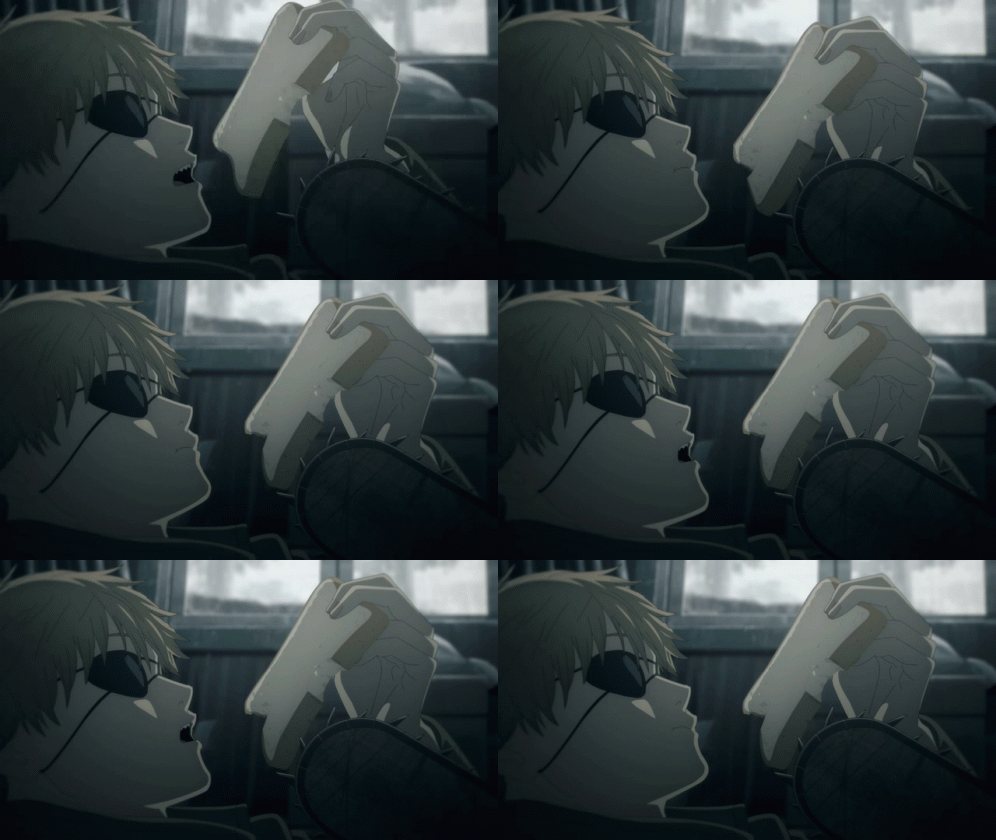
Unlike the previous two tiers, genuine human relationships and intimacy aren’t things that are easily attainable through tangible means. It’s a concept that is built upon trust, understanding, and vulnerability, which is something that Denji is going to have to discover for himself. Growing up with no one by his side except Pochita, the idea of romance, and sexual desire are foreign to him, blurring his perception of love with primal cravings of lust.

So why bring all this up? To understand what makes the Reze arc a cornerstone in Chainsaw Man is to understand Denji’s entire character journey up to this point. Deprived of love his whole life, Denji misunderstands manipulation for intimacy. It’s demonstrated during the lingerie scene when Denji’s personally conflicted to choose a woman who’ll grant him lust, or a woman who can potentially grant him love. Furthermore, it’s best showcased in the movie date with Makima where he feels no emotion from one sentimental film to another. Yet, the final movie they watch involving a hug between two people makes him tear up with the sincerity of a genuine familial bond. After the date, when Makima tells Denji he does have a heart, it reveals how she doesn’t see the “Man” in Chainsaw Man, because the heartbeat she was listening to wasn’t Denji’s, but Pochita’s.

Shounen protagonists like Denji are far and few between. Unlike his shounen contemporaries, he doesn’t have grand ambitions of becoming the best or being a hero people can rely on. Instead, he is someone who’s caught in a constant cycle of “wants.” After achieving one goal like, touching Power’s boobs, he moves on into wanting intimacy. Once Makima gave him a taste of intimacy, he now wants a genuine relationship that is mutual. Just like us, he simply desires things he doesn’t have. Shounen MCs like Naruto and Luffy inspire dreamers, but Denji speaks to the everyday man who works tirelessly for even better days.

What makes Reze work so well in the context of Chainsaw Man’s story is how not only does she mirror and contract with Denji, but she acts as a foil to Makima’s character. Just like Denji, they both were robbed from the joys of childhood, she can match his freak (no, seriously), neither ever went to school, and both seek a better life. She mirrors Makima as well, such as taking Denji on a date, and seeking to seize the Chainsaw Devil heart within Denji, but their approaches couldn’t be more different. Unlike Makima, Reze uses empathy and tries to understand Denji as a person first before killing him, but in the process eventually falls for Denji’s heart instead. On the other hand, Makima has always been after Pochita, and saw Denji as nothing more than a tool that she can manipulate using hollow displays of affection.


Speaking of the ending, another thing I love about Fujimoto’s way of storytelling is that he rarely relies on exposition or lengthy backstories to make you understand his characters, and only gives you the minimum to make you empathize with them which allows room for interpretation, and lets the story breathe naturally. We only find out in the end that Reze was a Russian spy, later in the movie, and her last words revealing she’s never gone to school either, completely recontextualizes the 1st half of the movie.
Beam
BEAM WAS THE TRUE MVP IN THIS ARC. Not only did he save Denji’s life in the festival, but he probably tanked the most hits during the 2nd half of the movie. Denji riding Beam like a horse instead of solely relying on his own abilities is so creative and unorthodox.
Overall Direction
Now, while the writing in the Reze arc is exceptional, even the best ingredients are meaningless without the proper chef to bring them together. That is where the animation and sound design comes in. The visual direction this film took is a complete 180 compared to season 1’s realistic approach, where they opted for a more surreal, and cartoonish style to fit the manga’s tone. The change in artstyle makes the scenes feel more vibrant and leave room for sakuga to shine, allowing the action sequences to fully immerse audiences. MAPPA truly elevated the source material tenfold, transforming a minor moment like the pool scene, into one of the film’s most powerful moments. The combination of detailed yet smooth animation combined with the powerful crescendo when Denji takes a leap of faith into the water, paired with the gentle flutes delivers a sense of childhood innocence and freedom.
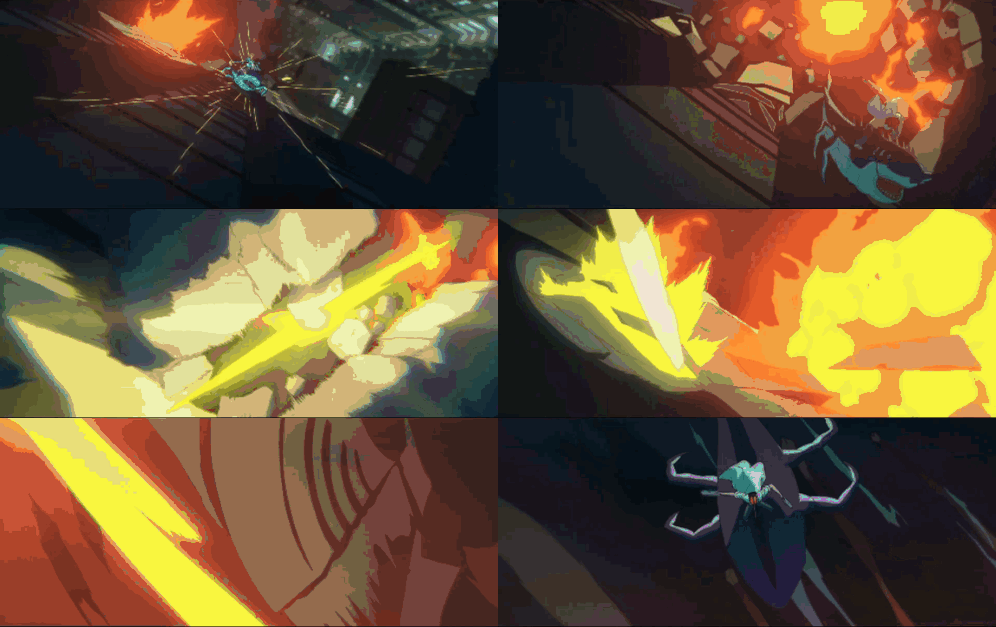
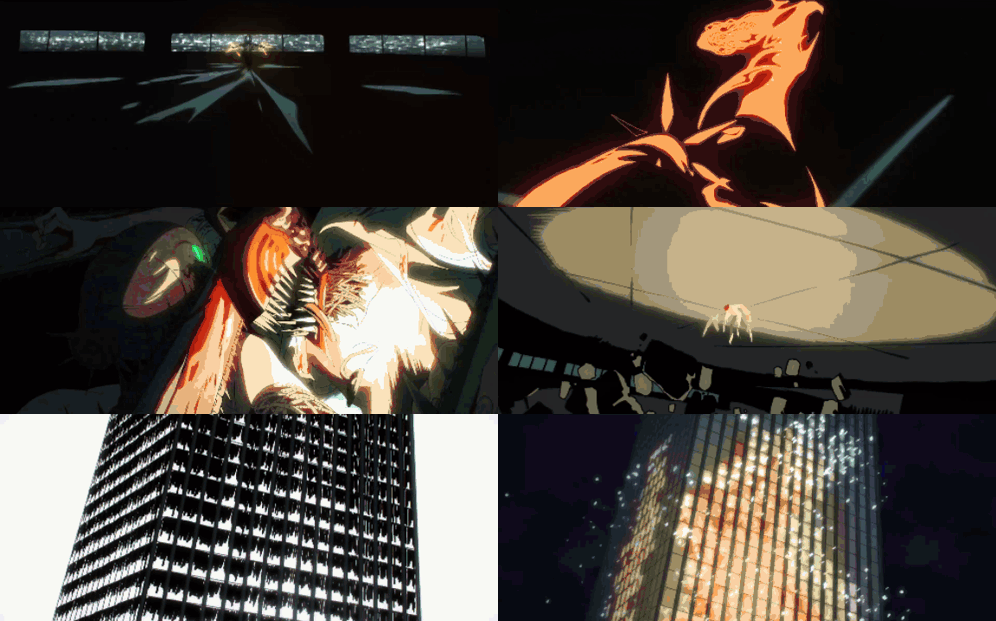
I don’t even know where to begin with the 2nd half, it’s like MAPPA took everything they learned from JJK’s Shibuya Arc, and decided to improve on every aspect. The fight scenes themselves in the 2nd half are so damn creative: Denji spinning like a beyblade with Beam, Denji using centrifugal force to spin around Typhoon Devil while chopping him up, Reze creating mini explosions to perform aerial acrobats, Reze blowing her head off and throwing it like a grenade in the Public Safety building, the subtle details of Denji pulling his cord every time he’s about to get hit makes the action feel so alive. The entire sequence from Typhoon Devil appearing, towards the ocean scene, was a complete visual spectacle, and a love letter to Chainsaw Man. From the transitions, to the camera angles, the vibrant color palette, the choreography, honestly I’m at a loss of words, I feel I’d have to rewatch this movie AGAIN to give this section justice. Loved the inclusion of Maximum The Hormone to throwback season 1, and the volume 1 cover reference after Typhoon Devil’s death. The choreography from their fight inside the office building, and Reze performing multiple punches on Beam felt like it was straight out of JJK, but done in the most Chainsaw Man way possible.
I mean what else is there to say about Kensuke Ushio? The man’s sound never fails to elevate every scene he cooks, and positively affects how someone experiences a work. IRIS OUT is a great opener for the movie, capturing the whacky side that makes Chainsaw Man iconic, while setting up the narrative themes for Denji. Jane Doe is a genius ED track, since Reze’s body will be marked as Jane Doe since she lacked an identity while being a child soldier. The lyrics also perfectly summarize Denji and Reze’s POVs during the movie’s ending.

Final thoughts
This movie’s adaptation marches to the beat of its own drum, delivering a project that not only elevates its source material, but also establishes its own creative identity that’s fitting for a feature film. Although Chainsaw Man’s soul has always been its quieter moments, the movie somehow deepened my appreciation for the smaller details in the manga, such as the pool scene, Aki’s subtle growth, the movie date implication, and the ocean scene. Reze’s story may seem like a fun detour in the grand scheme of things, but her arc encapsulates some of the best aspects of Denji’s development and emphasizes the “Man” behind Chainsaw Man. The two of them are essentially two sides of the same coin, and Reze works well as a juxtaposition with Makima’s personality. Not only that, the 2nd half is just absolute kino, as if MAPPA treated this movie as their passion project, pouring in clever references, and extended action sequences that exude creative freedom, all for the love of the game.
I haven’t been obsessed with an anime adaptation like this since Frieren, and I kinda wish I got to write this review sooner when the movie’s still fresh in my mind. But hey, another rewatch can’t hurt right? As a manga reader, if this is the level of creativity and passion MAPPA can bring to the table, I can’t imagine what the next 3 arcs will have in store. If everyone who made this project possible continues at this level of quality, Chainsaw Man might just cement itself as one of the greatest shounen anime of all time.
Story + Characters: 100/100
Direction (Visual + Sound): 100/100
Overall: 100/100
Denji..truth is.. I’ve never gone to school either.
Everybody's after my Chainsaw heart! What about my heart?! Denji's! Does nobody want that?!