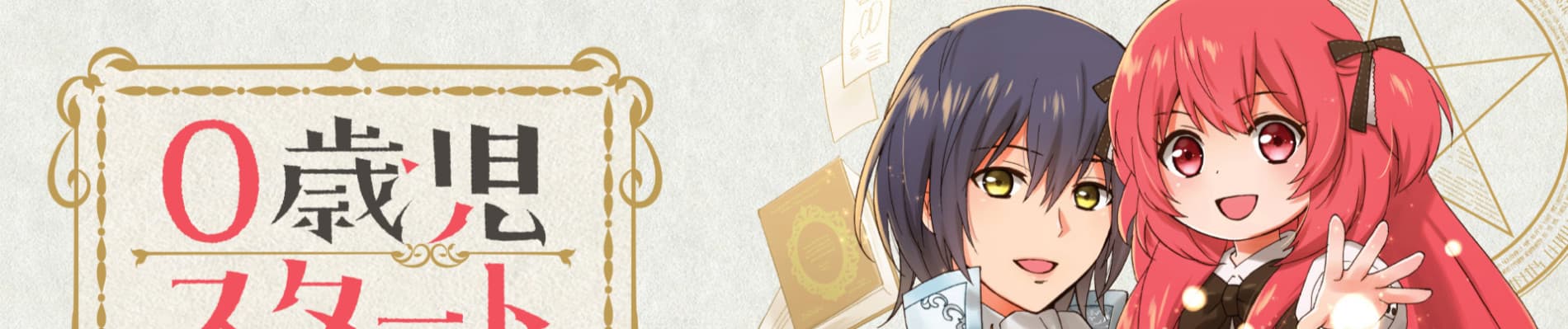
0-saiji Start Dash Monogatari (Season 1) presents an unusual case within the landscape of anime adaptations. While marketed as a TV short series, it functions far more like an extended promotional video than a genuine animated work. Across all twelve episodes, the production relies almost entirely on pre-existing manga panels, reusing them with only minor edits and minimal movement. This approach immediately limits its potential, as it lacks the interpretive creativity, animation craft, and atmospheric presentation that typically distinguish even low-budget adaptations.
The structure of the series mirrors the style popularized by Korean manhwa promotional reels—essentially slideshow-based previews meant to entice readers rather than to stand alone as independent works. Season 1 adapts manga chapters 1(1) through 2(2), four chapters in total, which correspond to the entirety of the first volume out of the eight volumes currently available. This results in a “1-to-1” retelling where virtually every shot, expression, and panel arrangement is directly lifted from the source. The anime neither expands upon the material nor offers reinterpretations that could enhance emotional resonance or narrative clarity.
Because the adaptation adds almost nothing, its weaknesses quickly become apparent. The presentation and style suffer most: limited animation, static compositions, and a lack of visual dynamism reduce the emotional weight of key moments. Scenes that carry subtle nuance in the manga often feel flattened in this format, simply because the medium isn’t allowed to breathe in the way animation typically would. Even the sound design—usually a saving grace for low-motion adaptations—offers little to compensate for the rigid structure dictated by panel reuse.
Evaluated purely as its own audiovisual product, the series lands in the lower-average range across multiple scoring categories. The plot and structure remain serviceable because the original manga provides a solid foundation, but character development, theming, and worldbuilding barely register due to the extremely limited scope of material covered. The creative originality score is arguably the strongest component, but even here, any strengths belong fully to the manga rather than the adaptation itself. On the technical side, consistency and quality control are surprisingly high, primarily because the production avoids risks entirely; it is difficult to falter when no original animation exists to begin with.
However, the series fares far worse when judged relative to its manga. Because it contributes no new scenes, interpretations, transitions, or visual upgrades—and even omits details due to asset simplification—it ends up offering a strictly inferior experience. Watching the anime takes longer than reading the equivalent chapters, yet provides less depth and emotional payoff. For this reason, the production cannot be recommended as an introduction to the story or as supplementary material for existing fans.
Season 2 appears to follow the same pattern based on its promotional imagery, suggesting that it also remains confined to early manga material without meaningful adaptation. Unless future seasons undergo a drastic shift in direction, this project is best understood not as an anime but as a marketing tool.
In conclusion: if you are interested in this story, the manga is unquestionably the better—and more respectful—way to experience it. The anime offers no additive value and is effectively a time-inefficient slideshow of content you can read more quickly, more clearly, and more enjoyably in its original form.
6 out of 7 users liked this review