
This review will contain spoilers for the entirety of the Chainsaw Man: Reze-hen movie only

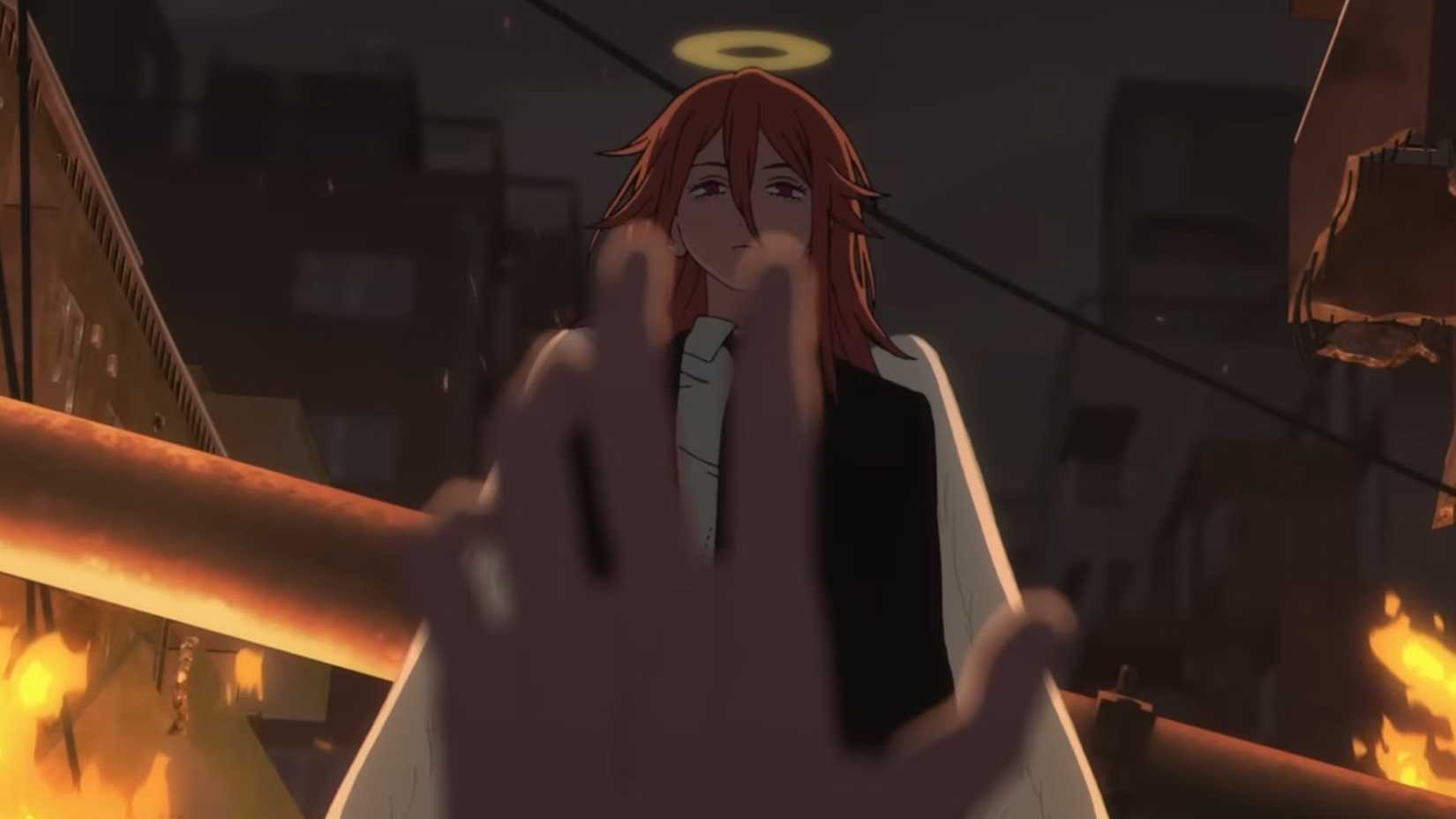
Despite her appearances only bookending Chainsaw Man: Reze-hen’s story, Makima’s presence is felt throughout its entire runtime, an eye staring from the background, watching through animals serving as diegetic cameras, twirling her cup to music she cannot, should not be hearing. This voyeurism is explicitly likened to that of the theatergoer in the scene where she and Denji go on a movie date, but her role can be further compared to that of the director, perhaps even the playwright. Indeed, while the end of the movie drives it home that she has been watching all along, through her mastery over rodents and the fact that she’s aware of what Reze said in the empty classroom, it also reasserts how powerful she is, prompting the question of what part she played in these events unfolding as they did. Here and there, hints let us know just how much she did behind the scenes : assigning Beam as Denji’s partner, telling him Reze’s an ally of the gun devil, perhaps even sending the assassin and Typhoon after them, since she was already suspicious regarding the first Gun Devil attack, not to mention her seemingly being able to put an end to everything at any time and yet remaining idle. Not only was she aware of everything, but plotted to have it all come together, being both actor, spectator and director within the movie, she is in control of everything.
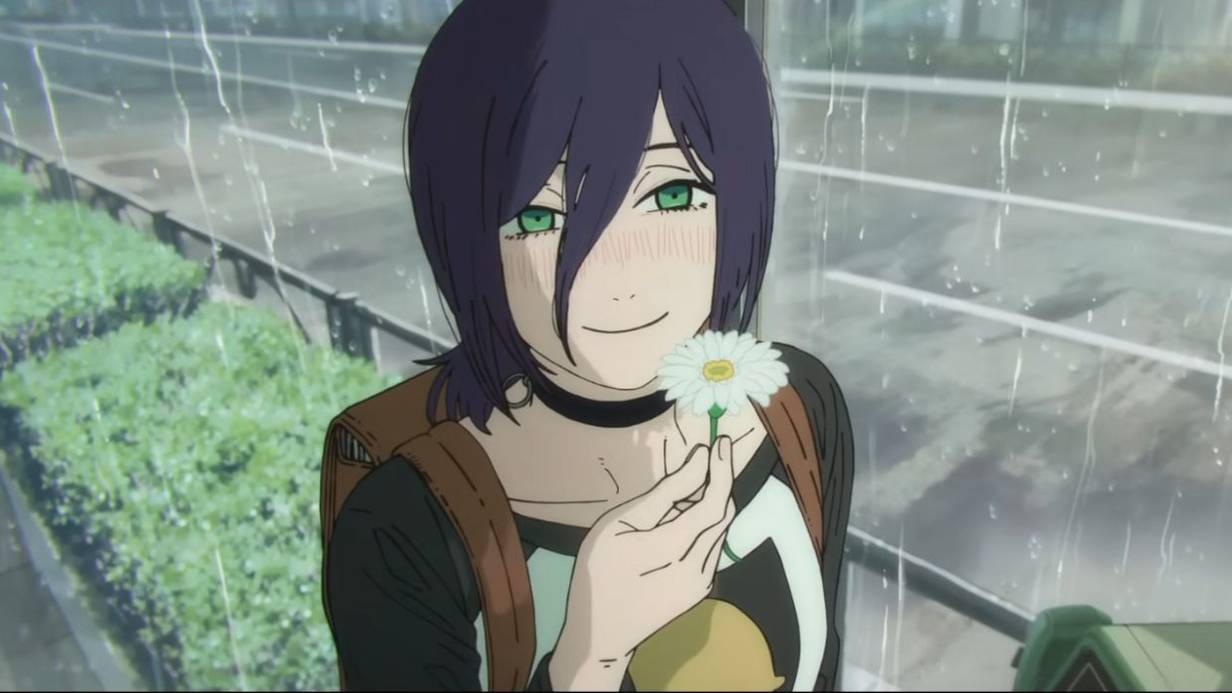
Just like Makima herself, the idea of artificiality permeates the entire movie, filled to the brim with simulacra and contradictions. Denji starts off by wondering whether his heart is real, a question made more pressing to him by the recent tragic events, Makima is both a looming presence and a potential romantic interest, an Angel is also a devil, Beam seems to know another Chainsaw Man and both our heroes hide secret identities from one another. And yet, in the middle of it all, they manage to find authenticity. Denji and Reze’s romance at first starts off like the tritest of clichés, a meet-cute under the rain and a date in a café, with the girl being mysteriously instantly attracted to Denji despite his more than odd behavior. It’s all very much played out, but despite it initially ringing hollow, Tatsuki Fujimoto manages to get the audience to root for Denji, until our characters literally bare themselves to one another, and suddenly manage to live an inexplicably genuine moment and forge an actual connection. Like Makima and Denji tearing up in the theater without being able to fully articulate why as two characters hug on the screen (a shot directly referenced during the beach scene), we, the audience are moved, despite all odds by this moment of genuine connection, which, Fujimoto seems insistent on, can happen despite, and perhaps even only with, all the lies and barriers we put up and our increasingly isolating, fragmented society.

Much of the movie is spent discussing Aesop’s fable of the country mouse and city mouse, and the choice between a luxurious, but dangerous life, and a simple but peaceful one. It’s no wonder these characters seem obsessed with this idea of choice, as none of them can seem to escape what has been made of them. Both our hybrids are broken children, obeying their country’s government against their best interests, the fiends are defined, body and mind, by their devil, Angel unable to even touch other people and refusing to extend a hand to humans, Power unable to control even her own body, growing horns that she then has no say in removing, Aki’s being a husk of a man standing upon one single tragedy and the rest of the devil hunters oscillating between wage slaves and deluded pawns of the system, unable to imagine a future beyond a five-year distant promotion. And yet, these city mice, deep down, yearn for something else, that they think might be found in the fabled country, an illusion shattered by Makima herself, pointing out how she enjoys regular trips to the countryside in order to exterminate rodents while murdering Reze, self-identified country mouse, about to run away with Denji. The very point of this false dichotomy is to offer an illusory choice, to fill the void left by modern capitalist society with a fake alternative to prevent any questions about the actual, most important choice this society presents us with : to accept it, or to change it.
As usual, Fujimoto’s social critique isn’t exactly subtle, but that does not prevent it from ringing true, and perhaps even helps drive home his point. Opening (post-credit) and closing his movie about abused children with the Hinomaru, the Japanese flag, the second of which is made out of a young girl’s blood, it’s hard not to think Tatsuya Yoshihara is calling back to Tatsuya Oishi’s Kizumonogatari trilogy and his commentary on « what it means to grow up in Japan nowadays ». Makima, the representative of the Japanese government in more than one way, is taking away everything from Denji so that he’ll be nothing more than a tool for her to use. While he’s not the only one - the satire about other devil hunters barely having lives outside of work being fairly obvious, as are the parallels between work and demon contracts - he and Reze are, in particular, singled out as children, the latter pointing out how unusual it is for Denji not to have ever been to school, words that we come to understand she also applies to herself. These two child soldiers are the emotional core of the movie, all at once pitiful and heartwarming in their human form, and terrifying and sexualized as devils, meeting each other in cafés, schools, festivals but battling under their « grown-up » forms (which are nothing more than costumes, personas) in offices and industrial harbors.. Even among all the exceptional, bombastic animation, there’s a deep sense of playfulness despite the genuine murderous intent in their battle, a paradox further highlighted by the fact that this duel quickly turns into an all-out brawl between four playmates (a literal baby and the childlike Beam) that brings to mind both a playdate, as they laugh and yell among the colorful explosions across the screen, and a battlefield, as they leave behind a trail of corpses in a literal sea of blood, underlining the absurdity of their exploitation as human weapons. Until finally, the carnage comes to a close, as, embracing, they slowly drown to the bottom of the sea, a motif evocative of couples’ suicide through drowning (especially in Japan), emerging reborn in their human form, as if to truly live the childhood stolen from them, a new life to be cut short within hours of its birth.

But this isn’t the story of a youth we can only mourn : rather, one might even see it as a call to action. Denji is still alive, this chainsaw, this explosive, perpetual motion that can start over again and again, cutting through everything and anything, and he still has Pochita, his heart, the one thing everyone has been trying to take away from him, the ability to make his own assessments, be they against everyone else’s, and to live for himself without being controlled. This is also true of Aki, who, despite barely having two years left to live, finds himself mellowing out, no longer a devil-killing machine, but even willing to sacrifice what few years he has left to save one of them, in perhaps the most transgressive act of the movie, furthered by the romantic subtext, as he refuses to use the fiend as Makima used him, as little as that might matter. One cannot wait for the perfect movie to drop in their laps, but must instead experience everything in life, perhaps even more so the nine awful movies that come before the life-changing one - no matter what you do, it’s never too little ; it’s never too late.-