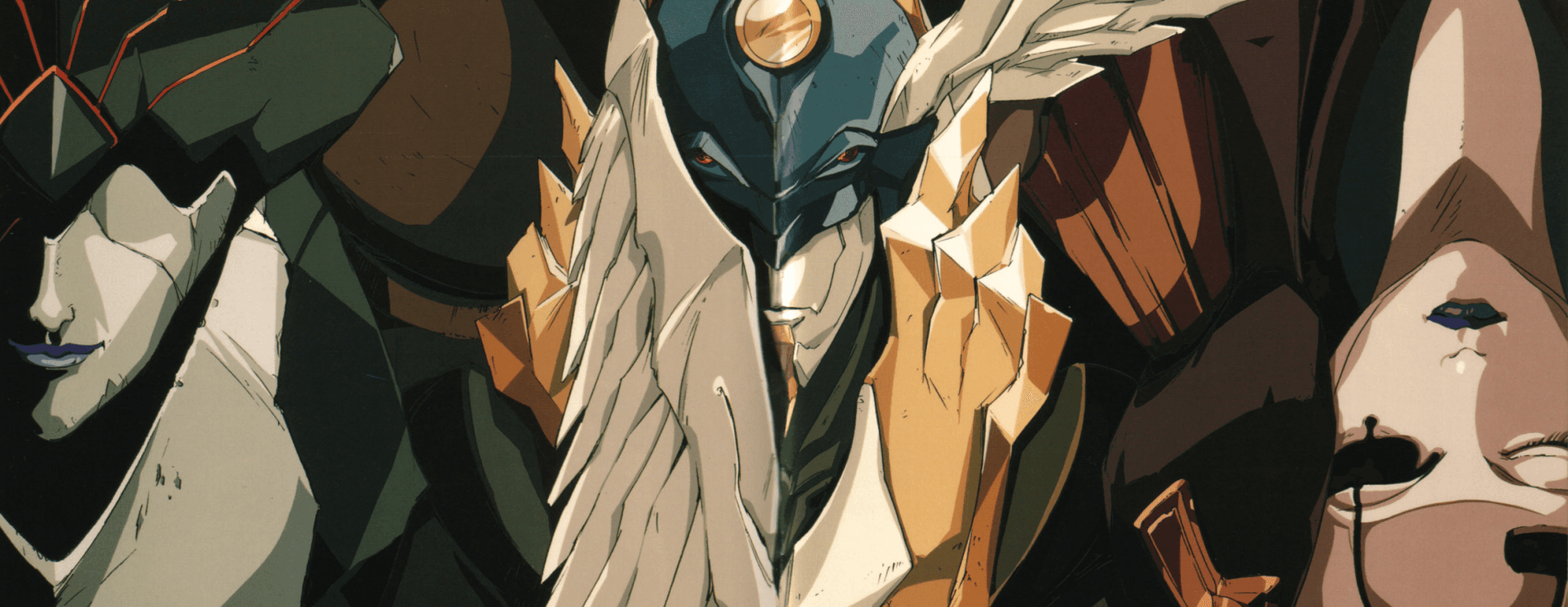
To get a grasp on what it's like to watch RahXephon, you need to reconcile things about it that appear contradictory. First of all, it borrows very liberally from Neon Genesis Evangelion. Character archetypes, visuals, and themes are lifted fairly directly from the prior work, which was itself a strange and messy thing. It shares Eva's interest in a cast of messy, very human characters dealing with threats beyond their comprehension and multiple conspiracies unfolding under their noses, in giant robots dripping with religious symbols. At the same time, it feels very different to Eva because it sheds Eva's penchant for silliness, leaving behind the moroseness and alienation and strange imagery and lack of interest in explaining itself. Yet, it's also surprisingly easy to like. You get to spend a lot of time just sort of existing, in the gaps between the battle between the humans and the Mu. It meanders about but also feels like it romps along at a fair old pace because meaningful insights into the inner worlds of the characters are dispensed at satisfactory intervals. Unrequited and doomed love and lethal violence are examined with equal levels of detachment and understanding. This is a world with people in it and their experiences are RahXephon's backbone. A backbone, however, is supposed to end in a skull, a proper, logical structure to have the spine connected to. (Slightly tortured metaphors are also a staple of the series) This is where my most major problem with the series is.
Ending a series like RahXephon, or Eva, is a challenge. These are works where the plots half exist, and feelings are king, but there is also clearly a lot of plot happening somewhere that ought to have some kind of resolution. You need something that ties the themes of the series together and finishes the plot without violating the established tone. RahXephon botches this, badly. It's very much a "and then it was the end" ending which hurriedly shoves all the toys back into the box with little fanfare. The central conflict feels like it's forgotten in the hurry to get things tied up, but also is straightened out and neat and tidy in a way that feels like it completely betrays the established tone of grim inevitability. It feels hollow, and wrong, and it's a shame because getting to that point is really rather good.
Over on the production side, Rahxephon looks quite nice. It's directed stylishly and there's a nice palette of muted colours. The technical designs encompass both intricate future-2000s military hardware and weird, fleshy, alien stuff, and it's all done well. The soundtrack by Ichiko Hashimoto is fantastic, a lovely collection of jazz pieces that suit the atmosphere perfectly. The use of discordant free jazz in one of the more nightmarish segments is especially memorable.
My enduring memory of RahXephon is sadly going to be one of disappointment. It's a bitter note to leave it on when so much of it works so well.
4.5 out of 5 users liked this review
